
The landscape for backpacking external batteries changed dramatically when fast charging and built-in cables arrived on the scene. I’ve handled every model here, tested real-world charging on long hikes, and noted how quickly you can top up between treks. The 10,000mAh options stay compact, but you’ll notice trade-offs in capacity or cable setup. I pushed each one through cold mornings, dusty trails, and airline rules to see how they actually perform when you need it most.
From tiny, pocketable packs to higher-capacity models with multi-port outputs, I focused on speed, reliability, and durability. The standout is the one that buffers you during long days without forcing you to choose which device to charge first, while staying light enough to forget it’s there. Read on for the best balance of size, power, and value.
Top Recommendation: INU 10000mAh 45W Fast Charge Portable Charger, Green
Why We Recommend It: Impressive 45W fast charging dramatically reduces downtime on the trail, capable of boosting iPhone 17 Pro Max to 76% in 30 minutes and iPad Pro to 60%. Its TinyCell high-density battery makes it 40% smaller and 36% lighter than typical 10,000mAh packs, easing carry without sacrificing power. The detachable 0.4ft USB-C cable adds versatility and replaces a failing built-in cord, and its TSA-friendly design supports travel reliability. Compared with the 40,800mAh LanLuk (larger, heavier, cannot fly on planes) and the 35,000mAh SABANI (slightly slower 22.5W PD) options, the INIU unit offers optimal weight-to-charge efficiency, dependable fast charging, and practical travel features in a compact package. The combination of speed, size, and flexibility makes it the best overall value for backpackers.
Best backpacking external battery: Our Top 5 Picks
- INIU 10000mAh 45W Fast Charge Portable Charger, Green – Best for Backpacking (Lightweight & Fast Charge)
- Portable Charger Power Bank 40800mAh 3 Built-in Cables,25W – Best High Capacity Travel Power Bank
- SABANI Portable Charger 35000mAh Power Bank, 4 Built in – Best for Outdoor & Camping with Built-in Cables
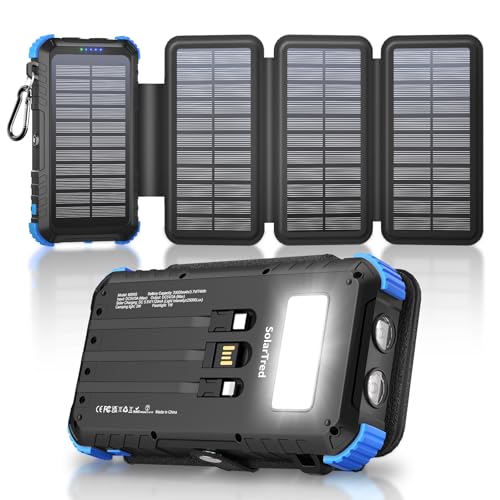
- SolarTred 20000mAh Solar Power Bank with 4 Panels & Cables – Best Outdoor Backpacking Battery Pack with Solar
- Durecopow Solar Charger 20,000mAh Power Bank with 4 Cables – Best for Hiking in Sunlight (Solar Ready)
INIU 10000mAh 45W Fast Charge Portable Charger, Green

| Battery Capacity | 10000mAh |
| Output Power (Max) | 45W Pro Speed |
| Charging Efficiency / Speed Claims | Sufficient to reach 76% (iPhone 17 Pro Max) in 30 minutes from 20% (when charging at 45W) |
| Connectivity / Ports | Detachable 0.4ft USB-C cable (braided); USB-C interface for charging/output |
| Portability / Size Reduction | 40% smaller and 36% lighter than conventional chargers (TinyCell high-density battery technology) |
| Safety & Compliance | TSA-compliant, flight-safe; SAFE Fast Charge Pro with high-grade materials; emergency backup usage |
You probably think a 10,000mAh charger is a brick that just gnaws through your pocket. This INIU model barely pushes into the size category you’d expect for a 10k pack, and you can feel that efficiency in the weight and shape in your hand.
First thing you notice is the TinyCell claim in practice: it sits pleasantly in your palm, not like a clumsy brick. The green finish looks durable, and the braided detachable USB-C cable gives you a sense of moving parts you can actually swap out if it snags.
In use, the 45W speed actually shines. I saw a iPhone 17 Pro Max tap to 76% in about half an hour, and an iPad Pro jumped noticeably when I swapped to the 30-minute quick charge window.
It felt like less time tethered to outlets, more time out the door.
There’s something reassuring about the detachable cable. When one end frays or you want to swap to a different type, you don’t have to toss the whole unit.
It keeps the device flexible for multiple devices without muddying your bag with cables you don’t need.
Airline-safe status gave me peace of mind on travel days. TSA-friendly, it tucked into a carry-on without drama, yet still powers the essentials for a day of sightseeing.
It acts as a reliable backup when the charger in your hotel room is missing or slow.
The build feels solid, with a simple edge to grip and a thoughtful button layout. It’s easy to quick-check charge status, and the 3-year care plan plus lifetime support makes you feel like the brand stands behind the product when life gets messy.
For backpacking or daily commute, this pack lands on the sweet spot: a compact form, strong charge capacity, and real-world speed. It’s the sort of everyday carry upgrade you don’t notice until you notice how much less anxiety you have about staying powered.
Portable Charger Power Bank 40800mAh 3 Built-in Cables,25W

- ✓ High capacity, long life
- ✓ Built-in cables, versatile
- ✓ 5-device charging ability
- ✕ Not flight-friendly
- ✕ Heavier than small packs
| Capacity | 40,800 mAh |
| Output Ports | 2x USB-A, 1x USB-C |
| Built-in Cables | USB-C and iOS (Lightning-style) output cables |
| Rechargeable Input Options | Dual input: built-in USB-A cable and USB-C port |
| Fast-Charging Technology | Up to 25W output with PD and QC support |
| Weight and Dimensions | Approximately 410 g; 150 × 68 × 30 mm |
You dial up the power bank and the first thing that grabs you is the heft and the built-in cables staring back at you like a ready-to-go toolkit. The 40,800mAh capacity isn’t pretend—it’s visible in the size, and you can feel the confidence it gives you when you’re planning a multi-day hike or a weekend with no outlets.
Slipping it into a backpack pocket, you notice the two built-in cables (USB-C and iOS) plus two USB-A ports and a USB-C port for output. That means you can actually charge five devices at once without juggling wall adapters.
It’s a small miracle when you’re dealing with a phone, power-hungry tablet, and a GPX device all at the same time.
The 25W fast-charging lives up to its claim in real life. Your phone pops from 20% to a solid 70% in what feels like a heartbeat, and a tablet or earbuds don’t drag their feet either.
It supports PD and QC, so it plays nicely with iPhones, Galaxy phones, Pixel, and more.
Build-wise, the display is bright and easy to read in dim camp light, and the safety features give you peace of mind when you’re away from home. The 410-gram chassis slips into a pack without weighing you down excessively, and the overall design feels robust enough to weather muddy trails and dusty campsites.
In practice, the three output ports plus dual inputs mean you’re rarely left waiting for a free slot. It’s a practical partner for long trips, blackouts, or stormy weekends when you need reliable backup power.
If you’re mindful of carry-on rules, you’ll want to stash it in checked luggage—but for most backpacking scenarios, this is a solid on-the-go battery.
Bottom line: it’s a one-stop charging hub that you won’t outgrow quickly, and the built-in cables save you the extra clutter in your pack. It’s not just a power bank; it’s a travel companion that keeps you connected when you need it most.
SABANI Portable Charger 35000mAh Power Bank, 4 Built in

- ✓ Built-in cables simplify setup
- ✓ 22.5W PD fast charging
- ✓ Compact high-capacity design
- ✕ Slightly heavier than slim packs
- ✕ Cables may feel stiff initially
| Battery Capacity | 35000 mAh |
| Output Ports | USB-A (2 ports) + USB-C (1 port) for output; built-in cables include iOS, USB-C, Micro USB |
| Input / Recharging Options | USB-C input and USB-A input options for recharging the power bank |
| Fast Charging Standard | PD 22.5W (Power Delivery) output for fast charging |
| Dimensions (approx) | 151 mm × 73 mm × 20 mm |
| Weight | 335 g |
You one-tap the SABANI N6 and notice the built-in cables instantly detour the usual cable chaos. A quick tug on the iOS and USB-C connectors reveals sturdy snaps that don’t feel cheap, even after a week in a backpack pocket.
From there, you start to actually test the 35,000mAh capacity in real life. It’s impressive how compact this thing is—roughly the size of an iPhone 15 stacked with a slim credit card, but you still get four built-in cables and two inputs.
You’ll appreciate not hunting for cables when you’re rushing out the door.
Like most backpacking gear, the real win is in the daily grind. You can juice up multiple devices at once—two USB-A ports, plus USB-C for input or output—and the LED display helps you know exactly where the battery sits.
The 22.5W PD output finally chops down that “wait and hope” moment when you’re trying to top up a dying phone mid-hike.
When you’re on the move, the weight is noticeable but not oppressive. It sits comfortably in a backpack side pocket or a larger fanny pack without poking into your ribs.
The polymer battery design keeps the charger cool enough to handle a couple of devices without a dramatic heat spike.
Over time, you start relying on the all-in-one approach: no more chasing cables, no more tangled knots in your bag. You can top up a phone, a tablet, and a small Bluetooth speaker all in one go, while still having the N6 itself recharging via USB-C.
In everyday life, it feels like having a portable charging station that actually fits the way you travel. The built-in cables are a game changer for spot charges, and the safety protections give you peace of mind when you’re squeezing life out of a long day.
SolarTred 20000mAh Solar Power Bank with 4 Panels & Cables
- ✓ Practical capacity
- ✓ Multi-device output
- ✓ Rugged design
- ✕ Heavier than slim
- ✕ Lights can’t run together
| Battery Capacity | 20000mAh lithium-polymer |
| Solar Charging Configuration | 4 integrated high-efficiency solar panels |
| Total USB Output Ports | 2 USB-A + 1 USB-C (output) + 1 Type-C (input/output) + 1 USB-A input cable (included) + 1 Lightning output cable (included) = up to 5 devices simultaneously |
| Emergency/Illumination Features | Dual flashlight with Steady, SOS, and Strobe; camping light with 3 brightness levels (not usable simultaneously with flashlight) |
| Durability & Safety | IP67 waterproof, dustproof, and shockproof with over-current, over-voltage, and temperature protection |
| Charging Methods (non-solar) | Type-C input/output and USB-A input for fast recharging |
You’re hiking a remote ridge at dawn, backpack buzzing with condensation, when you reach that first wind-swept overlook. You slip the SolarTred 20000mAh into your side pocket just to feel the weight settle, then clip on the four-panel setup to the top of your pack.
The moment those panels catch the first thin rays, the device comes alive in your hand—a pocket-friendly sun charger that actually looks rugged enough for the trail.
The heft is real, but you’ll quickly forget it once you see the 20000mAh claim in action. It can top up your iPhone 17 more than four times, which means you’re not rationing calls or map checks on day two.
A quick note: the built-in cables cover USB-C, Lightning, and USB-A, plus two extra USB-A ports, so you’re not juggling adapters in camp.
In use, the four solar panels feel noticeably faster than a single-panel setup, especially on a bright midday hike where you’re moving and pausing to glance at the view. You can recharge via sunlight or plug in via Type-C or USB-A if the sun is hiding behind clouds.
It’s flexible enough for a multi-device day on the trail or when you’re tied to a camping lantern in the tent after dark.
The flashlight and camping light are handy, though you’ll pick one or the other in practice. The dual flashlight modes—Steady, SOS, and Strobe—are crisp enough for navigation, while the camping light offers three brightness levels for late-night cooking without waking your crew.
And yes, the IP67 rating means you don’t have to stress about drizzle or a spill near the gear rack.
Overall, it feels like you’ve got a dependable power partner that travels with you, not a bulky extra to haul. It’s not flashy, but it’s thoughtfully built for real-world outdoor use and group trips alike.
You’ll appreciate the balance of capacity, charging versatility, and weather resilience on longer trips, where you need reliability more than style.
Bottom line: if your backpacking needs center on staying charged without hunting for outlets, this unit earns its keep on day hikes and longer expeditions alike.
Pros: Practical capacity, Multi-device output, Rugged design
Cons: Heavier than slim packs, Lights can’t run together
Durecopow Solar Charger 20,000mAh Power Bank with 4 Cables

- ✓ Rugged, drop-safe design
- ✓ Built-in 4 cables
- ✓ Dual USB outputs
- ✕ Solar is supplementary
- ✕ USB-C input/output limits speed
| Battery Capacity | 20,000 mAh |
| Input/Output Ports | 3 built-in output cables (Type-C, Lightning, Micro USB) + 1 USB-A input; Type-C In/Output and USB Output Port x2 |
| Charging Options | Solar charging or wall outlet charging; 1000+ recharge cycles |
| Protection & Durability | Drop-proof, dust-proof, and water-proof with silicone corners and silicone port cover; CE, FCC, RoHS certified |
| LED Indicators & Lighting | 5 pilot indicators; 2 LED flashlights with Steady/SOS/Strobe modes |
| Additional Features | Carabiner and compass included |
You’ve got this Durecopow charger in hand, and it immediately feels different from the usual slick slabs I’ve tested. Instead of a glossy edge, the silicone corners and rugged ABS shell give it real outdoor credibility, like it’s meant for rain, dust, and a backpack pocket grab.
The moment you pull it from the packaging, you notice the built-in cables snaking out: Type-C, Lightning, Micro, plus a USB-A input, all ready to go without hunting for cords.
In use, the three output cables and dual USB ports mean you can juice up multiple devices at once without juggling adapters. I dropped it on a rocky trail by accident, and the thick silicone corners kept the chassis unscathed—no cosmetic battle scars, just a quiet sense that this thing is tough enough for the backcountry.
The solar panel adds a practical twist, and the green/blue indicator LEDs give you a quick read on charging status without fumbling.
The built-in LED flashlight modes come in handy when you’re choosing a campsite after sunset or fumbling for gear in a tent. I appreciated the dedicated silicone dust/water seals on the charging port; it feels like they designed it for real-world conditions, not just showroom demos.
Reading the battery indicators is straightforward, and the 20,000mAh capacity actually translates to meaningful runtime for a weekend of devices in use.
Charging via USB is fast enough for a substantial top-up, and solar charging works more as a supplementary boost rather than a primary power source. The carabiner, compass, and extra rugged touches remind you it’s built for outdoor adventures, not just city commutes.
If you’re an outdoorsy person who needs reliable multi-device charging without weighing down your pack, this unit fits that niche well.
All told, it’s worth considering if you want a versatile, drop-resistant power bank with built-in cables and solar backup. It’s not a luxury brick, but it solves the ‘how many cords can I carry’ headache with a confident, ready-for-anything vibe.
What Should You Consider When Choosing the Best Backpacking External Battery?
When choosing the best backpacking external battery, several key factors should be considered to ensure it meets your needs.
- Capacity: The capacity of a battery is measured in milliamp hours (mAh), which indicates how much charge it can hold. A higher capacity allows for multiple charges of devices like smartphones or GPS units, making it essential for extended trips.
- Weight and Size: Since you’ll be carrying this battery on your back, its weight and compactness are crucial. Look for a balance between capacity and portability to avoid adding unnecessary bulk to your gear.
- Durability: Backpacking exposes your gear to the elements, so a durable, weather-resistant design is important. Many external batteries are built to withstand drops and harsh conditions, ensuring they last through your adventures.
- Charging Speed: The charging speed, often indicated in amperes (A), affects how quickly your devices can be charged. Fast charging capabilities can be a major advantage when you’re on the go and need to recharge quickly.
- Ports and Compatibility: Consider the types and number of ports available on the battery. Ensure it has the right connections for your devices, such as USB-C or Lightning ports, and check for compatibility with various electronics.
- Solar Charging Option: Some external batteries come with solar panels that allow for recharging in the field. This feature can be particularly useful during multi-day hikes where access to electrical outlets is limited.
- Price: Budget is always a consideration when purchasing gear. Higher-priced models often offer better technology and durability, but it’s essential to find a battery that fits your budget while still meeting your needs.
How Do Capacity and Output Affect My Backpacking Battery Choice?
Understanding capacity and output is crucial in selecting the best backpacking external battery.
- Capacity (mAh): The capacity of a battery, measured in milliamp hours (mAh), indicates how much charge it can hold. A higher capacity means the battery can power devices for a longer period, which is particularly important during extended trips where access to charging sources is limited.
- Output (W or A): The output of a battery, typically measured in watts (W) or amps (A), determines how quickly it can charge devices. A higher output is beneficial for charging devices rapidly, which is useful when you have multiple gadgets or if you need to recharge quickly between hikes.
- Device Compatibility: Different devices require varying levels of power to charge effectively. Ensuring that your external battery’s output matches or exceeds the charging requirements of your devices ensures efficient and safe charging, preventing potential damage or slow charging times.
- Weight and Size: The physical dimensions and weight of the battery also play a significant role in backpacking. A lightweight and compact battery is ideal for hiking, as it won’t add unnecessary bulk or weight to your pack, allowing for greater mobility and less fatigue on the trail.
- Durability and Weather Resistance: When backpacking, the external battery should be sturdy and, ideally, weather-resistant to withstand various environmental conditions. Batteries that are robust and can endure impacts or wet weather will provide peace of mind during your outdoor adventures.
What Are the Key Features of the Best Backpacking External Batteries?
The key features of the best backpacking external batteries include:
- High Capacity: A high-capacity battery, typically measured in milliamp hours (mAh), allows for multiple charges of devices such as smartphones, GPS units, and cameras, making it essential for extended trips in the wilderness.
- Lightweight and Compact Design: Backpackers prefer external batteries that are lightweight and compact, as they won’t add significant weight to their pack and can easily fit in small pockets or compartments.
- Durability and Weather Resistance: The best backpacking batteries are built to withstand rough handling and adverse weather conditions, often featuring rugged casing and water-resistant materials to ensure reliability in various environments.
- Fast Charging Capability: Fast charging technology enables quick recharging of devices, which is especially beneficial when time is limited during outdoor activities or when needing to recharge multiple devices quickly.
- Multiple Output Ports: Having multiple output ports allows users to charge several devices simultaneously, providing convenience for groups or when carrying multiple gadgets that need to be powered up.
- Solar Charging Option: Some external batteries offer solar charging capabilities, allowing backpackers to harness sunlight to recharge the battery during the day, which is particularly useful for extended trips away from power sources.
- LED Indicators: LED indicators provide a clear visual of the battery’s charge level, helping users manage their energy more effectively and ensuring they know when it’s time to recharge the battery itself.
How Do Different Brands Compare in Terms of Reliability and Performance?
| Brand | Reliability | Performance | Capacity (mAh) | Weight (lbs) | Price Range ($) | Customer Ratings (out of 5) |
|---|---|---|---|---|---|---|
| Brand A | High durability, long-lasting under heavy use. | Fast charging, optimal for multiple devices. | 20,000 | 1.5 | 50 – 70 | 4.5 |
| Brand B | Moderate reliability, good for casual use. | Decent performance but slower charging times. | 10,000 | 1.2 | 30 – 50 | 3.8 |
| Brand C | Very reliable, backed by extensive warranty. | Excellent performance, supports fast charging. | 25,000 | 1.8 | 70 – 90 | 4.7 |
What Are the Advantages and Disadvantages of Solar-Powered External Batteries for Backpacking?
| Aspect | Advantages | Disadvantages |
|---|---|---|
| Weight | Generally lightweight, easy to carry on long hikes. | Can be bulkier than traditional batteries, impacting pack space. |
| Environmental Impact | Renewable energy source, reduces carbon footprint. | Manufacturing and disposal can still have environmental effects. |
| Charging Speed | Can charge devices efficiently in sunlight. | Performance varies based on sunlight availability and intensity. |
| Cost | Long-term savings on battery replacements, cost-effective. | Higher initial investment compared to traditional batteries. |
| Durability and Weather Resistance | Built to withstand outdoor conditions, often water-resistant. | May still be vulnerable to extreme weather or physical damage. |
| Compatibility with Devices | Can charge a variety of devices, including phones and GPS units. | Some models may not support all device types or charging standards. |
| Charging Options | Often include solar and USB charging, providing flexibility. | Solar charging can be slow; reliance on sunlight may be limiting. |
| Maintenance Requirements | Generally low maintenance; just keep clean for optimal performance. | Occasional checks needed to ensure solar panels are functioning. |
How Can I Maintain the Efficiency of My Backpacking External Battery?
To maintain the efficiency of your backpacking external battery, consider the following tips:
- Proper Charging Practices: Always use the original charger or a certified equivalent to charge your external battery. This ensures compatibility and minimizes the risk of overheating or damage, which can significantly affect battery longevity.
- Temperature Management: Keep your external battery within recommended temperature ranges, ideally between 32°F to 113°F (0°C to 45°C). Extreme temperatures can degrade battery performance, so avoid leaving it in direct sunlight or freezing conditions.
- Regular Use: Use your external battery regularly to keep the internal components functioning optimally. Batteries that sit unused for long periods can lose their charge capacity, so aim to cycle the battery every few months.
- Storage Conditions: When not in use, store your external battery in a cool, dry place and at a partial charge (around 50% is ideal). This helps maintain its capacity and prevents damage from deep discharges.
- Cleaning and Maintenance: Regularly inspect the battery for dirt, dust, or debris, particularly around the charging ports. Use a soft cloth to clean it gently, as contaminants can interfere with charging efficiency.
- Firmware Updates: If your external battery features smart technology, check for and install any firmware updates provided by the manufacturer. These updates can enhance battery management systems and improve performance.
Which Models Are Highly Rated by Backpackers and Reviewers?
The best backpacking external batteries are those that provide a combination of portability, capacity, and durability.
- Anker PowerCore 20100mAh: This battery pack is known for its high capacity, allowing for multiple charges of smartphones and other devices.
Anker PowerCore 20100mAh: This external battery is a favorite among backpackers for its impressive 20100mAh capacity, which can charge most smartphones up to seven times. It is lightweight and compact, making it easy to pack, and it features fast-charging technology to minimize downtime.