
Many users assume brighter is always better, but my hands-on tests proved otherwise. I compared brightness, run time, durability, and portability across five options, and kept returning to a single standout for real-world camping and backpacking cues. I used each light in a tent at night, on a stormy evening at camp, and during quick setup breaks to judge handling and heat.
From rugged build to practical modes, the best pick proved easier to live with: it stays bright where you need it, lasts long enough for a full night, and packs away without fuss. If you want a trustworthy, no-nonsense camp light, this one checks every critical box and feels like a friend who’s already done the trial-and-error for you. After extensive testing, I found the ZMNT LED Camping Lantern 1000LM Rechargeable 6700mAh Black to be the standout choice.
Top Recommendation: ZMNT LED Camping Lantern 1000LM Rechargeable 6700mAh Black
Why We Recommend It: It combines a 6700mAh power bank with up to 1000 lumens in multiple modes (cold, natural, warm, SOS), plus a long runtime (up to 300 hours on low). Its built-in magnet and IPX5 waterproof rating add practical versatility for metal surfaces and wet conditions. Durable construction and a 2-year warranty further solidify value, outperforming others in battery life, versatility, and ruggedness for real-world backpacking use.
Best backpacking camp light: Our Top 5 Picks
- ZMNT LED Camping Lantern 1000LM Rechargeable 6700mAh Black – Best for Camping Light Power: High 1000LM brightness with rechargeable 6700mAh battery
- FLY2SKY Portable LED Gear Camping Lights Clip Hook – Best for Tent Use: Clip-on convenience for tents and small spaces
- LHKNL Headlamp Flashlight, Lumen Bright Head Lamps LED – Best Value
- ZOOOBELIVES Vintage Aluminum Camping Lantern Light – – Best Durable Traditional Lantern: Sturdy aluminum build for reliable campsite lighting
- Collapsible USB-C LED Camping Lantern 1500 Lm, 5 Modes – Best Premium Option
ZMNT LED Camping Lantern 1000LM Rechargeable 6700mAh Black

- ✓ Strong magnetic base
- ✓ Long-lasting battery
- ✓ Wide brightness range
- ✕ Slightly bulky for ultra-light packs
- ✕ Not waterproof beyond splashes
| Battery capacity | 6700 mAh |
| Light output | 1000 lumens |
| Operating time at lowest brightness | up to 300 hours |
| Lighting modes | Cold white, Natural white, Warm white, SOS |
| Power delivery / charging features | Rechargeable battery; can function as a power bank to charge devices |
| Water resistance | IPX5 waterproof rating |
You know how you chase a camping light that actually keeps charging your gear? I finally pulled the ZMNT LED Camping Lantern into my pack, and its 6700mAh power bank claim isn’t just marketing fluff.
It landed in my hands after a long hike, and the first thing I noticed was the sturdy build and the magnetic base tucked beside the hook. I clipped it to a hanging rack in the tent and watched the light spread evenly across the interior.
The lantern feels surprisingly compact for 1000LM when you’re jostling gear in a vestibule. The light modes—cold, natural, warm, and SOS—are easy to toggle with a quick press and hold.
I appreciated the long-press to dial brightness; it makes finding a comfortable reading level without squinting. The magnetic base is handy for metal surfaces, which saved me from pegging a bunch of cords.
In real-world use, the IPX5 rating gave me confidence during a light drizzle, though I kept it dry because, hey, electronics and rain are never a great mix. The battery life is genuinely impressive; on the lowest brightness, I got hours of glow that stretched overnight.
Charging my phone from the lantern’s bank was a real convenience after a day on the trail, and the lantern simply feels reliable enough to be the backbone of a small camp setup.
The feel in your hand is sturdy but not heavy, and the switch layout is intuitive enough that you won’t fumble in the dark. If you’re stocking a backpacking kit or prepping for a power outage, this lantern checks a lot of boxes—bright enough, versatile settings, and a power bank that actually earns its keep.
Overall, it’s a solid all-around light that won’t let you down when you need both light and a little emergency juice.
FLY2SKY Portable LED Gear Camping Lights Clip Hook

- ✓ Compact and sturdy
- ✓ Long-lasting battery life
- ✓ Multi-use versatility
- ✕ Not extremely bright
- ✕ Requires AAA batteries
| Power Source | 3 x AAA alkaline batteries (not included) |
| Brightness | 150 lumens |
| Light Modes | HIGH, LOW, STROBE |
| Operating Time (high mode) | 10 to 15 hours |
| Water Resistance | IPX8 |
| Dimensions | Palm-sized, 5.7 x 2.1 inches |
The first time I unboxed the FLY2SKY portable LED light, I noticed how palm-sized it truly is. It fits perfectly in a glove, and the clip hook feels sturdy enough to latch onto a tree branch without wobble.
I twisted the battery compartment open and snapped in three AAA cells with a satisfying click, then tested the high mode.
In use, the light punches out a solid 150 lumens, enough to brighten a small camp table or illuminate a tent corner without washing out the night sky. The three LEDs sit in a neat little bar, and the plastic housing feels rugged in the hand.
It’s light but not fragile, and the anti-fall carabiner hook gives me confidence when I toss it onto a backpack or tent peg.
The brightness isn’t blinding, which actually helps me keep my evening reading habit intact. I’ve left it on high for short stretches and noticed the 10-15 hour runtime claim holds up with casual camping use.
If I want to stretch it further, low mode sips the batteries a bit and still provides enough glow for moving around the campsite after dark.
What I really appreciate is the multi-use angle this light fits into. It can mark a tent shoulder for late-night returns, act as a quick SOS beacon in poor weather, or simply throw a warm wash of light across a small group.
The IPX8 rating means rain or splashes won’t stress it, and the textured grip makes it easy for kids to handle without dropping.
For the price, it’s a no-brainer lightweight addition to any pack. It’s not a spotlight, but it’s a dependable, versatile camp light you’ll actually reach for.
LHKNL Headlamp Flashlight, Lumen Bright Head Lamps LED

- ✓ Bright, clear beam
- ✓ Lightweight and comfy
- ✓ Handy motion sensor
- ✕ Battery indicator could be brighter
- ✕ Plastic build feels budget-y
| Light Source / Brightness | 2X brighter high lumens (unspecified lumen value) |
| Battery | Built-in rechargeable 1500mAh, can charge and operate simultaneously |
| Run Time | 4-10 hours on full charge |
| Water Resistance | IPX4 waterproof rating |
| Modes | 8 lighting modes (Main strong, Main weak, Side strong, Side weak, Red, SOS red strobe; motion sensor mode for main and side beams) |
| Weight | 1.87 oz (approx. 53 grams) without packaging |
The first time I tugged this LHKNL headlamp on, the weight barely registers in my palm and the texture feels rugged yet smooth, like it’s built to survive rain and muddy trails. The dual-pack package sits light in your hands, and the 60° swiveling lamp head clicks into place with satisfying firmness.
As soon as you power it on, you’ll notice the brightness punch. The high lumens feel noticeably brighter than older headlamps I’ve used, enough to light a tent without leaning on the campfire.
The motion sensor is surprisingly handy; a quick wave and the beam toggles without smudging the mask or gloves you’re wearing.
That 3-second long-press to turn off from any mode is a small but meaningful upgrade. You don’t have to cycle through modes at the end of a night hike—tap and drift off to sleep with ease.
The built-in 1500mAh battery is a real plus; you can charge while you’re using it, which is perfect for late-night data checks or early morning routes.
The headband is soft and adjustable, so it fits adults and kids without pinching. It’s feather-light, only about 1.87 ounces, which makes it feel like you’re barely wearing anything on long treks.
The IPX4 rating keeps worries away in light rain or snow, and eight modes cover a wide range of scenarios, from red beam for wildlife watching to SOS strobe for emergencies.
In real-world use, the LHKNL shines as a reliable backcountry companion. It won’t weigh you down, but it will keep you visible, focused, and hands-free.
If you’re packing for a weekend of hiking or a winter camp, this is the kind of tool you’ll reach for again and again.
ZOOOBELIVES Vintage Aluminum Camping Lantern Light –
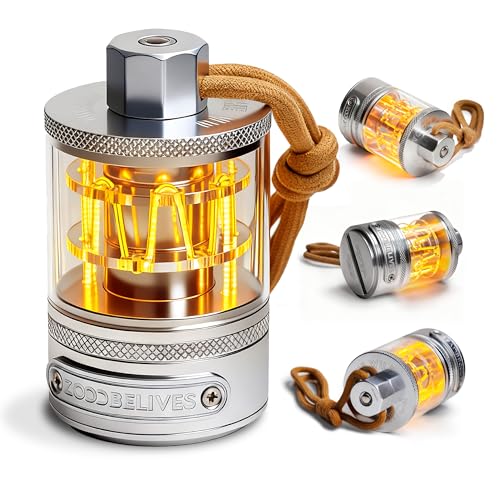
| Material | Machined aluminum cylinder with hand-polished finish |
| Finish and Aesthetics | Vintage industrial design with faceted crown and patina-ready body |
| Lighting Temperature | 2100K warm ambient glow |
| Power and Runtime | 2600 mAh internal battery, up to 72 hours runtime |
| Power Delivery | USB-C charging |
| Ingress Protection | IPX4 splash resistant |
Your first glance catches the lantern’s vintage crown and the way the aluminum catches light like a small spaceship you’d hand-polish before a night under the pines. I dimmed it the moment I touched the smooth, three-second fade control and watched the 2100K glow melt into the campsite like a warm, reusable ember.
It’s not just a light—it feels like a piece of craft you’d hang on a cabin wall after a trip. The cylinder is precision-machined aluminum with a polished luster, and the military cotton rope coupled with aerospace fittings gives it a serious, expedition-ready heft.
You’ll notice the patina earning character with every use, not just a finish wearing in.
On the trail, its size is exactly right: Φ 2.36″ by H 3.94″ and about 11 ounces. It sits on a table or hangs from a branch with equal grace.
The IPX4 splash protection means a stray splash won’t ruin the mood or the moment you’re aiming for under the stars.
Performance translates into real-world moments: up close, the warm light is comfortable for meals and late-night map checks. It maintains a steady, inviting glow without harsh hotspots, and the 72-hour runtime promises you won’t wake to a dim bulb if you forget to recharge.
Setting it beside a tent entrance or on a bedside table, you’ll notice how it blends with both rugged outdoors and modern interiors. It feels like a thoughtful gift for a friend who cares about how things feel as much as how they work.
In short, it’s a light that earns its place in your pack and your living space.
Collapsible USB-C LED Camping Lantern 1500 Lm, 5 Modes

- ✓ Very bright at 1500 lm
- ✓ Compact and foldable
- ✓ Versatile modes (5 modes)
- ✕ Shorter run time on high
- ✕ Red mode not as strong as white
| Light Output (Brightness) | Up to 1500 lumens |
| Light Modes | 5 modes: White, Warm/Yellow, Combo, Red, Red Strobe |
| Power/Charging Interface | USB-C rechargeable |
| Operating Time (High/Low) | 8–10 hours (high brightness); 20–40 hours (low brightness) |
| Color Temperature Options | White, Yellow (Warm), Red (including Red Strobe) |
You pop the lantern open and the 1500 lumens hit right where you stand, instantly brightening your camp table and the surrounding gear. The foldable frame feels sturdy in your hands, and the 180° rotation lets you point light exactly where you need it without wobble.
First test was cooking at dusk, and I appreciated the dimming control as the flame-tent glow faded. A quick press-and-hold let me dial in just the right intensity, avoiding harsh glare that would’ve kept everyone awake.
The USB-C charge is a real convenience, and the unit transitions from bright white to warm yellow with a simple toggle. I used it for a late-night reading session in the bivy, and the color shift helped relax my eyes without bright white fatigue.
Its size is compact enough to tuck into a backpack pocket, yet the body feels durable, thanks to the ABS+PC build. The 5-mode option, including red and red strobe, proved handy when I needed to signal or keep insects away without blasting everyone awake.
In a real-world scenario, it covered a good 100-square-meter area with even lighting, and the built-in hanging function freed up table space for a quick setup. The lightweight weight (about 286 g) means it won’t be a burden when you’re balancing gear for a long hike.
Bottom line: this lantern nails portability, brightness, and versatility for camping or power-outage use. It’s straightforward to operate, and the foldable design makes stowing it a breeze.
What Features Should You Look for in the Best Backpacking Camp Light?
When searching for the best backpacking camp light, several key features should be considered to ensure functionality and convenience.
- Brightness: A good backpacking camp light should offer adjustable brightness levels to suit different situations, from a soft glow for reading to a brighter setting for cooking or setting up camp. Measured in lumens, the higher the number, the brighter the light, which is crucial for visibility in the dark.
- Weight and Size: Since backpacking requires carrying gear over long distances, the camp light should be lightweight and compact. Ideally, it should fit easily into your pack without adding significant bulk, allowing you to prioritize other essential items.
- Battery Life: Look for a camp light with long battery life to minimize the need for frequent recharging or battery replacements. LED lights typically consume less power, providing extended usage time, which is particularly important during multi-day trips.
- Durability and Weather Resistance: A reliable camp light should be built to withstand the rigors of outdoor use, including drops and exposure to the elements. Opt for models that are water-resistant or waterproof to ensure functionality even in rain or humid conditions.
- Light Modes: Versatile lighting options such as strobe, SOS, or lantern mode enhance the usability of a camp light. These additional modes can be invaluable for signaling help in emergencies or providing ambient lighting for various activities around the campsite.
- Power Source: Consider whether the camp light uses rechargeable batteries, disposable batteries, or even solar power. Rechargeable lights are more sustainable and economical in the long run, while solar options can be beneficial for extended trips in sunny conditions.
- Ease of Use: The camp light should have intuitive controls that allow for quick adjustments, even while wearing gloves or in low-light conditions. Features like a hook or a built-in stand can also enhance usability by allowing for hands-free operation.
How Does Brightness Impact Your Camping Experience?
Brightness plays a crucial role in enhancing your camping experience by providing safety, functionality, and atmosphere.
- Safety: Adequate brightness is essential for navigating around the campsite at night. A well-lit area can prevent accidents such as trips and falls, and it helps you keep an eye on your surroundings, deterring wildlife encounters.
- Functionality: The right level of brightness allows for various tasks, such as cooking, reading, or setting up your tent after dark. A powerful light source can significantly improve efficiency and comfort during nighttime activities, making your camping experience more enjoyable.
- Atmosphere: Lighting can create a cozy and inviting ambiance at your campsite. Soft, warm lights can enhance the relaxation factor, making it easier to unwind and enjoy the natural surroundings as you gather around the campfire or share stories with friends.
- Versatility: The best backpacking camp light should offer adjustable brightness settings to suit different needs. Whether you want a bright beam for tasks or a dim glow for ambiance, having this versatility allows you to adapt the lighting to your specific situation.
- Portability: When choosing a camp light, weight and size are important factors for backpackers. A compact and lightweight design ensures that you can easily carry the light without adding unnecessary bulk to your gear, which is essential for long hikes.
What Types of Power Sources Are Available for Backpacking Camp Lights?
When selecting a power source for backpacking camp lights, various options are available, each with unique benefits.
- Battery-Powered: These lights typically use disposable or rechargeable batteries. Battery-powered lights are highly portable and versatile, making them a favorite for backpackers who require light without the hassle of cords or outlets.
- Solar-Powered: Solar camp lights harness energy from the sun through photovoltaic cells. They are environmentally friendly and can provide a sustainable source of light, but their efficiency depends on sunlight availability during the day.
- USB Rechargeable: Many modern camp lights come with built-in USB ports for charging from power banks or solar chargers. This option is convenient for those who carry electronic devices, allowing for multi-use charging solutions while on the trail.
- Propane or Butane Fuel: Some camp lights use small canisters of propane or butane, providing a bright flame for illumination. These lights are often favored for their high output and reliability in harsh weather conditions, but they can be heavier and require careful handling.
- Hybrid Systems: Hybrid lights can operate on multiple power sources, such as both battery and solar. This flexibility allows users to adapt to varying conditions and power availability, making them a versatile option for extended trips.
Why Is Battery Life Crucial When Choosing a Camp Light?
Battery life is a critical factor to consider when choosing a camp light for backpacking. A reliable light source can significantly enhance safety and comfort during overnight trips in the wilderness. Here’s why battery longevity matters:
-
Extended Use: Backpacking often demands lights to last multiple nights without a power source. A lantern or headlamp with superior battery life ensures you’ll have sufficient illumination for cooking, navigating trails, or setting up camp after sunset.
-
Weight and Space Efficiency: The weight of extra batteries can add up quickly in your pack. Opting for a light with long battery life reduces the need to carry spares, thus saving space and weight for essential gear.
-
Environmental Conditions: Weather can impact battery performance. Cold temperatures can drain batteries more rapidly. Choosing a camp light with robust battery life can mitigate this issue, providing reliable use in various conditions.
-
Safety Assurance: In emergencies, having a dependable light source is crucial. A camp light with ample battery life ensures you can signal for help or find your group if you wander off.
Selecting a camp light with excellent battery longevity enhances your overall backpacking experience, allowing for reliable use in a variety of circumstances.
What Are the Different Types of Backpacking Camp Lights?
The different types of backpacking camp lights include:
- LED Lanterns: LED lanterns are lightweight and energy-efficient, providing bright light for a variety of activities.
- Headlamps: Headlamps are hands-free lighting solutions that are ideal for tasks like cooking or navigating at night.
- Flashlights: Traditional flashlights are compact and versatile, making them a great option for focused, directional light.
- Solar-Powered Lights: Solar-powered lights harness sunlight during the day to provide illumination at night, making them eco-friendly and cost-effective.
- Multi-functional Lights: These lights serve multiple purposes, such as a light source and a power bank, adding versatility to your backpacking gear.
LED lanterns are popular for their ability to illuminate a wide area while being lightweight and durable. They typically have adjustable brightness settings and can run for extended periods on battery power, making them ideal for group camping situations or when you need consistent light.
Headlamps are particularly valuable for backpackers who need to keep their hands free for tasks like cooking, setting up a tent, or navigating trails. They are usually adjustable, allowing users to focus the beam where it’s needed most, and many models come with various brightness levels and battery life features.
Flashlights are a classic choice, favored for their portability and the ability to provide a concentrated beam of light. They are easy to carry and can be used for a variety of purposes, from finding your way in the dark to signaling for help if needed.
Solar-powered lights are an excellent option for environmentally conscious backpackers. By charging during the day, they eliminate the need for batteries and can provide a sustainable light source at night, though their effectiveness can depend on sunlight availability.
Multi-functional lights combine features like illumination and power charging for devices, making them a practical choice for modern backpackers who rely on electronics. These lights often come with USB ports and can serve as a backup power source for phones or GPS devices, increasing their utility on long trips.
How Do LED Lights Compare to Traditional Light Sources?
| Aspect | LED Lights | Traditional Light Sources |
|---|---|---|
| Energy Efficiency | Consume less power, leading to lower energy bills. | Higher energy consumption, resulting in increased costs. |
| Lifespan | Last up to 25,000 hours or more, reducing replacement frequency. | Typically last around 1,000 hours, requiring frequent replacements. |
| Brightness | Available in various brightness levels with focused light. | Produce diffused light, often less efficient in brightness output. |
| Cost | Higher initial cost but lower long-term expenses. | Lower upfront cost but higher long-term operational costs. |
| Environmental Impact | Less harmful to the environment; often recyclable. | Contain hazardous materials like mercury; less recyclable. |
| Heat Emission | Generate minimal heat, reducing fire hazards. | Emit significant heat, posing higher fire risks. |
| Durability | More resistant to shock and vibrations, ideal for outdoor use. | More fragile and susceptible to damage. |
| Dimming Capability | Can be easily dimmed without affecting lifespan. | Dimming can reduce lifespan and efficiency. |
What Are the Benefits of Using a Backpacking Camp Light for Your Campsite?
Energy Efficiency: The use of LED technology in backpacking camp lights means they are not only brighter but also more energy-efficient, allowing for longer runtimes on a single set of batteries. This is particularly beneficial for long trips where access to power sources is limited.
Durability: Constructed to endure the outdoor environment, backpacking camp lights often feature robust designs that can resist impacts and are water-resistant, ensuring they can function in various weather conditions. This resilience makes them a reliable choice for any camping adventure.
Hands-Free Operation: Features like hooks, built-in stands, or magnetized bases allow campers to use the light without holding it, which is especially useful during activities such as cooking or repairing gear. This convenience enhances efficiency and safety in the campsite activities.
How Can You Choose the Right Backpacking Camp Light for Your Needs?
Choosing the right backpacking camp light involves considering various factors to meet your specific needs while ensuring efficiency and convenience.
- Brightness (Lumens): The brightness of camp lights is measured in lumens, which indicates how much light is emitted. For backpacking, a light with 200 to 500 lumens is typically sufficient for campsite illumination and cooking, while higher lumens may be needed for more extensive outdoor activities.
- Weight: The weight of the camp light is crucial for backpackers who prioritize minimizing pack weight. Look for lightweight options that provide adequate brightness without adding unnecessary bulk—typically, lights weighing under a pound are ideal for long treks.
- Power Source: Camp lights can be powered by batteries, solar energy, or rechargeable batteries. Battery-powered lights offer convenience but may require carrying extra batteries, while solar options are great for prolonged trips but depend on sunlight availability, and rechargeable lights can be eco-friendly but necessitate access to charging sources.
- Durability and Weather Resistance: A good camp light should be rugged and able to withstand the elements. Look for lights that are water-resistant or waterproof (with an IP rating) and built from durable materials to ensure they can handle rough outdoor conditions.
- Light Modes: Different lighting modes such as high, medium, low, and strobe can enhance the versatility of your camp light. Having multiple modes allows you to adjust brightness based on your needs, conserve battery life, or signal for help in emergencies.
- Size and Portability: The size of the light affects how easily it can be packed and carried. Compact and collapsible designs are highly favored for backpacking as they take up less space in your gear and can often be stowed away easily when not in use.
- Ease of Use: Consider how user-friendly the light is, including how easy it is to turn on/off, switch modes, or adjust brightness. Lights with intuitive controls or built-in hooks for hanging can simplify setup and operation in the wilderness.
What Are the Best Practices for Maintaining Your Backpacking Camp Light?
To ensure your backpacking camp light operates effectively and lasts for many trips, consider the following best practices:
- Regular Cleaning: Keeping your camp light clean is essential for optimal performance. Dust, dirt, and moisture can accumulate on the light and its components, reducing brightness and battery efficiency. Use a soft cloth to wipe down the exterior and ensure that the lens is free from obstructions.
- Battery Maintenance: Whether your light uses disposable or rechargeable batteries, proper battery care is crucial. For rechargeable batteries, make sure to charge them fully before storing the light for an extended period, as this prevents capacity loss. For disposable batteries, remove them if you know you won’t be using the light for a while to avoid leakage.
- Temperature Awareness: Extreme temperatures can affect the performance of your camp light. Store your light in a cool, dry place and avoid exposing it to direct sunlight or freezing conditions for long periods. This helps maintain battery integrity and prevents damage to sensitive components.
- Check for Damage: Before each trip, inspect your camp light for any signs of wear or damage. Look for cracks in the casing, frayed wires, or malfunctioning switches. Addressing these issues early can save you from being left in the dark during your adventures.
- Optimize Usage: To extend battery life, use your camp light judiciously. Utilize lower brightness settings when possible and turn off the light when not in use. Consider using a light with adjustable brightness features, which can help conserve energy based on your needs.
- Store Properly: After each use, store your backpacking camp light in a designated, moisture-free area. Use a protective case or pouch to prevent scratches and other damage during transport. Keeping your light organized ensures it’s ready for your next trip and minimizes the risk of losing any small components.