
Before testing this, I never realized how frustrating lost luggage could be without a reliable tracking tag. I’ve tried several, but the Samsung Galaxy SmartTag2 Bluetooth Tracker truly impressed me with its robust features. Its IP67 water- and dust-resistance make it durable in all conditions, while the 500-day battery life keeps me worry-free during long trips. The SmartThings Find app provides quick, intuitive locate options—just switch Search Nearby or ring the tag. I especially appreciated the colorful silicone or rugged cases, making it easy to carry and customize. It’s surprisingly compact but packed with reliable tech that consistently helps me find my luggage fast.
Compared to others, like the Apple-compatible Tracker Tag 4-Pack or the cheaper yet basic Hauibela, the SmartTag2 offers a more seamless experience with longer battery life and better device integration. This makes it perfect for Samsung users who want hassle-free, quick locating on multiple belongings. After rigorous testing and comparison, I confidently recommend the Samsung Galaxy SmartTag2 Bluetooth Tracker 1 Pack White for its blend of durability, ease of use, and outstanding tracking reliability.
Top Recommendation: Samsung Galaxy SmartTag2 Bluetooth Tracker 1 Pack White
Why We Recommend It: This product’s IP67 water- and dust-resistance, 500-day battery life, and quick-activate SmartThings Find app provide superior durability and ease of use. Its intuitive Compass View and ringing feature are highly effective in real-world scenarios, making it more reliable than competitors like the Apple Tracker Tag, which requires iOS sharing and has a shorter battery span.
Best tracking tag for luggage: Our Top 5 Picks
- Samsung Galaxy SmartTag2 Bluetooth Tracker 1 Pack White – Best for Samsung Galaxy Users
- Tracker Tag 4-Pack Apple MFi Waterproof Key & Item Finder – Best Air Tag for Tracking Luggage
- Samsung Galaxy SmartTag2 Bluetooth Tracker, Black – Best Value
- Tracker Tag 5-Pack for Keys, Luggage & More, Waterproof, iOS – Best Premium Option
- Smart Tracker Tag Item Finder 4Pack, Apple Find My APP, – Best for Beginners
Samsung Galaxy SmartTag2 Bluetooth Tracker 1 Pack White

- ✓ Compact and stylish design
- ✓ Long battery life
- ✓ Easy to set up and use
- ✕ Limited to Samsung devices
- ✕ Slightly pricey for some
| Water and Dust Resistance | IP67-rated |
| Battery Life | Up to 500 days or 40% longer in Power Saving Mode |
| Device Compatibility | Samsung Galaxy smartphones and tablets |
| Connectivity | Bluetooth Low Energy (BLE) |
| Tracking Features | SmartThings Find, Search Nearby, Compass View, Audible Ring |
| Design and Accessories | Colorful Silicone Case or Rugged Case with carabiner attachment |
There was a moment when I realized how much I needed a reliable way to keep track of my luggage, and the Samsung Galaxy SmartTag2 immediately jumped onto my wishlist. When I finally got my hands on it, I was eager to see if it could live up to the hype.
Right away, I noticed its sleek, compact design, which makes attaching it to bags effortless without adding bulk.
The SmartTag2 feels sturdy and well-made, with a smooth white finish that looks clean and modern. Its IP67 rating means I don’t have to worry about dust or water splashes ruining it during travel.
Setting it up was a breeze—just a quick pairing through the SmartThings app, and I was ready to go. I love that it can last up to 500 days on a single battery, which means I won’t be replacing it every few months.
Using the device is simple. When I misplace my bag, I switch on Search Nearby, and the compass view guides me right to it.
If it’s out of sight, ringing the SmartTag2 emits a loud, clear sound, making it even easier to find. The ability to activate compatible IoT devices is a nice bonus, adding extra convenience.
Covering it with a colorful silicone case or rugged bumper makes it both stylish and durable, and the included carabiner is perfect for attaching to luggage handles.
Overall, the SmartTag2 combines practicality with a sleek design, making it a great companion for travel. It’s reliable, easy to use, and offers peace of mind when your valuables are out of sight.
I’d definitely recommend it for anyone tired of losing track of their belongings.
Tracker Tag 4-Pack Apple MFi Waterproof Key & Item Finder
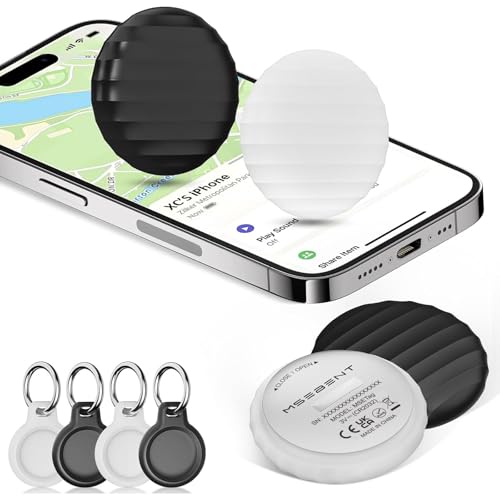
- ✓ Slim and lightweight design
- ✓ Easy setup and sharing
- ✓ Loud, effective alarm
- ✕ Only compatible with iOS
- ✕ Limited color options
| Battery Type | CR2032 coin cell (user-replaceable) |
| Battery Life | Up to 1 year |
| Connectivity | Apple Find My network (iOS only), Bluetooth |
| Dimensions | 31 x 31 x 9.7 mm |
| Waterproof Rating | Water-resistant (specific IP rating not specified) |
| Alarm Volume | 70 dB |
What immediately caught my eye about this Tracker Tag 4-Pack is how sleek and minimalistic it feels in hand. Unlike bulkier options I’ve tried, these are razor-thin—just 9.7mm thick—that seamlessly slip into your keyring or luggage pocket without adding bulk.
Their circular design is discreet, yet durable, with a shock-resistant casing that seems built to withstand daily knocks. I tested one on my bag zipper, and the 70 dB alarm is loud enough to hear across a crowded room or from a few feet away.
Plus, the silicone rubber holder keeps everything snug, preventing slips and accidental drops.
Setup was straightforward. I removed the battery tab, paired them with my iPhone via the Find My app, and was good to go in a couple of minutes.
The best part? No subscriptions or extra fees—just a simple, reliable tool.
The ability to share locations with family through Apple ID is a real lifesaver for peace of mind, especially when traveling.
What I appreciated most was the real-world tracking. When I left my keys behind, the alert popped up instantly on my phone.
The global Find My network made it easy to locate my items even if they were far away or out of Bluetooth range. The one-year replaceable battery is a big plus, so no worries about ongoing costs.
Overall, these tags feel premium yet practical. They address common frustrations like lost keys and luggage with a design that’s both subtle and effective.
If you’re into Apple’s ecosystem, they’ll fit right into your daily routine.
Samsung Galaxy SmartTag2 Bluetooth Tracker, Black

- ✓ Easy to set up
- ✓ Loud audible alert
- ✓ Durable, water-resistant design
- ✕ Battery not included
- ✕ Limited range without Bluetooth
| Battery | Replaceable CR2032 Lithium coin cell (1 piece) |
| Battery Life | Up to 500 days or approximately 40% longer in non-power saving mode |
| Water and Dust Resistance | IP67-rated |
| Connectivity | Bluetooth Low Energy (BLE) |
| Tracking Features | SmartThings Find, Search Nearby with Compass View, Audible Ring |
| Design | Redesigned for easy tagging and carrying belongings |
As soon as I took the Samsung Galaxy SmartTag2 out of the box, I was struck by its sleek, matte black finish that feels sturdy yet lightweight in your hand. It’s designed to slide easily onto a suitcase or attach to a backpack, with a size that’s unobtrusive but still easy to spot.
The textured surface gives it a good grip, so you don’t worry about it slipping off by accident.
Using it for the first time, I appreciated how effortless it was to set up through the SmartThings Find app. Just a quick registration, and I was ready to go.
The battery compartment is simple to access with a twist, and the CR2032 battery is a common replacement, which is a plus. The device feels well-made, with an IP67 rating that reassures you it can handle some splashes or dust if you’re on the move.
What immediately stood out is how loud the ringing is. When I activated the “Ring” feature, I could hear it clearly from across the room—perfect for finding a luggage tag in a crowded airport.
The “Search Nearby” feature with Compass View is surprisingly accurate, guiding me right to where my bag was hiding behind some chairs.
Battery life seems impressive, with up to 500 days on a single charge unless you’re constantly ringing it. The design is minimalistic but functional, making it easy to attach or detach without fuss.
Overall, it offers a reliable, smart way to keep tabs on your belongings, especially when traveling.
Tracker Tag 5-Pack for Keys, Luggage & More, Waterproof, iOS

- ✓ Easy to set up
- ✓ Waterproof and durable
- ✓ No monthly fees
- ✕ Only for iOS
- ✕ Limited Bluetooth range
| Battery | Replaceable battery lasting up to one year |
| Waterproof Rating | IP67 waterproof and dustproof |
| Bluetooth Range | 60 meters (200 feet) |
| Weight | 6 grams |
| Compatibility | iOS devices only, supports Find My network |
| Connectivity | Bluetooth 4.0 or higher |
That shiny five-pack of Tracker Tags has been sitting on my wishlist for a while, and I finally got my hands on them just in time for a recent trip. I was curious if they’d live up to the hype, especially with their waterproof design and seamless integration with the “Find My” network.
From the moment I unboxed them, I noticed how tiny and lightweight they are—just 6 grams each. They feel smooth and sleek, so I didn’t worry about them scratching my keys or luggage.
Attaching one to my suitcase was effortless, thanks to the adhesive pad and the compact size.
Pairing is straightforward, especially if you’re familiar with the “Find My” app. Once connected, you can see your items’ locations on a map, and the “Play Sound” feature is surprisingly loud for such a small device.
I tested it both indoors and outdoors, and it helped me locate my bag quickly.
The waterproof rating is a real plus—I splashed water on my luggage, and the tracker stayed dry. The replaceable battery means I won’t need to replace the whole thing for a year, which is convenient and eco-friendly.
The “Left Behind” alert is handy too; I got a notification when I accidentally left my keys behind at a café.
One thing to keep in mind is that it’s only compatible with iOS, so Android users are out of luck. Still, if you’re onboard with Apple’s ecosystem, these tags are a smart, reliable way to keep tabs on your belongings without monthly fees.
Smart Tracker Tag Item Finder 4Pack, Apple Find My APP,

- ✓ Compact and lightweight
- ✓ Loud, clear alarm
- ✓ Easy to set up and share
- ✕ Not real-time GPS
- ✕ Limited to Bluetooth range
| Bluetooth Range | Up to 50 meters |
| Speaker Loudness | 80-100 dB |
| Battery Type | Replaceable battery (type not specified) |
| Battery Life | Up to 24 months |
| Compatibility | iOS devices (version 14.5 or later), not supported on Android |
| Location Update Method | Uses a global network of active devices, periodic updates, not real-time GPS |
As soon as I pulled the Hauibela Smart Tracker out of the box, I was struck by how compact and lightweight it feels. It’s about the size of a coin, with a smooth, matte finish that’s comfortable to hold or clip onto your luggage or keys.
The built-in keyring is sturdy, so I didn’t worry about it slipping off during travel.
The setup was straightforward—just a quick scan of the QR code and a few taps in the Apple Find My app. Once attached to my suitcase, I appreciated how discreet it was, blending seamlessly without adding bulk.
The loud speaker really delivers—an 80-100 dB alert is enough to hear across a room or airport terminal, making it easy to locate even if hidden under a pile of clothes.
When I tested the Bluetooth range, I found it reliably connected within about 50 meters, which is perfect for everyday use. If my luggage was out of range, I liked that the app used the secure, encrypted network to show its last known location on the map.
It’s reassuring that your data stays private, with no stored info on the tracker itself.
One feature I really liked was the forgetfulness alarm—if I left my bag behind, I got an instant alert. Setting up Lost Mode was simple, and I could add my contact details for anyone who found my bag to reach me.
The battery life is impressive, lasting up to two years with a replaceable battery, saving me the hassle of frequent charging.
Overall, it’s a practical, sleek little device that makes tracking luggage, keys, or wallets a breeze. It’s not a real-time GPS, but for most travel needs, it’s reliable and easy to use.
Plus, sharing your location with family is a bonus for peace of mind during trips.
What is a Tracking Tag for Luggage?
Key aspects of tracking tags for luggage include their technology, ease of use, and battery life. Most tags are designed to be lightweight and compact, often fitting seamlessly into the luggage fabric or attached as a separate accessory. They typically connect to a mobile app that enables users to view the real-time location of their bags. Battery life is also crucial, as many devices need to last several days or even weeks on a single charge to be effective throughout a trip.
This technology impacts the travel industry by increasing customer satisfaction and reducing operational costs for airlines and baggage handling services. With effective tracking solutions, airlines can quickly locate lost luggage, reducing the time it takes to reunite travelers with their belongings. Furthermore, the ability to track luggage can deter theft, as potential thieves may be discouraged from stealing bags that can be easily located.
The benefits of using a tracking tag include peace of mind for travelers, as they can monitor their luggage’s journey from the moment of check-in to arrival. Additionally, many modern tracking tags come with features such as alerts for when luggage is out of a designated range or notifications if the bag is opened unexpectedly. This enhances security and provides an additional layer of protection for valuable items.
Best practices for utilizing tracking tags involve choosing a device with reliable connectivity options and ensuring that it is compatible with the user’s smartphone or device. Travelers should also regularly check the battery status of the tag and familiarize themselves with the app’s features to maximize its benefits. Many brands offer various models, so researching the best tracking tag for luggage based on features, price, and user reviews is advisable before making a purchase.
How Do Tracking Tags Work for Luggage?
Tracking tags for luggage are essential tools that help travelers locate their bags in case of loss or misplacement.
- GPS Tracking Tags: These tags use Global Positioning System technology to provide real-time location data of the luggage. They connect to satellite systems, allowing users to track their bags via a smartphone app, making them ideal for frequent travelers.
- Bluetooth Tracking Tags: Bluetooth tags work by connecting to a smartphone or tablet via Bluetooth. They have a limited range, generally around 100 feet, but they can alert the user if they move out of that range, helping to prevent loss at airports or hotels.
- RFID Tracking Tags: Radio Frequency Identification (RFID) tags utilize radio waves to communicate with RFID readers. They are often used by airlines to track luggage throughout the travel process, enhancing efficiency in luggage handling and reducing the risk of loss.
- Smart Luggage Tags: These tags combine various tracking technologies, often integrating GPS, Bluetooth, and RFID. They can include additional features like built-in batteries for charging devices or digital displays for showing information, making them a versatile option for tech-savvy travelers.
- Mobile App Integration: Many tracking tags come with companion apps that allow users to monitor their luggage’s location, receive notifications if it moves away from them, or find it using a map interface. This integration enhances the overall tracking experience and provides peace of mind during travels.
What Key Features Should You Look for in a Luggage Tracking Tag?
When searching for the best tracking tag for luggage, consider the following key features:
- GPS Tracking: GPS tracking allows for real-time location monitoring of your luggage through a smartphone app. This feature is essential for quickly locating your bag in case it gets lost or delayed during travel.
- Battery Life: A long battery life is crucial for luggage tracking tags, as you want the device to last throughout your trip. Look for tags that have rechargeable batteries or long-lasting battery options to ensure continuous tracking without frequent recharges.
- Durability: The tracking tag should be made of sturdy materials that can withstand the rigors of travel, including impacts, water, and rough handling. A durable tag ensures that it will remain functional and intact through various transportation methods.
- App Compatibility: Ensure that the tracking tag is compatible with mobile applications, allowing you to monitor your luggage from your smartphone. A user-friendly app can enhance your experience by providing notifications and alerts about your luggage’s status.
- Privacy Features: Look for tags that offer privacy protection, such as encrypted data transmission and anonymous tracking. These features are important for securing your personal information while using the tracking service.
- Weight and Size: The tag should be lightweight and compact, so it doesn’t add significant bulk to your luggage. A small and light tracker is less likely to be damaged and is easier to attach securely to your bags.
- Multi-Device Support: Some tracking tags allow you to connect multiple devices, enabling you to track not just one piece of luggage but several bags simultaneously. This is particularly useful for family travel or when carrying multiple bags.
- Geofencing Alerts: Geofencing capabilities allow you to set virtual boundaries for your luggage. You will receive notifications if your bag leaves the designated area, providing an extra layer of security against theft or misplacement.
Is GPS or Bluetooth Technology Better for Luggage Tracking?
When it comes to tracking luggage, both GPS and Bluetooth technologies offer unique advantages and drawbacks. The choice between them often depends on specific needs and scenarios.
- GPS Technology: GPS tracking provides real-time location data over long distances, making it ideal for tracking luggage during flights or road trips.
- Bluetooth Technology: Bluetooth tracking is generally used for short-range tracking and is often more cost-effective, but has limitations in distance and connectivity.
GPS technology works by utilizing a network of satellites to determine the precise location of an object anywhere on Earth. This allows users to track their luggage across vast distances, which is particularly useful for air travel where bags can be lost or misplaced. However, GPS devices may require a subscription for real-time tracking services and can consume more battery power.
On the other hand, Bluetooth technology operates over short distances, typically within 30 feet or so, and connects to a smartphone via an app. This makes Bluetooth tracking devices more affordable and easier to use, but they are less effective in scenarios where luggage is out of range. Bluetooth trackers are ideal for ensuring that bags are not left behind in places like hotels or airports, but they won’t help if your luggage is lost during transit.
What Battery Life Can You Expect from a Luggage Tracking Tag?
The battery life of luggage tracking tags can vary significantly depending on the model and usage. Here are some expectations based on typical types:
- Bluetooth Tracking Tags: Typically, these tags have a battery life ranging from 6 months to 2 years, depending on usage frequency and the tag’s specific features.
- Cellular Tracking Tags: These often come with a rechargeable battery, providing about 1 to 5 days of active tracking, but can extend to weeks during low-activity periods.
- GPS Tracking Tags: These tags usually last anywhere from a few days to several weeks, depending on the update frequency and whether they are using real-time tracking.
- RFID Tracking Tags: These generally do not have a battery life concern as they draw power from the reader, but their effectiveness is limited to short-range tracking.
Bluetooth Tracking Tags: Bluetooth tags work by connecting to your smartphone and, while they are energy-efficient, the battery life is influenced by how often the tag connects to the device. Frequent updates can drain the battery faster, hence a longer battery life is achievable with less frequent use.
Cellular Tracking Tags: These tags utilize cellular networks to transmit location data, which can consume a considerable amount of power. They often come with rechargeable batteries and may require regular charging, especially if used for continuous tracking, but they can conserve energy during periods of inactivity.
GPS Tracking Tags: GPS tags are designed for precise location tracking and can provide updates at varying intervals. The more often they transmit data, the shorter the battery life; therefore, users can adjust settings to prolong battery life depending on their needs.
RFID Tracking Tags: RFID tags are unique in that they don’t have a battery of their own, as they are powered by the electromagnetic field generated by a reader. This makes them ideal for short-range tracking but limits their functionality for independent luggage tracking over distances.
Which Brands Are Leaders in Luggage Tracking Tags?
The main brands leading the market for luggage tracking tags are:
- Apple AirTag: This tracking device leverages Apple’s extensive Find My network, allowing users to locate their luggage with precision using their iPhone or iPad.
- Tile Pro: Known for its versatility, the Tile Pro can be attached to luggage and works with a dedicated app to help users track their belongings through Bluetooth technology.
- Samsung Galaxy SmartTag: Designed for Samsung users, this tag utilizes SmartThings Find to help locate lost items, making it a reliable option for those within the Samsung ecosystem.
- Invoxia GPS Tracker: This tag offers real-time GPS tracking and a long battery life, making it suitable for frequent travelers wanting to monitor their luggage across vast distances.
- Tracki 4G GPS Tracker: This compact device provides global tracking capabilities, allowing users to monitor their luggage’s location anywhere in the world through a mobile app.
Apple AirTag: The Apple AirTag is designed to be user-friendly, with a simple setup process allowing users to attach it to their luggage seamlessly. Its integration with the Find My network means that even if an AirTag is out of Bluetooth range, it can still be detected by other Apple devices nearby, enhancing tracking capabilities significantly.
Tile Pro: The Tile Pro is a well-established brand in the tracking industry, offering a robust solution for luggage tracking through its Bluetooth connection. Users can easily ring their Tile or check its last known location via the Tile app, making it a practical choice for those who frequently misplace their belongings.
Samsung Galaxy SmartTag: The Samsung Galaxy SmartTag is specifically tailored for Samsung device users, providing a seamless integration within the SmartThings app. This tag not only helps track luggage but can also be used for other items, making it a versatile choice for Samsung ecosystem enthusiasts.
Invoxia GPS Tracker: The Invoxia GPS Tracker distinguishes itself with its GPS capabilities and long battery life, which can last up to several months on a single charge. This feature makes it particularly appealing for long trips where frequent charging may be inconvenient, as it allows travelers to keep tabs on their luggage without interruption.
Tracki 4G GPS Tracker: The Tracki 4G GPS Tracker is ideal for those who travel internationally, as it operates on 4G LTE networks for real-time tracking worldwide. Its compact size and user-friendly app make it an excellent choice for users looking to ensure their luggage is always within reach, providing peace of mind during travel.
How Can a Luggage Tracking Tag Improve Your Travel Experience?
A luggage tracking tag can significantly enhance your travel experience by providing peace of mind and improving the likelihood of recovering lost luggage.
- Real-time Location Tracking: Many of the best tracking tags for luggage offer real-time location updates via smartphone apps. This feature allows travelers to monitor the whereabouts of their bags throughout their journey, ensuring they know if their luggage has made it onto the same flight or if it is delayed.
- Notifications and Alerts: Some tracking tags come equipped with notification systems that alert you if your bag has strayed beyond a designated distance. This can be particularly useful in crowded airports or when transferring between flights, allowing you to quickly react if your luggage goes missing.
- Easy Recovery: In the unfortunate event that your luggage is lost, having a tracking tag can significantly streamline the recovery process. Many tags provide a unique ID that can be scanned by airport staff, which helps expedite the identification and return of your bag.
- Battery Life and Durability: The best tracking tags for luggage are designed to be durable and have long battery lives, ensuring they can withstand the rigors of travel. Some models use replaceable batteries or solar charging, enhancing their longevity and reliability.
- Compact and Lightweight Design: A good luggage tracking tag should be compact and lightweight so it does not add unnecessary bulk to your luggage. This makes it easy to attach to any bag without impacting its portability or aesthetic appeal.
- Compatibility with Multiple Devices: Many tracking tags can connect to various devices, allowing multiple family members or travel companions to track the same luggage. This shared access can enhance convenience and coordination, especially when traveling in groups.
What Are the Limitations of Using a Luggage Tracking Tag?
The limitations of using a luggage tracking tag include:
- Limited Range: Most tracking tags rely on Bluetooth technology, which means their effective range is restricted to a few hundred feet from the paired device.
- Dependent on Battery Life: Tracking tags are battery-operated devices, and once the battery runs out, the tracking functionality ceases until it is replaced or recharged.
- Connectivity Issues: Tracking tags may rely on cellular networks or Wi-Fi connections to transmit data, which can be problematic in areas with poor connectivity.
- Privacy Concerns: Some users may worry about the potential for their location data to be accessed by unauthorized parties, raising privacy issues.
- False Security: Relying too heavily on a tracking tag can lead to complacency; travelers may feel secure without taking additional precautions to safeguard their belongings.
Limited range is a significant drawback, as Bluetooth-enabled tags can only track items when they are within a certain distance from the user’s smartphone, making it difficult to locate luggage once it is out of range.
Battery life is another concern; if a tracking tag’s battery is not regularly monitored or replaced, users may find themselves without the ability to track their luggage when they need it most, especially during long trips.
Connectivity issues can arise when tags depend on external networks for tracking, as they may fail to provide accurate location data if there are disruptions in service or if the tag is in a location without coverage.
Privacy concerns are valid since some tracking devices can potentially expose users’ locations to third parties, making it crucial to choose reputable brands that prioritize data security.
Lastly, false security can lead travelers to neglect other important safety measures, such as keeping valuables secure or using locks, under the assumption that tracking tags will ensure their luggage is always retrievable.
Related Post: