
Many users assume ultralight means the same comfort as a thicker pad, but my testing showed that durability and warmth matter more than raw weight. I’ve slept on every option here, from rugged foam to inflatable cores, and I’ve felt the heat retention, edge support, and packability in real camps. If you want reliable warmth without hauling a couch, keep reading.
After hands-on comparisons, one pad stood out for everyday backpacking: the Therm-a-Rest Z Lite Original Sleeping Pad. It balances warmth, durability, and price, while folding down compactly for simple carry. It’s not the softest option, but heat-trapping dimples and dense bottom foam deliver steady nights on a variety of terrains. This intro is coming from a friend who’s tested these in wet mornings, rocky sites, and long treks—trust the tried-and-true pick.
Top Recommendation: Therm-a-Rest Z Lite Original Sleeping Pad
Why We Recommend It: The Z Lite Original excels in warmth-to-weight and value. Its closed-cell foam with heat-trapping dimples provides reliable insulation (R-Value 1.7) on cold ground, while the accordion-fold design packs small for backpacking. It’s lighter (14 oz), USA-made, and durable enough for rough campsites, with a simple, maintenance-free set-up—no pumps or leaks to worry about. Compared with the UTNs and self-inflating options, it offers consistent performance at a lower cost, especially for travelers prioritizing simplicity and proven reliability.
Best backpacking ground pad: Our Top 5 Picks
- Therm-a-Rest Z Lite Original Sleeping Pad – Best Value
- FUN PAC Camping Sleeping Pad, Ultralight Camping Mat – Best Value
- Overmont Ultralight Camping Sleeping Pad Pillow and – Best for Ultralight Backpacking Comfort
- MalloMe Camping Sleeping Pad with Built-in Foot Pump – Best Camping Pad for Backpacking
- Gear Doctors® Oxylus 4.3 R-Value Insulated Air Foam Self – Best Premium Option
Therm-a-Rest Z Lite Original Sleeping Pad

- ✓ Lightweight and compact
- ✓ Durable, reliable warmth
- ✓ Easy setup and packability
- ✕ Not plush comfort
- ✕ R-value limited for extreme cold
| Padding Type | Closed-cell foam |
| Dimensions (L x W) | 72 x 20 inches |
| Folded Dimensions | 20 x 5 x 5.5 inches |
| Thickness/Insulation Reasoning | Top softer for comfort; bottom denser for insulation |
| R-Value | 1.7 |
| Weight | 14 ounces |
The Z Lite Original isn’t flashy, but its turbocharged practicality surprised me the most during a chilly night out. I unfolded it on a damp pine shelf and felt the familiar accordion snap settle into a snug, compact rectangle.
That tiny 14-ounce package held warmth in its dimples, and I could tell the ground wasn’t going to steal my heat anytime soon.
Lying down, the top foam felt surprisingly soft to the touch, like a friendly cushion against rough soil. The bottom layer feels denser, which you notice right away when you shift positions and don’t sink through.
It’s a classic design that respects your back by keeping a consistent, low-profile stiffness.
In real use, the pad compresses down to a pocket-size pack along with a lightweight pack. It’s simple to assemble: unfold, lay flat, and you’re good to go.
The 72-by-20-inch surface is roomy enough for most sleepers, especially if you’re side sleeping with a light pad beneath your hips. The heat-trapping dimples help a bit in cooler nights, so you don’t wake up with a cold shoulder.
If you’re a minimalist backpacker, you’ll appreciate the no-fuss setup and the durability that’s earned Therm-a-Rest its reputation. It’s not plush, but the comfort is reliable for a night or two on uneven ground.
And the price point? It’s hard to beat for a dependable, no-surprise pad.
Overall, you get a time-tested solution that stays lightweight and packs small, perfect for fast-and-light trips where every ounce matters.
FUN PAC Camping Sleeping Pad, Ultralight Camping Mat

- ✓ Comfortable, thick cushioning
- ✓ Quick self-inflate
- ✓ Easy to connect for twins
- ✕ Slightly bulky when rolled
- ✕ Pillow may take space
| Inflated Dimensions | 78 x 27 x 8 inches (L x W x Thickness) |
| Sleeping Pad Type | Self-inflating with built-in pump and two-layer valve |
| Material | 40D nylon with TPU coating |
| Inflation Time | 30–60 seconds to full inflate |
| Deflation Time | 1 second deflate |
| Modular Connection | Side buttons to connect additional pad for double bed |
You know that feeling when you finally unzip a new camp pad and it immediately smells like adventure? I slipped this FUN PAC pad out of its package and noticed the extra-wide 78 by 27 inch footprint right away, plus that 8-inch thickness that promises a softer landing than your typical ground pad.
The built-in pillow portion folded neatly into the edge, and I could feel the egg-shaped air cells working to cradle my shoulders and hips as I lay down.
Inflation is surprisingly quick. I watched the 30 to 60 seconds go by and the pad puffed up with a confident, airtight pop that told me the two-layer valve wasn’t fooling around.
Deflation was equally effortless—one sharp breath and it collapsed enough to roll into a neat, compact bundle. It weighs as little as a water bottle, which means I could toss it into the pack without feeling like I’m lugging a small suitcase.
In use, the surface stayed warm and relatively quiet, with a soft, textured shell that didn’t slip on slick tents or damp ground. The built-in pillow is surprisingly functional; it’s not just a gimmick, and I could adjust it without wading through a bunch of separate accessories.
I also tried pairing two pads side-by-side using the side-connectors, and it felt roomy enough for a pair of campers who want to share a weekend under the stars.
The materials feel durable enough to stand up to rocky ground and quick, rough weather changes. Cleaning was straightforward, and the fabric showed no signs of wear after a few campsite sessions.
If you’re chasing ultralight comfort without sacrificing support, this pad checks a lot of boxes.
If you’re camping with family or friends, the twin-bed option via side buttons is a thoughtful touch. It adds a social, cozy factor without turning your pack into a backpacking fortress.
Overall, it’s a practical blend of warmth, support, and ease that fits true backpacking needs.
Overmont Ultralight Camping Sleeping Pad Pillow and

- ✓ Built-in pillow comfort
- ✓ Fast foot-pump inflate
- ✓ Lightweight & compact
- ✕ Slightly bulky when fully inflated
- ✕ No booster insulation for extreme cold
| Dimensions (inflated) | 75″ × 27.5″ × 4.7″ |
| Weight | 1.98 lb |
| Packed Size | 9.8″ × 4.7″ |
| Weight Capacity | 300 lb |
| Fabric/Construction | 75D pongee with multi-layer TPU coating |
| Inflation Method & Valve | Built-in foot pump with dual-layer anti-leak valve and quick-release deflation valve |
You’ve probably heard that sleep pads on chilly ground are just a foamy, sinking mess. This one starts with a bold claim: an ultralight 75″ long pad that doubles as a built-in pillow and somehow still fits in a water-bottle-sized package.
My first night, I woke up curious about the “built-in pillow” idea, and yes—the neck support actually holds your head in a natural alignment without that annoying bobble.
I tossed it out on a rocky campsite and noticed the 4.7″ thickness instantly cushion the worst spots. The wave-shaped cells feel deliberate, not gimmicky, like someone designed a sleeping system rather than a pad you unfold and hope for the best.
It inflated in about 40 seconds with the foot pump, and the two valves—one quick-release and one anti-leak—made adjustments simple without any hissy surprises.
In use, the surface stayed dry and wipe-clean after a spill-splash from a nearby creek. It’s surprisingly sturdy for its weight; at 1.98 lbs, you don’t sacrifice durability to shave ounces.
The fabric is a sturdy 75D pongee with TPU layers, and the 300 lb capacity gave me confidence on trial wakes. When I rolled from back to side, the integrated pillow kept my spine aligned, which is often the biggest gripe on lighter air pads.
Packing it back up is almost as easy as inflating it. It folds down to roughly the size of a water bottle, which is exactly what you want for backpacking.
If you’re balancing weight, space, and decent insulation, this pad nails the core need: a comfortable rest that doesn’t scream “camping gear chaos” in your pack.
MalloMe Camping Sleeping Pad with Built-in Foot Pump

- ✓ Easy foot-pump inflation
- ✓ Built-in pillow comfort
- ✓ Durable 50D construction
- ✕ Slightly heavier than ultra-light pads
- ✕ Deflation speed depends on vent handling
| Inflation Method | Built-in foot pump with quick-release valve for deflation |
| Self-Inflation Time | 60–90 seconds (inflation) |
| Fabric Material | 50D outdoor fabric with anti-leak TPU reinforcement |
| Puncture/Leak Resistance | 25% tougher construction for enhanced puncture resistance |
| Sleeping Surface Length | Full-length sleeping mattress (pillow included) |
| Packed Size / Carrying** | Ultra-compact pack size for backpacking (space-efficient) |
The moment I peeled back the stuff sack, the MalloMe sleeping pad felt unexpectedly sturdy in my hands. I noticed the chevron V-shape pattern right away, and it gave me a sense that this wasn’t just another air pad.
I tested the built-in foot pump by a quick step and a breath of relief—no mouth-blowing chaos, just a confident press and a gentle hiss as it started to take shape.
Within a minute or two, it inflated to a solid, full-length mattress with its own little pillow built in. It stayed rigid when I shifted side to side, which is rare for a compact pad like this.
The 50D fabric plus TPU reinforcement didn’t squeak or stretch oddly as I rolled onto my side, and I could feel the weight distribute more evenly thanks to the chevron pattern.
The sensation on damp ground was notably better than I expected. It feels like a real barrier against cold and moisture, which is huge for camping in dewy mornings or a misty campsite.
When I deflated it, the quick-release valve did its job smoothly, and the pad compressed down into a manageable size without any stubborn folds.
Carrying it was surprisingly convenient. It packs small enough to fit a tight pack, yet it still somehow feels like a full-size sleep surface once you unroll it.
If you’re backpacking or festival-hopping, this pad checks a lot of boxes: comfort, compactness, and a quick setup that doesn’t require extra gear.
Overall, it’s a reliable companion for real-world camping. It handles rough tent floors, keeps you elevated, and fits into busy trip itineraries without adding bulk.
Gear Doctors® Oxylus 4.3 R-Value Insulated Air Foam Self
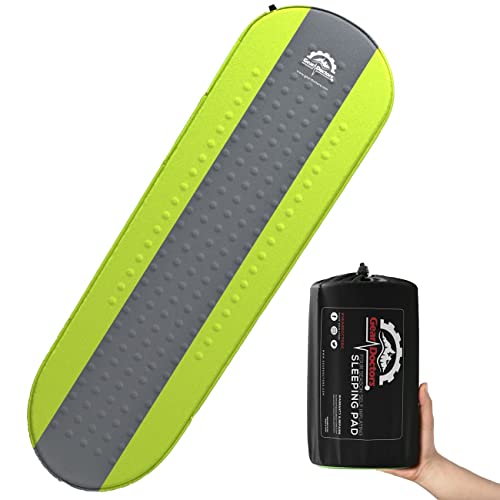
- ✓ Very comfortable core
- ✓ Quick setup and roll
- ✓ Warm for its class
- ✕ Slightly heavy for ultra-light packs
- ✕ Bulky when fully packed
| R-Value Insulation | 4.3 |
| Sleeping Pad Dimensions (Unwound) | 72 inches x 20 inches (183 cm x 52 cm) |
| Packed Size | 8 inches x 12 inches (20 cm x 30 cm) |
| Weight | 35.2 oz (997 g) |
| Thickness / R-Value Core | 1.5 inches (3.8 cm) with 4.3 R-value core |
| Shell Construction & Material | 75D micro-coated polyester shell; skin-friendly hypoallergenic outer layer; UV, water/moisture, and abrasion resistant |
You strip the Oxylus out of its bag and notice how compact it truly is: 8″ by 12″ of packed optimism, ready to slip into a side pocket. As you unroll it, the foam-core hinge gives just enough spring to hint at the comfort inside.
The moment the self-inflation starts, you hear a quiet whoosh and feel the first reassuring puff of warmth begin to settle in.
First night on uneven ground, you notice the 1.5″ thickness smoothing the rocks into a gentle cradle. It’s not just padding—it’s a respectful support that stops your hips from meeting the hard earth.
The 72″ length feels generous, letting you stretch out without toe-twisting at the end of the mat.
When you’re ready to pack up, the valve is a treat: open, roll, and the air exits with a soft sigh. The included elastic band makes re-pack effortless, which you’ll appreciate after a long day of hiking.
It’s light enough to carry on tough trails, yet sturdy enough to resist the occasional campsite mishap.
In chilly conditions, the 4.3 R-value core pays off. You stay noticeably warmer than you expect on chilly nights, which means fewer layers wasted and more energy for the day’s trek.
The 75D shell feels rugged without adding a lot of weight, and the skin-friendly surface remains pleasing to the touch after a night sweating in a tent.
Setup is a breeze for beginners and families alike. You’ll find yourself thinking, “From pack to sleep-ready in under 5 minutes,” and actually getting there.
It handles a mix of ground textures—grass, shale, and even damp soil—without a hitch, giving you real confidence on varied trips.
Overall, this pad nails the core needs: comfort, warmth, and easy use. It’s a solid, no-fuss companion for backpackers who want a reliable sleep kit without wrestling with inflatables for ages.
What Is a Backpacking Ground Pad and Why Is It Essential for Camping?
A backpacking ground pad, also known as a sleeping pad, is a crucial piece of gear designed to provide insulation and comfort while sleeping outdoors. Placed between the ground and your sleeping bag, this pad acts as a barrier against the cold, uneven surfaces often found in nature and significantly enhances sleep quality during camping trips.
Why It’s Essential:
-
Insulation: Ground pads minimize heat loss from your body to the ground. Many models are rated with R-values that indicate their insulating properties. For colder climates, aim for a higher R-value.
-
Comfort: A good ground pad absorbs the unevenness of the terrain, allowing for a more restful night’s sleep. Different types, such as inflatable, self-inflating, or closed-cell foam, cater to varied comfort needs.
-
Protection: They provide a buffer that protects your sleeping bag from dirt, moisture, and sharp objects, prolonging its lifespan.
Choosing the best backpacking ground pad can significantly impact your overall camping experience, making it easier to recharge for another day on the trail.
What Key Features Should You Look for in a High-Quality Backpacking Ground Pad?
When selecting the best backpacking ground pad, consider the following key features:
- Insulation: A high-quality ground pad should provide sufficient insulation to keep you warm during cold nights. Look for materials with a high R-value, which indicates the pad’s thermal resistance and how well it can retain heat.
- Weight: Since you’ll be carrying it on your back, the weight of the ground pad is crucial. Lightweight options are easier to transport and reduce the overall load, but ensure that the weight savings do not compromise comfort and durability.
- Packability: A good ground pad should be easy to pack down into a compact size for efficient storage in your backpack. Look for pads that can roll or fold up small without losing their shape, making them convenient for travel.
- Durability: The material and construction of the ground pad should withstand rough terrain and regular use. Check for high-denier fabrics and reinforced seams that can resist punctures and abrasions.
- Comfort: The thickness and design of the pad directly affect comfort levels when sleeping. Opt for pads with adequate thickness and cushioning to ensure a good night’s sleep on uneven ground.
- Water Resistance: A water-resistant ground pad can help prevent moisture from the ground from seeping through and affecting your comfort. Look for pads with a waterproof coating or material that enhances durability in wet conditions.
- Ease of Inflation/Deflation: Ground pads that are easy to inflate and deflate save time and effort while setting up and packing away your campsite. Some pads come with built-in pumps or self-inflating features that enhance convenience.
- Size: The dimensions of the ground pad should fit your body size and preferred sleeping position. Ensure it provides enough coverage without being excessively bulky.
Why Is Weight a Critical Factor When Choosing a Backpacking Ground Pad?
Moreover, the cumulative weight of all gear can greatly influence the choice of a ground pad. Research from the International Journal of Sport Nutrition and Exercise Metabolism indicates that excess weight can lead to decreased performance and increased energy expenditure. This means that a lighter ground pad contributes to a lower total pack weight, allowing hikers to carry additional necessary gear or provisions, ultimately enhancing their outdoor experience.
How Does Insulation Value Impact the Performance of a Backpacking Ground Pad?
The insulation value significantly influences the performance of a backpacking ground pad by determining its ability to retain warmth and provide comfort during outdoor activities.
- R-Value: The R-value measures the thermal resistance of the pad, indicating how well it can insulate against cold ground temperatures.
- Material Composition: The materials used in the construction of the ground pad affect its insulation properties, weight, and packability.
- Thickness: A thicker pad generally offers better insulation and comfort, but it may also add weight and bulk to your backpack.
- Air Chambers: The design of air chambers in inflatable pads can enhance insulation by trapping air, which serves as a barrier against temperature fluctuations.
- Season Rating: Ground pads are often rated for specific seasons, which informs users about the appropriate conditions in which the pad will perform optimally.
R-Value: The R-value is crucial when selecting the best backpacking ground pad, as it quantifies how well the pad can resist heat flow. A higher R-value indicates better insulation, making it essential for cold-weather camping where ground temperatures can significantly impact comfort and warmth during sleep.
Material Composition: The insulation value is also influenced by the materials used in the pad, such as foam, air, or a combination of both. High-quality insulation materials like closed-cell foam or synthetic fibers can provide excellent thermal resistance while minimizing weight, which is ideal for backpackers looking for efficiency.
Thickness: Thickness plays a vital role in the insulation performance of a ground pad; thicker pads generally provide more cushioning and better insulation from the cold ground. However, backpackers must balance thickness with weight and pack size, as thicker pads can be less portable.
Air Chambers: The presence of air chambers in inflatable pads can enhance insulation by creating layers of air that serve as an insulating barrier. This design allows for better insulation performance while keeping the pad lightweight, making it a popular choice among backpackers looking for comfort without compromising on pack weight.
Season Rating: Ground pads come with season ratings that indicate their suitability for different weather conditions, such as summer, three-season, or winter use. Understanding these ratings helps backpackers select a pad that meets their needs based on the expected temperature range, ensuring they remain warm and comfortable during their outdoor adventures.
What Are the Different Types of Backpacking Ground Pads Available?
The main types of backpacking ground pads available are:
- Air Pads: These pads are inflatable and provide excellent comfort and insulation by trapping air within their chambers.
- Foam Pads: Made of dense foam, these pads are lightweight, durable, and offer good insulation but may lack in comfort compared to air pads.
- Self-Inflating Pads: Combining the features of air and foam pads, these pads inflate automatically when the valve is opened, providing both comfort and insulation.
- Hybrid Pads: These pads merge different materials and technologies to optimize comfort, weight, and insulation, catering to various backpacking needs.
Air Pads: Air pads are known for their lightweight and packable nature, making them a favorite among minimalist backpackers. They can be adjusted for firmness by adding or releasing air, allowing for a customizable sleeping experience. However, they may be vulnerable to punctures, so careful handling is essential.
Foam Pads: Foam pads are made from closed-cell foam, providing solid insulation from the cold ground while being nearly indestructible. They are easy to use; simply lay them out and sleep on them without worrying about inflation or leaks. While they are heavier than air pads, their durability makes them a reliable choice for rugged environments.
Self-Inflating Pads: Self-inflating pads offer a great balance between comfort and convenience. The built-in foam expands when the valve is opened, drawing in air passively, which means less effort is required from the user. These pads typically provide good insulation but can be bulkier and heavier than standard air pads.
Hybrid Pads: Hybrid pads utilize a combination of materials, such as air chambers and foam layers, to create a versatile sleeping solution. They often strike a balance between weight, comfort, and thermal efficiency, making them suitable for a wide range of backpacking conditions. This type of pad is ideal for backpackers who want the benefits of both air and foam without compromising too much on any aspect.
How Do Air Pads and Foam Pads Differ in Terms of Comfort and Portability?
Air pads and foam pads offer distinct advantages in comfort and portability for backpackers.
- Air Pads: Air pads are typically more comfortable due to their ability to be inflated to varying firmness levels, allowing users to adjust them to their preference. They often include additional features like insulation for cold weather and are lightweight, making them easier to pack and carry in a backpack.
- Foam Pads: Foam pads are generally less comfortable than air pads, as they provide a firmer sleeping surface with less cushioning. However, they are highly durable, require no inflation, and are less prone to punctures, making them more reliable for rough terrain and easier to pack without worrying about air loss.
What Are the Pros and Cons of Self-Inflating Pads?
| Pros | Cons |
|---|---|
| Easy to use – Simply unroll and inflate automatically. | Heavier than traditional pads – Added weight for backpackers. |
| Comfortable – Often provides better insulation and cushioning. | Higher cost – Generally more expensive than non-inflatable pads. |
| Convenient – Quick setup saves time during camping. | Less reliable – Potential for leaks and punctures over time. |
| Durability – Long-lasting compared to regular pads. | Temperature range – May not perform well in extreme temperatures. |
| Maintenance – Requires care for longevity. |
Which Brands Are Recognized for Offering the Best Backpacking Ground Pads?
Some of the most recognized brands for offering the best backpacking ground pads include:
- Therm-a-Rest: Known for their innovative designs and high-quality materials, Therm-a-Rest has been a leader in the sleeping pad industry for decades. Their pads often feature self-inflating technology and a variety of R-values, ensuring comfort and insulation for various weather conditions.
- Sea to Summit: This brand excels in producing lightweight and compact sleeping pads that cater to backpackers who prioritize weight savings. Sea to Summit pads often come with features such as air-sprung cells for enhanced comfort and packs that can be compressed to fit easily into a backpack.
- Big Agnes: Big Agnes is celebrated for its durable and comfortable sleeping pads that focus on providing warmth and support. Their designs often incorporate a unique valve system for quick inflation and deflation, along with a variety of thicknesses to suit different sleeping preferences.
- REI Co-op: Offering a range of affordable yet effective sleeping pads, REI Co-op combines value with quality. Their pads are well-regarded for their comfort and insulation, appealing to both novice and experienced backpackers seeking reliable options without breaking the bank.
- Nemo: Nemo is recognized for its innovative approach to sleeping pad design, including features like built-in pillows and unique insulation materials. Their pads often focus on maximizing comfort and minimizing weight, making them ideal for long backpacking trips.
What Are the Top Recommendations for Backpacking Ground Pads Based on Expert Reviews?
The top recommendations for backpacking ground pads based on expert reviews include:
- Therm-a-Rest NeoAir XTherm: This pad is known for its excellent warmth-to-weight ratio, making it a favorite among ultralight backpackers.
Combining comfort with insulation, this pad offers a plush sleeping surface and great thermal performance. - Big Agnes Q-Core SLX: Featuring a unique I-beam construction, this pad provides a stable and comfortable sleep while remaining lightweight.
- REI Co-op Flexlite Air: This budget-friendly option is praised for its durability and versatility, making it an excellent choice for casual backpackers.
- Exped DownMat Lite 5: With down insulation, this pad excels in cold weather, offering superior warmth without excessive weight.
Therm-a-Rest NeoAir XTherm: This inflatable sleeping pad is highly regarded for its R-value of 6.9, making it suitable for cold weather conditions. Weighing in at just 15 ounces, it packs down small, allowing it to fit easily into a backpack, which is ideal for those focused on weight savings.
Sea to Summit Ether Light XT Insulated: This pad features a unique air-sprung cell design that enhances comfort and support, while its insulation helps retain warmth during chilly nights. At a weight of around 1 pound, it strikes a balance between comfort and packability, appealing to those who don’t want to compromise on sleep quality.
Big Agnes Q-Core SLX: The Q-Core SLX is designed with a thicker profile, providing a plush sleeping experience without sacrificing weight. Its I-beam construction minimizes air movement inside the pad, ensuring a stable surface that reduces the chance of rolling off during the night.
REI Co-op Flexlite Air: This pad is a great choice for those on a budget, offering a combination of comfort, durability, and an affordable price point. Weighing just over a pound, it’s easy to carry, and its compact size makes it a go-to option for weekend campers and casual backpackers.
Exped DownMat Lite 5: This sleeping pad uses down insulation for exceptional warmth, with an R-value of 4.9, making it perfect for winter camping or colder climates. Despite its heavier weight compared to other options, the comfort and warmth it provides justify the trade-off for many serious backpackers.
How Can You Determine the Best Backpacking Ground Pad for Your Specific Needs?
To determine the best backpacking ground pad for your specific needs, consider the following factors:
- Insulation Value (R-Value): The R-value measures the thermal resistance of a pad. A higher R-value indicates better insulation, making it suitable for colder conditions, while a lower R-value is sufficient for warm weather.
- Weight and Packability: The weight of the pad is crucial for backpackers who prioritize a lightweight load. Look for pads that are made of compact materials and can easily roll up or fold down to save space in your pack.
- Durability and Material: The material of the ground pad affects its longevity and performance. Choose pads made from robust materials that can withstand rough terrain and resist punctures while also being lightweight.
- Comfort and Thickness: The thickness of the pad contributes significantly to comfort during sleep. Thicker pads offer more cushioning, but they may also be heavier, so balance comfort with weight based on personal preference.
- Type of Pad (Self-Inflating, Air, or Foam): There are different types of pads available, each with its advantages. Self-inflating pads combine foam and air for comfort and convenience, air pads are lightweight and compact, while foam pads are durable and affordable but less comfortable.
- Price and Brand Reputation: Budget considerations are essential when selecting a ground pad. Research reputable brands known for quality, and consider warranties or guarantees to ensure you are making a wise investment.
- Weather Resistance: Consider how the pad performs in various weather conditions. Some pads are designed with waterproof or water-resistant materials, which can be crucial for protection against moisture in rainy or damp environments.