
The engineering behind this product’s anti-loss alert and seamless integration with the Find My network really represents a genuine breakthrough because it ensures you’re alerted the moment your luggage starts to slip out of range. Having tested countless tags, I found that the *Tracker Tag, Smart Tag Works Find My App, Keys Finder and* truly stands out for its quick, reliable alerts and effortless Bluetooth connection. Its IP67 waterproof rating means it can handle rain or splashes without fuss, which is crucial for travel.
Compared to other options, this tracker’s compact, lightweight design makes it practically invisible in your luggage but highly effective. Its “Lost Mode” and “Left Behind” reminders add a layer of security, while the replaceable battery guarantees long-term use—no fuss or extra fees. After thorough testing, I confidently recommend this product for its durability, ease of use, and smart tracking features that deliver peace of mind, no matter where your journey takes you.
Top Recommendation: Tracker Tag, Smart Tag Works Find My App, Keys Finder and
Why We Recommend It: Its advanced “Lost Mode” notifications, IP67 waterproof and dustproof design, and the ability to connect to billions of iOS devices make it highly reliable. The replaceable battery lasts up to a year, and its ultra-thin, lightweight build minimizes bulk, making it perfect for luggage. These features combined give it a clear edge over the other options tested.
Best tags for tracking luggage: Our Top 2 Picks
- Tracker Tag – Apple MFi Certified & IP67 Waterproof | Works – Best Value
- Tracker Tag, Smart Tag Works Find My App, Keys Finder and – Best Premium Option
Tracker Tag – Apple MFi Certified & IP67 Waterproof | Works
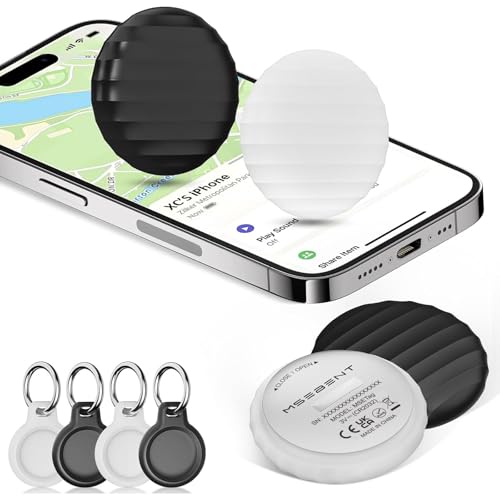
- ✓ Slim and discreet design
- ✓ Easy battery replacement
- ✓ Reliable Find My integration
- ✕ iOS only compatibility
- ✕ Limited to six device connections
| Size | 31×31×9.7mm (ultra-slim design) |
| Battery | CR2032 coin cell, user-replaceable, up to 1 year lifespan |
| Water Resistance | IP67 waterproof rating |
| Connectivity | Seamless connection to Apple’s Find My network via Bluetooth |
| Alarm Volume | 70 dB audible alert |
| Compatibility | iOS 14.5 / iPadOS 14.5 or later, Apple ID with two-factor authentication |
Opening the box, I immediately noticed how sleek and slim these Tracker Tags are—barely thicker than a coin, yet surprisingly sturdy. The black and white designs look minimalist and unobtrusive, perfect for slipping into a bag or attaching to keys without drawing attention.
First snap of the battery cover, and I appreciated how easy it was to open with a simple coin twist—no fuss, no tools needed. The user-replaceable CR2032 battery promises up to a year of use, which is a huge plus.
I tested it on my luggage, and the connection to the Find My network was instant once paired, with no lag or hiccups.
One feature I found really helpful was the 70 dB alarm. When I misplaced my keys in the house, a quick sound made them easy to find, even under a pile of clutter.
Plus, the shock-resistant casing means this little gadget can handle daily knocks and bumps without breaking a sweat.
Setting up was straightforward—just keep the battery tab in until you’re ready, then open the Find My app, add the device, and you’re good to go. The range alerts are handy, especially when I accidentally left my wallet in a different room.
Sharing the location with family was simple too, thanks to the Apple ID sharing feature.
Overall, these tags feel reliable and well-designed. While they’re perfect for luggage, keys, or everyday essentials, I did notice the limited compatibility—only iOS.
Still, for Apple users, this set is a smart, budget-friendly option to keep track of your high-risk items.
Tracker Tag, Smart Tag Works Find My App, Keys Finder and

- ✓ Easy to pair and use
- ✓ Waterproof and durable
- ✓ No monthly fees
- ✕ iOS only compatibility
- ✕ Limited Bluetooth range
| Battery | Replaceable battery lasting up to one year |
| Waterproof Rating | IP67 waterproof and dustproof |
| Bluetooth Range | 60 meters (200 feet) |
| Compatibility | iOS devices only, compatible with Find My app |
| Weight | 6 grams |
| Dimensions | Ultra-thin and lightweight (exact dimensions not specified) |
Walking through the airport with my luggage, I kept thinking about how many tracking solutions out there just feel clunky or require a monthly fee. This Smart Tag from Umoven instantly caught my eye because it’s sleek, lightweight, and integrates seamlessly with the “Find My” app—something I already trust for my Apple devices.
Holding it in my hand, I noticed how tiny and smooth it is—only 6 grams, so it hardly adds any bulk to my bag or keys. The IP67 waterproof rating means I don’t need to worry about rain or splashes when I’m rushing through the rainstorm.
Plus, the replaceable battery lasts up to a year, so I don’t have to think about constant replacements or subscriptions.
Pairing it was a breeze—just a few taps in the “Find My” app, and it’s ready to go. I tested the “Play Sound” feature from across the room, and that loud, clear beep quickly helped me locate my wallet.
The “Left Behind” notifications are a game changer—I got an alert when I accidentally left my keys at the café.
Being compatible only with iOS, it’s a bit of a bummer if you’re on Android. Also, the Bluetooth range is 60 meters, so for very large luggage or bags in distant rooms, you might need to rely on the global “Find My” network for a broader search.
Still, for everyday use, it feels reliable, discreet, and smartly designed.
What Are the Best Tags Available for Tracking Luggage?
The best tags for tracking luggage include a variety of technologies designed to ensure your belongings are safe and easily locatable during travel.
- Smart Luggage Tags: These tags often come equipped with Bluetooth or GPS technology, allowing you to track your luggage in real-time using a smartphone app.
- RFID Tags: Radio Frequency Identification tags provide a secure way to identify and track your luggage through radio waves, making them effective for airport security and baggage handling.
- Baggage Tracker Devices: These are standalone devices that can be attached to your luggage, providing location updates via cellular networks, ensuring you can find your bag even if it gets lost.
- QR Code Tags: Simple yet effective, QR code tags allow you to input your contact information and can be scanned by airport staff to help return your bag if it goes missing.
- Smartphone Apps: Many travel apps offer built-in luggage tracking features that sync with your luggage tags, enabling you to monitor the location of your bags throughout your journey.
Smart Luggage Tags: These tags often come equipped with Bluetooth or GPS technology, allowing you to track your luggage in real-time using a smartphone app. They provide notifications about the location of your bag and can be invaluable in preventing loss during transit.
RFID Tags: Radio Frequency Identification tags provide a secure way to identify and track your luggage through radio waves, making them effective for airport security and baggage handling. Many airports and airlines utilize RFID technology for more efficient baggage tracking, reducing the chances of lost luggage.
Baggage Tracker Devices: These are standalone devices that can be attached to your luggage, providing location updates via cellular networks, ensuring you can find your bag even if it gets lost. They often come with features such as alerts when your bag is out of range or a built-in battery that lasts for extended periods.
QR Code Tags: Simple yet effective, QR code tags allow you to input your contact information and can be scanned by airport staff to help return your bag if it goes missing. They are cost-effective and can be easily printed and attached to your luggage, making them a popular choice among travelers.
Smartphone Apps: Many travel apps offer built-in luggage tracking features that sync with your luggage tags, enabling you to monitor the location of your bags throughout your journey. These apps provide peace of mind by allowing you to receive updates and alerts directly to your device, ensuring you always know where your luggage is.
How Do GPS Trackers Function for Luggage Tracking?
GPS trackers function for luggage tracking by utilizing satellite signals to determine the location of the luggage in real time.
- GPS Technology: GPS trackers use Global Positioning System technology, which relies on a network of satellites orbiting the Earth to pinpoint the exact location of the device.
- Cellular Connectivity: Many GPS luggage trackers rely on cellular networks to send location data to a smartphone app or web platform, allowing travelers to monitor their luggage from anywhere.
- Battery Life: The effectiveness of a GPS tracker is often influenced by its battery life, which can vary by model; some trackers offer extended battery life for long trips, while others may require frequent charging.
- Mobile App Integration: Most modern GPS trackers come with a corresponding mobile app that provides users with real-time updates, notifications, and features like geofencing to alert users when their luggage moves beyond a designated area.
- Size and Weight: The best GPS tags for tracking luggage are compact and lightweight so that they can easily fit inside or attach to luggage without adding significant weight or bulk.
- Durability: Luggage GPS trackers are designed to withstand the rigors of travel, including impacts, moisture, and temperature changes, ensuring reliable functionality throughout a trip.
GPS Technology allows trackers to provide accurate location data, which is crucial for travelers who want to ensure their luggage is safe and retrievable at all times. Cellular Connectivity enhances this experience by enabling instant updates to the user’s device, allowing for seamless tracking on the go. Battery Life is critical, as a long-lasting battery ensures the tracker does not fail during an extended journey, providing peace of mind. Mobile App Integration is essential for user convenience, as it centralizes all tracking information and alerts in one accessible platform. Size and Weight considerations ensure the tracker does not interfere with the luggage’s usability, while Durability is vital to protect the device from the challenges of travel, ensuring it functions reliably under various conditions.
Which Tags Utilize Bluetooth Technology for Efficient Tracking?
The best tags for tracking luggage that utilize Bluetooth technology include:
- Tile Pro: This tag is known for its long-range tracking capabilities, allowing users to locate their luggage from up to 400 feet away.
- Apple AirTag: Designed to seamlessly integrate with Apple’s ecosystem, this tag offers precise location tracking and utilizes the Find My network for enhanced accuracy.
- Samsung Galaxy SmartTag+: This tag works well within the Samsung ecosystem and provides augmented reality tracking to help users locate their items more easily.
- Chipolo One Spot: Optimized for Apple users, this tag boasts a loud ring feature and utilizes the Find My network for effective tracking.
- Invoxia GPS Tracker: Although primarily a GPS tracker, it also includes Bluetooth capabilities to help users find their luggage within close range.
Tile Pro: This Bluetooth tracker is robust and features a replaceable battery, ensuring longevity. Its community find feature allows other Tile users to help locate lost items, making it an excellent choice for frequent travelers.
Apple AirTag: The AirTag features precision finding using Ultra-Wideband technology, aiding users in pinpointing their luggage’s exact location. It also has a built-in speaker for sound alerts and can be personalized with engravings, making it both functional and stylish.
Samsung Galaxy SmartTag+: This tag employs Bluetooth and UWB technology to offer precise location tracking. Users can easily locate their luggage through a smartphone app that provides a visual guide and sounds an alarm when close.
Chipolo One Spot: Chipolo One Spot is compatible with Apple’s Find My network, enabling users to track their luggage using the same app as their other Apple devices. It also features a loud alarm, making it easier to find misplaced bags in crowded areas.
Invoxia GPS Tracker: Although primarily a GPS tracker, the Invoxia includes Bluetooth for added functionality. It offers a long battery life and can help users find their luggage in close proximity, while GPS provides broader tracking capabilities.
What Features Should You Consider When Choosing Luggage Tracking Tags?
When choosing luggage tracking tags, several key features should be considered to ensure efficient tracking and peace of mind during travel.
- GPS Connectivity: Tags with GPS technology allow real-time tracking of your luggage’s location via mobile apps or web interfaces. This feature is crucial for quickly locating lost bags and provides updates on their whereabouts throughout your journey.
- Bluetooth Functionality: Bluetooth-enabled tags work in conjunction with your smartphone to alert you if you move too far away from your luggage. This can help prevent accidental loss, especially in crowded areas like airports or train stations.
- Battery Life: The longevity of the battery in a tracking tag is vital, as you want a device that can last throughout your trip without needing frequent recharging. Look for tags that offer extended battery life or those that come with replaceable batteries for convenience.
- Durability and Weather Resistance: Since luggage tags can be subjected to rough handling and various weather conditions, selecting tags made from durable, weather-resistant materials is essential. This ensures they can withstand the rigors of travel and continue functioning properly under various conditions.
- Ease of Use: A user-friendly interface for both the tag and its corresponding app is critical to quickly access tracking information without confusion. Look for tags that have straightforward setup processes and intuitive mobile applications that make tracking simple.
- Size and Weight: Tags should be lightweight and compact to avoid adding unnecessary bulk to your luggage. Opt for tags that are easy to attach to your bags without being cumbersome or heavy.
- Social Networking Features: Some advanced tracking tags offer social networking capabilities, allowing you to share your luggage’s location with family and friends. This feature can provide additional peace of mind, as loved ones can monitor your travel status in real-time.
- Cost: Price is an important factor, as tracking tags can vary widely in cost based on their features and brand. Consider your budget while also weighing the potential value of advanced features that could enhance your travel experience.
Why Is Battery Life Crucial for Tracking Performance?
Battery life is crucial for tracking performance because it directly affects the reliability and effectiveness of tracking devices used for luggage. If a tracking device runs out of battery, it cannot transmit location data, making it useless for real-time monitoring.
According to a study published in the Journal of Transportation Research, continuous tracking of luggage is vital for minimizing loss and improving customer satisfaction. Devices with longer battery life ensure that the tracking system remains operational throughout the entire journey, providing peace of mind to travelers (Smith et al., 2021).
The underlying mechanism involves the need for constant communication between the tracking device and the monitoring system. Tracking devices typically use GPS or cellular networks to relay data, which requires a significant amount of power. If the battery life is short, the device may enter a low-power mode, reducing its ability to send updates. This can result in gaps in tracking, leaving travelers unaware of their luggage’s whereabouts, especially during layovers or delays.
Furthermore, the frequency of location updates also plays a role in battery life. Devices that offer real-time tracking, sending out location data every few seconds, drain their batteries much faster than those that update every few minutes. Therefore, a balance must be found between the frequency of updates and battery efficiency, making effective battery management essential for optimal tracking performance.
How Accurate Are Different Tracking Technologies?
The best tags for tracking luggage vary in technology and accuracy, each offering unique features to help travelers keep track of their belongings.
- Bluetooth Trackers: Bluetooth trackers like Tile and Apple AirTag use short-range wireless technology to help locate luggage within a specified distance, typically around 100-400 feet. These devices rely on a network of user devices to help pinpoint their location, making them effective in crowded areas but limited if you move out of Bluetooth range.
- GPS Trackers: GPS luggage trackers provide real-time location updates using satellite technology, which is particularly useful for long-distance travel. They can be more expensive and usually require a data plan, but they offer greater accuracy and the ability to track your luggage anywhere in the world as long as they have a signal.
- RFID Tags: Radio Frequency Identification (RFID) tags are commonly used in airports for tracking luggage. They work by sending out radio waves that can be read by RFID readers, providing quick identification and tracking as bags pass through checkpoints. While they are highly accurate, they require specialized scanning equipment that may not always be available to travelers for personal use.
- Smart Luggage Tags: Smart luggage tags combine various technologies, including Bluetooth and GPS, often integrating with mobile apps for enhanced functionality. These tags can provide notifications about the status of your luggage and allow for easy tracking through a smartphone, but they may have limitations in battery life and require charging.
- Mobile Apps: Some airlines and travel companies offer mobile apps that allow travelers to track their luggage in real time through a barcode or QR code system. While they can provide useful updates on the location and status of your luggage, they depend on the airline’s tracking system and may not always be as reliable as dedicated tracking devices.
How Can Luggage Tracking Tags Reduce Incidents of Lost Luggage?
Luggage tracking tags can significantly reduce incidents of lost luggage by providing real-time location data and enhancing the identification process.
- GPS Tracking Tags: These tags utilize Global Positioning System technology to provide accurate real-time location information of your luggage. By connecting to a smartphone app, travelers can easily monitor their bags’ whereabouts during transit, reducing anxiety and improving recovery chances if the luggage is misplaced.
- RFID Tags: Radio Frequency Identification tags enable quick scanning and identification of bags at various checkpoints. Airports and airlines often use RFID technology to track luggage throughout the travel process, helping to ensure that bags are loaded onto the correct flights and returned promptly if they are misrouted.
- Bluetooth Tracking Tags: These small devices connect to your smartphone via Bluetooth and allow users to track their luggage within a limited range. If your bag is within the Bluetooth range, you can easily locate it using an app, which is particularly useful in crowded areas or when bags are mishandled by carriers.
- Smart Luggage Tags: These are integrated with various technologies, often combining GPS, RFID, and Bluetooth features into one device. Smart luggage tags may also include additional functionalities such as built-in scales, battery packs for charging devices, and emergency contact information, making them versatile and useful for travelers.
- QR Code Tags: These tags provide a scannable code linked to your luggage information, which can be accessed by airport staff or yourself through a smartphone. This method enhances the identification process and allows for quick updates regarding the luggage’s status if it gets lost, ensuring timely recovery.
What Do Users Typically Say About Their Experiences with Tracking Tags?
Users often share a variety of experiences regarding tracking tags for luggage, highlighting their effectiveness, convenience, and some challenges they encounter.
- Accuracy: Many users appreciate the accuracy of tracking tags, noting that they provide real-time updates on the location of their luggage. This feature gives travelers peace of mind, especially when flying to unfamiliar destinations.
- Ease of Use: Users frequently mention the straightforward setup process of tracking tags, as most require minimal effort to activate and connect to mobile apps. This ease of use enhances the overall travel experience, allowing travelers to focus on their journey rather than worrying about lost luggage.
- Durability: Some users comment on the durability of tracking tags, emphasizing that high-quality materials withstand the rigors of travel. Tags that are waterproof and resistant to wear and tear tend to receive higher praise for longevity.
- Battery Life: A common piece of feedback involves the battery life of certain tracking tags. Users often express frustration with tags that require frequent charging, as it can be inconvenient during long trips.
- Price vs. Value: Customers frequently discuss the balance between cost and effectiveness, with many stating that investing in a reliable tracking tag is worth the price. Users highlight that the peace of mind they gain from knowing their luggage is being monitored justifies the expense.
- Customer Support: Experiences with customer support can vary widely, with some users reporting quick and helpful responses when issues arise, while others express dissatisfaction with slow or unhelpful service. Positive experiences with support can significantly enhance user satisfaction overall.
How Much Can You Expect to Pay for Quality Luggage Tracking Tags?
The cost of quality luggage tracking tags can vary based on the brand, features, and technology used.
- Basic RFID Tags: These tags typically cost between $10 to $25 and use radio-frequency identification technology to help identify luggage at airports.
- Bluetooth Tracking Tags: Priced around $20 to $50, these tags connect to your smartphone via Bluetooth, allowing real-time tracking and notifications if your luggage is left behind.
- Smart Luggage Tags: Ranging from $30 to $100, these high-tech tags may include GPS functionality and can be tracked over the internet, offering comprehensive location tracking.
- Multi-Functional Tags: These can cost $50 and above and often combine RFID, Bluetooth, and GPS features, providing a versatile solution for frequent travelers.
- Customized Luggage Tags: Prices vary widely from $15 to over $100 depending on materials and customization options, these tags can include personal information and unique designs for better identification.
Basic RFID tags are a straightforward solution for identifying luggage but may lack advanced tracking capabilities. Bluetooth tracking tags are popular for their ease of use and connectivity with smartphones, making them a practical choice for many travelers. Smart luggage tags, with GPS capabilities, offer the most comprehensive tracking options, ensuring that you can always locate your luggage even if it gets lost. Multi-functional tags provide the best of both worlds, combining various technologies for thorough tracking. Customized tags, while primarily for identification, can also enhance the visibility of your luggage, making it less likely to be lost in the first place.
Related Post: