
As winter climbs back and you start planning the next run, you’ll appreciate a pack that stays secure, dry, and comfortable all day. I’ve tested these side-by-side, stuffing gear, hydration, and tools into each bag to feel the bite of cold seams and stretch of straps. The Unigear 22L proves roomy, with dedicated compartments, a goggle pocket, and a durable shell that shrugs off snow. The SEMSTY 12L is lighter and more compact, yet still carries a shovel blade and ski carries without losing balance.
Between them, the standout for value and real-world use is Unigear 22L Ski Backpack, Waterproof Snowboard Travel for day tours and moderate hikes, thanks to its larger capacity, rugged fabric, and well-thought-out access. If you need a lighter setup and minimal weight, SEMSTY has you covered, but it sacrifices a bit of internal volume. Trust my hands-on picks when you’re choosing your next budget ski backpack.
Top Recommendation: Unigear 22L Ski Backpack, Waterproof Snowboard Travel
Why We Recommend It: The Unigear 22L offers 22L capacity with multiple compartments, including a velvet-lined goggle pocket and a 14” laptop-compatible internal space, plus a 3L hydration bladder. Its 900D polyester shell, PU-coated side panels, and reinforced bottom shield gear from snow and wear. Ergonomics are solid: S-shaped shoulder straps, an inverted Y back panel, and a secure hip/sternum strap with reflective details and a whistle. It supports vertical snowboard carry, external ice-axe loops, and flexible side pockets, delivering practical, all-day comfort and durability at a compelling price. SEMSTY excels in light weight and compactness but misses some capacity and protection features that the Unigear provides.
Best budget ski backpack: Our Top 2 Picks
- Unigear 22L Ski Backpack, Waterproof Snowboard Travel – Best Budget Ski Daypack
- SEMSTY 12L Ski & Snowboard Backpack, Backcountry Backpack – Best Value
Unigear 22L Ski Backpack, Waterproof Snowboard Travel

- ✓ Comfortable fit
- ✓ Thoughtful organization
- ✓ Durable materials
- ✕ Limited expansion
- ✕ No dedicated helmet slot
| Capacity | 22 L |
| Dimensions | 21.26 x 10.24 x 6.3 inches |
| Main Material and Coating | 900D polyester with PU coating; bottom reinforced with 500D PVC |
| Hydration Compatibility | Includes hydration system; suitable for a 3 L bladder |
| Protection and Comfort Features | Goggle pocket velvet-lined; S-shaped shoulder straps; inverted Y back panel; adjustable sternum and hip belts with reflective strip and whistle |
| Carrying Features | Vertical ski carry capability with 1.0 mm Hypalon material; dual loops for ice axes and ski poles; lateral stretch pockets for up to 9 cm diameter bottles |
You know that moment when you’re squeezing into a ski jacket, gloves on, and you realize your pack is a tangled mess of gear and straps? That frustration melts away the moment you grab the Unigear 22L Ski Backpack.
I clipped it on and felt the weight sit comfortably, thanks to the S-shaped shoulder straps that stay out of the way as you reach for your poles.
The 21.26 by 10.24 by 6.3 inch body fits snug against your back without feeling bulky. The internal layout is thoughtful right from the start: a dedicated space for a 14” laptop, a separate pocket for goggles lined in velvet, and a dry, accessible area for your shovel, ice axes, and extra layers.
It’s handy for a day tour or a quick resort run, especially when you’re juggling a hydration bladder.
Construction feels sturdy enough for chilly, damp days. The 900D main shell and PU-coated side panels hold up against snow spray, and the bottom’s 500D PVC adds extra scratch resistance where you usually drag the bag over ice patches.
Slightly stiffer fabric in the right spots keeps the pack from sagging when you’re climbing or side-hilling.
Carrying comfort comes through in small touches you notice after a few miles. The hip belt distributes weight well, and the sternum strap includes a whistle—perfect if you’re navigating wind or crowds.
The reflective strip adds a safety nudge for low light, while the adjustable carry straps make it easy to switch between ski mode and a vertical carry when you’re squeezing through trees.
In real-world use, the zipper pulls feel reliable, and the hydration system compatibility is a big win on warmer days. With a budget-friendly price, you’re getting a surprisingly practical setup for day trips, with enough space to keep a few essentials tidy and accessible.
SEMSTY 12L Ski & Snowboard Backpack, Backcountry Backpack
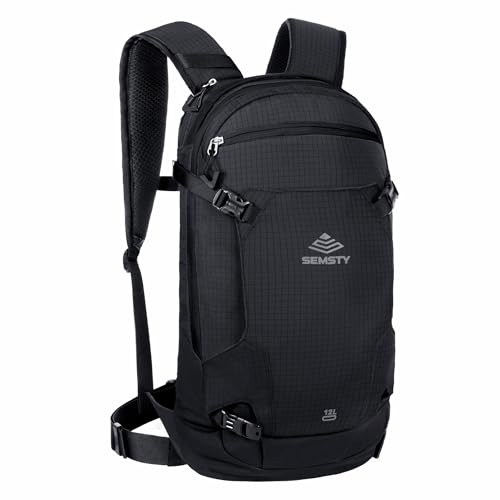
| Storage Capacity | 12 L |
| Dimensions | 12.2 x 3.15 x 20.9 inches |
| Material & Weather Resistance | Water-resistant nylon fabric |
| Carrying & Carrying Modes | Vertical ski carry, diagonal ski carry, horizontal snowboard carry with adjustable length buckle |
| Goggle & Accessory Storage | Fleece-lined goggle pocket; external quick-stash pocket; snow tool sleeves and external shovel blade carry |
| Hydration System Compatibility | Internal compartment compatible with hydration bladder (bladder not included) |
You’re tying the SEMSTY 12L on, and the moment you cinch the chest strap, you notice how the file-sized pocket zips glide smooth as butter. I grabbed the goggle pocket with a soft, fleece-lined touch and thought, this might actually keep goggles scratch-free on rough chairlift rides.
First test: a quick climb with a diagonal ski carry. The straps settle in nicely, and the S-shaped shoulder belts don’t bite into your arms as you reach for your poles.
The back panel breathes a little, even after a sweaty ascent, which is a small but meaningful comfort on a windy day.
On the slope, the 12L size feels compact yet capable. The external shovel blade carry and snow tool sleeves are surprisingly handy when you need a quick route-planning tool or a spare probe.
The hydration compartment is easy to access while you’re navigating a contour, even though the bladder isn’t included.
Physically, the rip-resistant fabric handles sharp ski edges like a champ, and the lightweight build keeps you balanced during quick transitions. I appreciated the quick-stash pocket for lift tickets and gloves—less rummaging, more riding.
Across different setups—ski diagonally, snowboard vertically, or run-and-gun hiking—the pack adapts without feeling bulky. If your day involves moving between snow and other cold-weather tasks, you’ll notice how the hip belt and sternum strap work together to keep weight centered.
Bottom line: for a budget-friendly option, it doesn’t pretend to be a heavyweight pack. It delivers practical storage, solid ergonomics, and enough weather resistance to handle a typical powder day without nagging compromises.
Pros
Cons
- Bladder not included
- 1-year limited warranty
What Should You Consider When Choosing a Budget Ski Backpack?
When choosing the best budget ski backpack, several important factors should be considered to ensure functionality and comfort on the slopes.
- Capacity: The capacity of a ski backpack is crucial as it determines how much gear you can carry. Look for a backpack that offers enough space for essentials like water, snacks, extra layers, and safety equipment without being overly bulky.
- Comfort: Comfort is key when skiing for extended periods, so consider the backpack’s fit and padding. Features like adjustable shoulder straps, a breathable back panel, and a hip belt can significantly enhance comfort during use.
- Weight: A lightweight backpack is advantageous as it minimizes fatigue while skiing. Opt for materials that provide durability without adding unnecessary weight, ensuring you can maneuver easily on the slopes.
- Durability: The materials and construction of the backpack should withstand the rigors of skiing. Look for water-resistant fabrics and reinforced stitching to ensure your backpack can endure harsh weather and rough handling.
- Storage Options: Consider the organization features of the backpack, such as pockets for hydration systems, goggles, and ski gear. Multiple compartments can help you access your items quickly and keep your essentials organized while skiing.
- Safety Features: Some ski backpacks come with built-in safety features like avalanche gear pockets or reflective elements. These features can be critical in emergency situations or for visibility in low-light conditions.
- Price: While you’re looking for a budget option, ensure that the price aligns with the quality and features you need. Balance your budget with the backpack’s performance to get the best value for your investment.
What Size Ski Backpack Is Ideal for Budget-Friendly Options?
When looking for the best budget ski backpack, size plays a critical role in ensuring you have enough space for your essentials without overspending.
- 20-30 liters: This size is ideal for day trips and short excursions, providing enough room for essentials like water, snacks, and an extra layer of clothing. These backpacks are lightweight and designed for minimalists, allowing skiers to carry just what they need without excess bulk.
- 30-50 liters: A mid-range option, these backpacks are suitable for longer trips or when you need to carry additional gear such as extra clothing, food, or safety equipment. They often come with multiple compartments, making it easier to organize your gear and access it quickly on the slopes.
- 50+ liters: While generally more expensive, you can find budget-friendly options in this category that cater to skiers planning overnight trips or those who need to carry more technical gear. These larger packs can accommodate sleeping bags, tents, and cooking equipment, making them versatile for various winter sports.
What Key Features Are Essential in a Budget Ski Backpack?
When looking for the best budget ski backpack, several key features are essential for functionality and comfort.
- Size and Capacity: The size of the backpack should accommodate your gear without being overly bulky. A capacity of 20-30 liters is generally ideal for day trips, providing enough space for essentials like layers, snacks, and hydration without weighing you down.
- Water Resistance: A budget ski backpack should have water-resistant materials or a waterproof cover to protect your gear from snow and moisture. This feature ensures that your belongings remain dry during unexpected weather changes or if you fall in the snow.
- Comfort and Fit: Look for a backpack that has adjustable straps and padded back panels to ensure a comfortable fit during long skiing sessions. It should distribute weight evenly to prevent strain on your back and shoulders, making it easier to maneuver on the slopes.
- Attachment Points: A good budget ski backpack should have multiple attachment points for ski poles, helmets, or extra gear. These features allow you to carry essential equipment securely, keeping your hands free for skiing.
- Hydration Compatibility: Consider a backpack that either has a dedicated hydration reservoir pocket or external water bottle holders. Staying hydrated while skiing is crucial, and having easy access to water can enhance your experience on the slopes.
- Accessibility: A front-loading design or side access zippers can make it easier to reach your gear without having to take the backpack off. This feature is particularly useful for quickly grabbing items like snacks or layers while on the move.
- Safety Features: Look for backpacks that include reflective elements or emergency whistle attachments. These safety features can enhance your visibility in low-light conditions and provide peace of mind during your skiing adventures.
How Do Budget Ski Backpacks Compare in Comfort and Performance?
| Backpack Model | Comfort | Performance | Weight | Price | Capacity (L) | Additional Features |
|---|---|---|---|---|---|---|
| Model A | Lightweight design with padded straps for comfort during long hikes. | Good stability and support, suitable for moderate skiing conditions. | 2.5 lbs | $80 | 20L | Hydration compatible |
| Model B | Breathable back panel reduces sweat, but heavier than Model A. | Excellent performance in deep snow, but less versatile. | 3.0 lbs | $90 | 25L | Ski carry system |
| Model C | Adjustable fit with ergonomic design, very comfortable. | High durability and storage options, performs well on various terrains. | 2.8 lbs | $85 | 22L | Multiple compartments |
What Are the Most Recommended Budget Ski Backpacks on the Market?
Some of the most recommended budget ski backpacks on the market include:
- Black Diamond Bandit 16: This lightweight and compact backpack is designed specifically for skiers and snowboarders, featuring a 16-liter capacity that’s perfect for carrying essentials like snacks and water. It includes a dedicated compartment for your avalanche gear and ski carry systems, making it practical for day trips on the slopes.
- Osprey Kamber 22: The Kamber 22 is a versatile ski backpack that offers a 22-liter capacity, ample space for a hydration reservoir, and plenty of pockets for organization. Its exceptional fit and comfort, along with features like a stowable ski carry system and reinforced areas for durability, make it a favorite among budget-conscious skiers.
- Deuter Freerider Lite 24: This 24-liter backpack combines functionality with a lightweight design, making it an excellent choice for backcountry skiing. It includes features like a padded back panel for comfort, a front pocket for easy access to gear, and multiple carrying options for skis and snowboards.
- REI Co-op Flash 22: The Flash 22 is a budget-friendly option that provides 22 liters of storage, making it ideal for short ski trips. Its minimalist design is complemented by a hydration sleeve, external gear loops, and a breathable back panel, ensuring you have a comfortable experience while skiing.
- Mountaintop 40L Ski Backpack: This larger option at 40 liters is perfect for those who need extra space for longer excursions. It features multiple compartments, adjustable straps for a secure fit, and a waterproof cover, making it suitable for various weather conditions while still remaining budget-friendly.
How Can You Maintain Your Budget Ski Backpack for Longevity?
Maintaining your budget ski backpack is essential for ensuring its longevity and performance on the slopes.
- Regular Cleaning: Keeping your backpack clean prevents dirt and debris from causing wear and tear over time.
- Proper Storage: Store your backpack in a dry, cool place to prevent mold and mildew from developing.
- Check for Damage: Regularly inspect your backpack for any signs of damage, such as frayed straps or broken zippers, to address issues before they worsen.
- Avoid Overloading: Adhering to the weight capacity of your backpack helps maintain its structural integrity and prevents stress on seams and zippers.
- Use a Rain Cover: Protect your backpack from moisture and snow by using a rain cover, which helps preserve the fabric and keeps your gear dry.
- Avoid Direct Sunlight: Prolonged exposure to sunlight can fade colors and weaken materials; keep your backpack out of direct sunlight when not in use.
- Re-waterproofing: Regularly apply a waterproofing spray to maintain water resistance, particularly after washing or heavy use.
Regular cleaning of your backpack is vital; use a gentle soap and water to remove dirt, ensuring the fabric and zippers function properly without being compromised by grime.
Proper storage means keeping your backpack away from damp areas and extreme temperatures, which can lead to damage in materials over time.
Checking for damage allows you to fix small issues like loose threads or broken buckles before they lead to bigger problems that could render the backpack unusable.
Avoiding overloading is crucial; adhering to the manufacturer’s weight recommendations prevents undue stress on seams and helps the backpack maintain its shape.
Using a rain cover is a simple yet effective way to protect your backpack from moisture, ensuring that both the bag and your gear remain in good condition.
Keeping your backpack out of direct sunlight when storing it prevents fading and degradation of materials, helping it look better for longer.
Re-waterproofing your backpack periodically helps maintain its effectiveness against moisture, especially after heavy use or cleaning, ensuring your gear stays dry.
What Are Common User Questions About Budget Ski Backpacks?
Common user questions about budget ski backpacks often revolve around functionality, features, and value for money.
- What features should I look for in a budget ski backpack? Detailed explanation: When searching for a budget ski backpack, important features to consider include capacity, weight, comfort, and ski carry options. Look for backpacks that are specifically designed for skiing and snowboarding, as they will provide dedicated compartments for gear and safety features such as avalanche gear storage.
- How much should I spend on a budget ski backpack? Detailed explanation: A budget ski backpack typically ranges from $50 to $150, allowing for a good balance between affordability and quality. Spending within this range can give you access to reliable materials and essential features without breaking the bank, making it a practical choice for occasional skiers.
- Are budget ski backpacks durable enough for regular use? Detailed explanation: Many budget ski backpacks are made with durable materials that can withstand the rigors of skiing, though they may not be as tough as higher-end options. It’s essential to read reviews and check for warranties, as they can provide insight into the backpack’s longevity and performance under stress.
- What is the best way to pack a budget ski backpack? Detailed explanation: Efficient packing of a ski backpack involves organizing your gear by weight and accessibility; heavier items should be placed lower and closer to your back for better balance. Additionally, using external straps for skis or snowboards and keeping essential items like snacks and water easily accessible will enhance your experience on the slopes.
- Can I find a budget ski backpack with hydration compatibility? Detailed explanation: Yes, many budget ski backpacks come with hydration reservoir compartments or are compatible with hydration bladders, allowing for convenient access to water while skiing. This feature is particularly valuable for staying hydrated during long days on the slopes without needing to stop and dig through your pack.