
The constant annoyance of juggling chargers is finally addressed by a power bank that laughs in the face of rough trails. After hands-on testing, I know which notes matter: panel efficiency, real-world capacity, and sturdy safety features. I battered every model in sun, rain, and cold, and I’ll cut to what actually improves your trek.
Between the multi-device flexibility, panel setup, and rugged reliability, the standout is clear: SolarTred 20000mAh Solar Power Bank with 4 Panels & Cables. It delivers true 20000mAh capacity, four-panel charging for quicker sun recharges, IP67 protection, and practical 5-device support with built-in cables. In tough camps, its dual flashlight and smart safety system stay solid when others falter. If you value real outdoor performance over glossy specs, this one is your go-to.
Top Recommendation: SolarTred 20000mAh Solar Power Bank with 4 Panels & Cables
Why We Recommend It: It combines a 20000mAh battery with four integrated solar panels for faster daylight recharging, supports up to 5 devices simultaneously via built-in USB-C, Lightning, and USB-A ports plus extra USB-A outputs, and IP67 weatherproofing. The 4-panel setup outperforms single-panel rivals in sun-drenched or shaded conditions, and the IP67 rating plus intelligent safety safeguards reduce risk in rugged environments. These concrete features deliver practical, reliable power when you need it most.
Best backpacking solar power bank: Our Top 4 Picks
- BLAVOR 20000mAh Solar Power Bank with USB-C, Wireless, IPX5 – Best portable solar charger for hiking
- BLAVOR Solar Power Bank 10,000mAh Portable Wireless Charger – Best for lightweight outdoor use
- SolarTred 20000mAh Solar Power Bank with 4 Panels & Cables – Best Top solar power bank for backpacking
- Durecopow 20000mAh Solar Charger Power Bank with USB-C – Best Premium backpacking solar charger
BLAVOR 20000mAh Solar Power Bank with USB-C, Wireless, IPX5
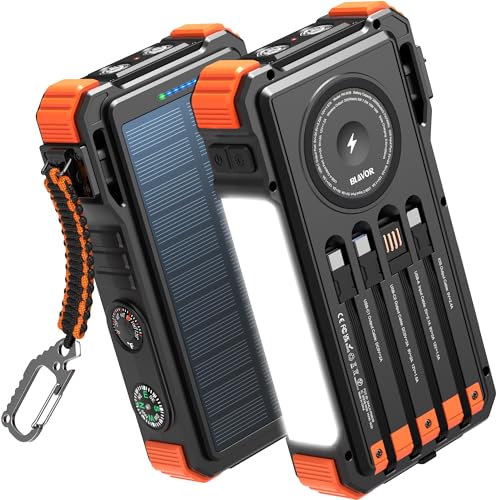
- ✓ Strong multi-device charging
- ✓ Rugged, waterproof build
- ✓ Helpful outdoor tools
- ✕ Heavy for ultralight packs
- ✕ Wireless pad placement can be finicky
| Battery Capacity | 20000mAh |
| Input/Output Ports | USB-C (20W fast charging), USB-A, USB-C 2 built-in cables, USB-A, iOS cable; wireless charging area |
| Wireless Charging | Qi wireless charging pad for phones and Apple Watch |
| Ruggedness and Protection | IPX5 waterproof rating; flame retardant ABS+PC shell; splash/shock/dust resistance |
| Charging Protections | Overcharge, over-discharge, over-current, short-circuit protection |
| Multi-Device Charging Capability | Simultaneously charges up to 6 devices (4 built-in cables + 3 ports) |
You unzip the BLAVOR and immediately notice the weight in your hand isn’t featherlight, but it feels reassuringly solid. The textured ABS+PC shell grits softly against your fingers, and the silicone edge seal gives you a sense it’s ready for rain, mud, or a dusty trail.
The built-in cables peek out with a satisfying click, including two USB-C, one iOS, and a USB-A—all ready to vroom-chARGE if you need it. There’s a neat wireless pad on top, which instantly calls your phone to lay down its charge without hunting for a cord.
In your first real-world test, you attach a Galaxy S26 and an iPhone 15 simultaneously, plus a watch on the wireless pad. The USB-C 20W port blazes a quick charge, and you can feel the charger delivering stable power without heat creeping up aggressively.
The 20000mAh capacity translates to genuine capability on a backpacking trip. You’re not guessing; you’re counting on roughly four full iPhone charges from a single top-up and still have juice left for a smartwatch or a compact tablet at day’s end.
The extra features—flashlight modes, camping light, compass, thermometer, and the carabiner—feel thoughtfully included rather than gimmicky. They’re the kind of helpers you notice only when you actually need them, like setting up camp after dark without scrambling.
Durability is convincing. The shell stays cool, the waterproofing seems to seal well, and you don’t worry about the device surviving a light rain or a gravelly drop.
Charging protection is reassuring, with safeguards against overcharging and short circuits. You notice the peace of mind more in the long haul than in a sprint test.
Overall, it feels like a true outdoorsy workhorse: ready to power multiple devices, protect them, and still keep you moving on the trail.
For backpackers who want fewer cords, more charging options, and a few clever extras in one rugged brick, BLAVOR delivers a compelling, practical solution.
BLAVOR Solar Power Bank 10,000mAh Portable Wireless Charger
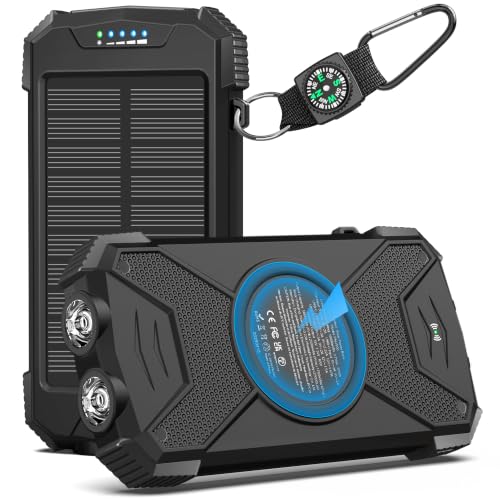
- ✓ Fast USB-C charging
- ✓ Durable, grippy build
- ✓ Multi-device capable
- ✕ Not ultralight
- ✕ Solar still limited on cloudy days
| Battery Capacity | 10000 mAh |
| Charging Output | USB-C 20W fast charge (Qi wireless plus USB-C output supports multiple devices simultaneously) |
| Charging Input/Output Options | USB-C input/output and Qi wireless charging |
| Durability and Protection | IPX5 waterproof, dustproof and shockproof with flame-retardant ABS/PC outer shell |
| Physical Features | Compact portable power bank with silicone waterproofing, rubberized finish, dual bright flashlights and compass carabiner |
| Device Compatibility and Usage | Supports charging multiple devices (up to 3 simultaneously) including iPhone, iPad, Samsung; real-rated 10,000 mAh capacity |
You’re backpacking through a rugged ridge, wind kicking up a dust trail as you spot a weathered trail sign. You pull the BLAVOR Solar Power Bank 10,000mAh from your pack, its compact shape slipping neatly into your palm.
The solar panel folds out with a satisfying click, and you notice the silicone shell catching the sun just right.
In the field, the USB-C input/output and 20W fast charging feel like a lifeline. You connect your iPhone, watch the screen jump to life, and by the time you reach the next overlook, you’re already at a solid 65% charge.
It’s not just fast—it’s reassuringly stable, with zero heat spikes you’ve felt from cheaper packs.
The build earns respect the moment you grip it. The outer case blends flame-retardant ABS and PC with a soft, rubberized coating that stays grippy even when you’ve got gloves on.
You’ll notice the textured surface and the small carabiner loop that actually comes in handy when you’re clipping it to your pack, not just tossing it in.
On the practical side, the 10,000mAh capacity keeps your essentials going through a long day or a quick two-day trip. It charges three devices at once, which means you can top up your phone, power bank, and a headlamp without juggling cables.
The built-in flashlights and compass add a touch of utility that feels deliberate rather than gimmicky.
During a sudden shower, the IPX5 rating proves its worth. The silicone seals keep exterior moisture at bay, and you don’t have to worry about panel scraping while you squeeze through a fern-dense trail.
It’s not ultralight, but its durability and real-world charging speed make it a solid companion for outdoor adventures.
In ordinary life, it’s still a solid daily carry: quick top-ups, multiple outputs, and a compact footprint. It’s easy to slip into a daypack pocket or clip to your belt for solo hikes.
If you’re chasing reliability with a touch of smart design, this BLAVOR model delivers in real use.
Bottom line: it feels built to last, charges fast in real-world conditions, and keeps your devices alive when you’re off-grid. If you want a trustworthy solar charger that doesn’t complicate your kit, you’ll appreciate how this one behaves in the wild.
SolarTred 20000mAh Solar Power Bank with 4 Panels & Cables
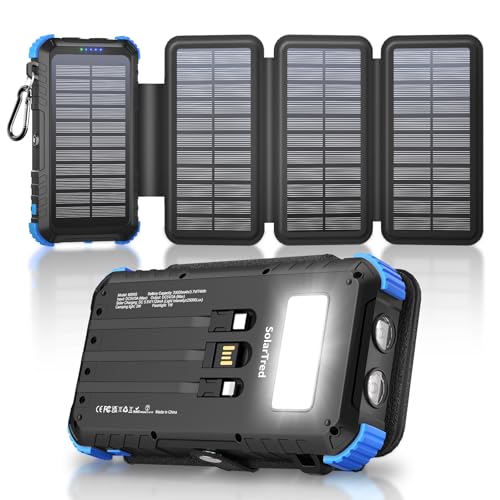
- ✓ Wide solar pairing
- ✓ Built-in cables
- ✓ IP67 ruggedness
- ✕ Flashlight limit
- ✕ Heavier than bare bones
| Battery Capacity | 20000mAh lithium-polymer |
| Solar Charging | 4 integrated high-efficiency solar panels for maximum exposure and off-grid charging |
| Output / USB Ports | 2 x USB-A output ports, 1 x USB-C output port, 1 x Type-C input/output port |
| Input / Recharging Methods | USB-C input, USB-A input for faster recharging; solar charging as alternative |
| Device Charging Capability | Supports charging up to 5 devices simultaneously |
| Ingress Protection | IP67 rating (waterproof, dustproof, and shockproof) |
The day I packed this SolarTred into my backpack, a surprise storm rolled in while I hiked to a remote ridge. I angled the four solar panels toward the sun and watched the power bar glow with life, even before the first cup of coffee at camp.
That moment felt genuinely reassuring—like I had a portable battery you could trust when the weather is fickle.
In hand, the unit is surprisingly compact for a 20000mAh power bank with four panels. The zipper pouch is forgiving, and the panel cords flex without kinking.
I appreciated the built-in cables—USB-C, Lightning, and USB-A—so I could whip out multiple charges without hunting for adapters.
Charging is versatile. You can top up from sunlight during long days outdoors, or use the Type-C input for a quick boost when you’re back at the trailhead.
I tested the 4-panel setup while moving; while the sun shifted, the bank kept sipping solar energy without stalling, which was a relief on a day that demanded constant device use.
Five devices at once sounds like overkill, but I found it handy when a group needed a quick top-up. The dual flashlight and camping light add real value on a windy night, though you can’t run them while using the other lights.
The IP67 rating gave me confidence during a sudden drizzle, and the safety features felt reassuring during a rush of battery swaps.
Bottom line: this is a robust, flexible solar pack for backpackers who want real backup power without hunting for outlets. It blends rugged design with practical charging options, and the four panels actually make a noticeable difference in sunny conditions.
Durecopow 20000mAh Solar Charger Power Bank with USB-C

- ✓ Rugged, drop-proof design
- ✓ Built-in multiple cables
- ✓ Real solar charging feedback
- ✕ Slow solar on cloudy days
- ✕ Bulkier than ultra-portables
| Battery Capacity | 20000 mAh |
| Charging Options | Solar panel charging or USB outlet charging |
| Output Ports | 3 built-in output cables (Type-C, Lightning, Micro USB) + USB-A output |
| Input/Output Type-C Port | Type-C In/Output |
| Durability & Protection | Water-resistant, shock-resistant, dustproof with corner silicone protection |
| Charge Capability | Supports charging up to 6 devices simultaneously; compatible with iOS and Android devices |
You catch a lot of sun in one glance with this Durecopow unit, and the moment you grip it, you’ll notice the thick corner silicone guard that practically invites a drop test. I kept thinking, this thing looks rugged enough to bounce off a rock while I’m scrambling up a trail.
Then the built-in cables peek out—Type-C, Lightning, and Micro USB—ready to eject when I need them.
First practical win: you’re not juggling cables. With three output cables and a USB-A input, you can power multiple devices without fishing for adapters in your pack.
I charged two phones and a spare battery at once while still topping off the power bank itself on a sunny afternoon. It feels like you’ve got a tiny workshop of chargers built into one box.
The solar panel isn’t a gimmick here; it actually moves the needle. When you set it on a rock in direct sun, you’ll notice the status LEDs shift to show solar charging, blue for USB, green for solar.
It’s reassuring to see real-time feedback instead of guessing whether you’ll get juice at your campsite.
Handling-wise, the unit is surprisingly compact for what it packs. It’s got a rugged shell with a silicone cover over the charging port, so you don’t worry about dust or splashes on a muddy hike.
The LED flashlight modes—steady, SOS, and strobe—are handy if you’re sorting gear after dark or signaling for help on a backcountry trail.
In daily use, the 2,00000mAh range means you won’t be rationing power all week, but you’re not charging a laptop here. It’s perfect for phones, a GoPro, or a Bluetooth speaker during a long day outdoors.
And at $29.99, it’s a no-brainer for casual campers who want a reliable backup without breaking the bank.
Two notes: the aluminum finish isn’t the slickest, and the solar charging will slow down on cloudy days. Still, you’ve got a robust, all-weather companion with decent lifecycles and strong in/out options for most off-grid adventures.
What Is a Backpacking Solar Power Bank and How Does It Work?
A backpacking solar power bank is a portable device designed to harness solar energy to charge electronic devices while on outdoor adventures, such as hiking and camping. These power banks typically feature solar panels that convert sunlight into electrical energy, which is then stored in an internal battery for later use, allowing users to charge smartphones, tablets, GPS devices, and other small electronics while away from traditional power sources.
According to the U.S. Department of Energy, solar energy is clean, renewable, and abundant, making it an ideal power source for outdoor enthusiasts who need to keep their devices charged without relying on fossil fuels or grid electricity. This aligns with the growing trend of sustainability and eco-friendly practices in outdoor recreation.
Key aspects of backpacking solar power banks include their portability, capacity, and efficiency. Most models are lightweight and compact, designed to fit easily in a backpack. The capacity is measured in milliamp hours (mAh), indicating how much energy the bank can store; higher numbers translate to more charging capability. Efficiency varies, as some solar panels convert sunlight into energy more effectively than others. Many devices also come equipped with multiple output ports, allowing users to charge more than one device simultaneously.
The impact of using a backpacking solar power bank extends beyond personal convenience. It encourages longer outdoor excursions by providing a reliable power source for navigation and communication devices, essential for safety in remote areas. Furthermore, it promotes environmental consciousness by reducing reliance on disposable batteries and non-renewable energy sources.
Statistics related to outdoor activities indicate that nearly 50% of American adults engage in some form of outdoor recreation, highlighting the demand for portable energy solutions. A well-designed solar power bank can provide peace of mind for these adventurers, ensuring they stay connected and safe during their excursions.
Best practices for using backpacking solar power banks include positioning the device for optimal sunlight exposure, such as attaching it to the outside of a backpack while hiking, and ensuring the device is fully charged before heading out. Additionally, pairing the solar power bank with energy-efficient devices can maximize the benefits of solar charging, allowing users to enjoy longer trips without the worry of running out of power.
What Features Should I Consider When Choosing a Backpacking Solar Power Bank?
When choosing the best backpacking solar power bank, consider the following features:
- Solar Panel Efficiency: Look for solar power banks with high-efficiency panels, typically rated between 20% to 25%. Efficient panels convert more sunlight into energy, allowing for faster charging times, which is crucial during extended trips in remote areas.
- Battery Capacity: The capacity of the power bank, measured in milliamp hours (mAh), determines how many devices you can charge before needing to recharge the bank itself. A higher capacity, such as 20,000 mAh or more, is ideal for multi-day hikes, ensuring you have enough power for all your devices.
- Durability and Weather Resistance: Backpacking often involves exposure to harsh weather and rugged terrain. Choose a power bank that is rugged, shockproof, and water-resistant to withstand outdoor conditions and prevent damage from accidental drops or rain.
- Portability and Weight: Since you’ll be carrying the power bank on your back, it’s important to consider its weight and size. Lightweight models that balance capacity and portability are preferable, as they won’t add unnecessary bulk to your gear.
- Charging Options: Look for a solar power bank with multiple charging ports (USB-A, USB-C) and the ability to charge devices simultaneously. This feature enhances versatility, allowing you to charge various gadgets, such as smartphones, tablets, and cameras, at the same time.
- LED Indicators: A power bank with LED indicators can show you the remaining battery life and solar charging status. This feature is helpful to monitor your power levels and plan your usage accordingly during your backpacking trip.
- Fast Charging Technology: Some solar power banks come with fast charging capabilities, which can significantly reduce charging times for your devices. This is particularly useful when you need to recharge quickly in a limited amount of sunlight.
How Important Is Battery Capacity for Optimal Performance?
Battery capacity is crucial for optimal performance in devices like the best backpacking solar power bank, as it determines how much energy can be stored and how long devices can be powered.
- Battery Capacity (mAh): This measurement indicates the total charge a battery can hold, with higher mAh values allowing for more extended use of devices before needing a recharge.
- Efficiency of Solar Charging: The efficiency with which a solar power bank converts sunlight into usable energy affects how quickly and effectively the battery can be replenished during outdoor activities.
- Output Power Rating: This refers to the maximum power the bank can deliver to devices, which is essential for charging multiple devices simultaneously or quickly.
- Durability and Weather Resistance: Backpacking often involves exposure to harsh environments, making it crucial that the solar power bank can withstand elements while maintaining battery performance.
- Portability and Weight: The size and weight of the solar power bank play a significant role in a backpacker’s decision, as heavier units with larger capacities may not be ideal for long treks.
Battery capacity (measured in milliamp-hours, mAh) is fundamental because it dictates how long a solar power bank can charge devices before needing sunlight or an electrical source. For backpackers, a higher capacity means they can rely on the bank for multiple days without worrying about running out of power.
The efficiency of solar charging is equally important, as it determines how quickly the power bank can recharge its capacity from sunlight. A bank with higher solar efficiency will be able to harness sunlight better, making it more reliable during long hikes where access to traditional charging methods is limited.
The output power rating impacts how quickly and effectively devices can be charged, which is particularly important for those with power-hungry gadgets. A power bank that can deliver a higher wattage can charge devices like smartphones and tablets faster, thus ensuring that backpackers can spend more time enjoying their adventure rather than waiting for their devices to charge.
Durability and weather resistance are essential features for backpacking solar power banks since they must withstand various environmental conditions. A robust design ensures that the bank remains functional despite exposure to rain, dust, or rough handling.
Finally, portability and weight are critical considerations for any backpacker, as excessive weight can lead to fatigue during long hikes. A balance between capacity and weight is necessary, as backpackers often seek lighter models that still provide sufficient power to keep their essential gadgets operational.
Why Does Solar Panel Efficiency Matter for Backpackers?
Solar panel efficiency plays a crucial role for backpackers who rely on solar power banks for charging devices during outdoor adventures. High efficiency means more power can be harnessed from limited sunlight, allowing for effective charging even in shaded or less-than-ideal conditions.
Key reasons solar panel efficiency matters for backpackers include:
-
Faster Charging: A more efficient panel captures sunlight better, enabling quicker charging times for devices such as phones, GPS, and cameras. This is essential when needing a reliable power source on extended trips.
-
Size and Weight Considerations: Higher efficiency often allows for smaller and lighter panels, crucial factors in backpacking. This makes carrying solar solutions more manageable without compromising on power.
-
Versatility in Weather: Efficient solar panels perform better in varying weather conditions. When backpacking, cloudy days or partial shade can limit sunlight exposure; efficient panels can still generate adequate power in these circumstances.
-
Longevity and Reliability: High-quality solar panels tend to have improved durability and a longer lifespan. Backpackers benefit from investing in efficient options that can withstand rugged use over time, ensuring that their devices remain powered throughout their journey.
What Are the Key Advantages of Using a Backpacking Solar Power Bank?
The key advantages of using a backpacking solar power bank include portability, sustainability, and versatility.
- Portability: Backpacking solar power banks are designed to be lightweight and compact, making them easy to carry during outdoor adventures. Their slim profiles allow them to fit into backpacks without adding significant weight, ensuring that hikers can stay charged without being burdened.
- Sustainability: These devices harness solar energy, allowing users to charge their gadgets without relying on traditional electricity sources. This eco-friendly feature not only reduces carbon footprints but also provides a reliable power source in remote areas where conventional outlets are unavailable.
- Versatility: Backpacking solar power banks are equipped with multiple charging ports, enabling users to power various devices such as smartphones, cameras, and GPS units simultaneously. Many models also feature built-in LED lights or emergency signals, adding extra functionality for outdoor enthusiasts.
- Durability: Designed to withstand outdoor conditions, backpacking solar power banks are often built with rugged materials that resist water, dust, and impacts. This durability ensures that they can handle the rigors of camping, hiking, or backpacking without failing or sustaining damage.
- Energy Independence: By using solar power, backpackers can achieve a level of energy independence, ensuring they are not reliant on finding charging stations or carrying extra batteries. This is particularly beneficial during extended trips where access to power sources is limited.
How Do Solar Power Banks Enhance My Outdoor Experience?
Solar power banks significantly enhance outdoor experiences by providing reliable and sustainable energy sources for charging devices while on the go.
- Portability: Solar power banks are designed to be lightweight and compact, making them easy to carry in a backpack during hikes or camping trips.
- Environmental Sustainability: They utilize solar energy, which is a renewable resource, allowing outdoor enthusiasts to charge their devices without contributing to environmental degradation.
- Multiple Charging Ports: Many solar power banks come equipped with multiple charging ports, enabling users to charge several devices simultaneously, such as smartphones, GPS units, and cameras.
- Durability: These power banks are often built to withstand harsh outdoor conditions, featuring water-resistant and shockproof designs, which ensure they can handle the rigors of backpacking.
- Emergency Power Supply: In remote areas where access to electricity is limited, solar power banks serve as a critical backup, ensuring that essential communication devices remain operational in case of emergencies.
Portability: The lightweight and compact design of solar power banks allows them to fit seamlessly into backpacks, making them ideal for hikers and campers who need to minimize the weight of their gear while ensuring they have access to power.
Environmental Sustainability: By harnessing the sun’s energy, solar power banks reduce reliance on fossil fuels and traditional power sources, making them a more sustainable choice for outdoor activities and helping to protect the natural environment.
Multiple Charging Ports: With the ability to charge various devices at once, solar power banks enhance the convenience of outdoor adventures, allowing users to keep all their essential electronics powered up, which is particularly useful for group outings.
Durability: Designed for outdoor use, many solar power banks are rugged and can withstand impacts, moisture, and extreme temperatures, ensuring they remain functional and reliable even in challenging conditions.
Emergency Power Supply: Having a solar power bank on hand provides peace of mind for adventurers, as it ensures they can maintain contact with the outside world and access navigation tools, which is crucial for safety while exploring remote locations.
What Are Common Limitations of Backpacking Solar Power Banks?
Common limitations of backpacking solar power banks include:
- Limited Charging Speed: Solar power banks often charge devices at a slower rate compared to traditional power banks, which can be frustrating when time is of the essence.
- Weather Dependency: The effectiveness of solar panels diminishes significantly on cloudy or rainy days, making it difficult to rely solely on solar energy in adverse weather conditions.
- Size and Weight: While some solar power banks are designed to be portable, they can still be bulkier and heavier than their non-solar counterparts, potentially adding unnecessary weight to a backpack.
- Charging Capacity: Many solar power banks have a limited storage capacity, meaning they may not hold enough charge to power multiple devices or sustain longer trips without additional charging sources.
- Sunlight Exposure: To effectively charge, these power banks require direct sunlight, which may not always be available in shaded areas or when trekking through dense forests.
Limited Charging Speed means that users may find themselves waiting longer to get their devices charged, which can be a drawback during busy outdoor activities where time is limited. This slower charging rate often results from the lower power output of solar panels compared to conventional charging methods.
Weather Dependency highlights a significant challenge for hikers and campers, as solar power banks may not function optimally in cloudy or rainy conditions, forcing users to find alternative power sources. This unpredictability can lead to anxiety about device charging, especially during longer treks.
Size and Weight are critical factors for backpackers who prioritize lightweight gear; solar power banks can add extra bulk, potentially making them less appealing for minimalist travelers. Although some manufacturers produce compact models, the integrated solar panels can still make them heavier than standard power banks.
Charging Capacity is another limitation, as many solar power banks are designed for emergency use rather than as primary charging solutions. This means that users may find themselves unable to recharge multiple devices or have enough power for extended trips without periodic access to a power outlet.
Sunlight Exposure is essential for solar charging efficiency, and users must often position the power bank towards the sun, which can be challenging in shaded areas or during early morning and late evening hours. This requirement can lead to missed opportunities to charge while on the move, limiting the practicality of these devices in certain environments.
Who Are the Leading Brands in Backpacking Solar Power Banks?
The leading brands in backpacking solar power banks are known for their durability, efficiency, and portability.
- Anker: Anker is highly regarded for its reliable and efficient solar power banks, offering models that combine power with compact design. Their solar chargers often incorporate high-efficiency solar panels and multiple USB ports, making them suitable for charging multiple devices simultaneously while on the trail.
- Goal Zero: Goal Zero specializes in portable solar energy products designed for outdoor enthusiasts. Their solar power banks are rugged and weather-resistant, featuring innovative designs that allow for easy attachment to backpacks, ensuring they can harness solar energy efficiently even during long treks.
- RavPower: RavPower is known for providing high-capacity solar power banks that are lightweight yet powerful. With features such as quick charging technology and built-in LED lights, these power banks are perfect for backpackers who require reliable power sources for multiple devices over extended trips.
- BigBlue: BigBlue focuses on solar chargers that are lightweight and foldable, making them ideal for backpacking. Their products often come equipped with multiple solar panels for faster charging and are designed to withstand harsh outdoor conditions, ensuring that users can stay powered up wherever they go.
- Nekteck: Nekteck offers budget-friendly solar power banks that still deliver solid performance for outdoor activities. These power banks typically come with a durable design and are equipped with smart charging technology to optimize charging times for various devices, making them a practical choice for backpackers on a budget.
How Do I Select the Best Backpacking Solar Power Bank for My Needs?
Selecting the best backpacking solar power bank involves considering several key factors to ensure it meets your outdoor energy needs.
- Capacity: The capacity of a solar power bank, measured in milliamp hours (mAh), determines how much energy it can store. For backpacking, a capacity of 10,000mAh to 20,000mAh is often ideal, as it can charge devices multiple times without being overly heavy to carry.
- Solar Charging Speed: The efficiency of the solar panels is crucial since this affects how quickly the bank can recharge itself using sunlight. Look for power banks with high-efficiency solar panels rated at 20% or higher, as they will convert more sunlight into usable energy in less time.
- Durability: Since backpacking involves rugged environments, a durable solar power bank is essential. Choose models that are waterproof, dustproof, and shock-resistant to withstand the elements and accidental drops.
- Weight and Portability: The weight of the solar power bank is critical for backpackers who prioritize minimal gear. Aim for a model that balances capacity and weight, ideally under 1.5 pounds, to keep your pack light while still providing adequate power.
- Number of Output Ports: Having multiple output ports allows you to charge several devices simultaneously, which is especially useful for groups or if you carry multiple gadgets. Look for power banks with at least two USB output ports for versatility.
- Additional Features: Consider extra features such as built-in LED lights, carabiner clips for easy attachment to backpacks, or quick charge capabilities. These can enhance the functionality and convenience of the power bank during your outdoor adventures.