
As the camping season approaches, a reliable backpacking sleep system starts to feel like a secret weapon. I’ve tested four setups in real conditions—on rough ground, in chilly mornings, and after long days—so you don’t have to guess. The big win is a system that keeps you warm, doesn’t shift, and packs light enough for a thru-hike.
From ultra-light pads that stay put to versatile bags you can wear or unzip into a blanket, I weighed warmth, weight, and setup ease. The standout is the ATEPA Ultralight Backpacking Sleep System for its integrated pad plus 3-in-1 bag, secure pad attachment, and solid warmth for 3-season use. It compresses well and stays comfortable whether you roll to the side or back. If you value simplicity and proven performance, this is the one to trust.
Top Recommendation: ATEPA Ultralight Backpacking Sleep System, 3 Season Camping
Why We Recommend It: The ATEPA Ultralight Backpacking Sleep System combines a 6.6 R-value insulated sleeping pad with a 3-in-1 hybrid down sleeping bag, delivering balanced warmth (Comfort 39°F / Limit 30°F) across spring, summer, and fall. The integrated pad-attachment system (no-slip) keeps you centered and reduces heat loss, a real advantage on uneven ground. At 1.7 lb for the pad and a compact carry for the bag, it offers standout packability for backpackers. Durable 20D ripstop shell and 3D baffle insulation enhance reliability in damp or variable conditions, making it the best overall value and performance among the options.
Best backpacking sleep system: Our Top 4 Picks
- ATEPA Ultralight Backpacking Sleep System, 3 Season Camping – Best Value
- USGI Gear Military Sleeping Bag System: 4-Part Modular Set – Best Premium Option
- ATEPA Ultralight Down Sleeping Bag 650FP – 3-Season, Green – Best Ultralight Sleep System for Backpacking
- BISINNA Mummy Sleeping Bag for Adults – 3-4 Season – Best for All-Season Backcountry Sleep
ATEPA Ultralight Backpacking Sleep System, 3 Season Camping

- ✓ Excellent stability
- ✓ Packs ultra-compact
- ✓ Flexible usage
- ✕ Slightly bulky when packed
- ✕ Hood removal can loosen drawcord
| Sleeping Pad R-Value | 6.6 |
| Sleeping Pad Weight | 1.7 lb |
| Sleeping Pad Pack Size | Bottle-sized (compact) packing |
| Sleeping Bag Temperature Rating | Comfort 39°F / Limit 30°F |
| Sleeping Bag Dimensions (Wide XL) | 88.58 in × 35.43 in |
| Shell Material & Construction | 20D ripstop water-resistant shell with 3D baffle insulation |
You know that moment when you finally unzip your pack and feel the air shed off a chilly morning—that’s exactly where the ATEPA Ultralight Sleep System starts winning you over. I pulled it from the box and noticed how the 6.6 R-value pad and 3-in-1 bag feel like they were designed to work together from the ground up.
The pad’s width and the bag’s generous length immediately tell you this isn’t a squeeze-every-inch setup.
The pad attaches to the sleeping bag with built-in side straps, so the two don’t slide around at all once you roll. It’s a simple, almost tactile confidence that translates into better warmth without chasing cold spots.
I slept on uneven ground and woke up with minimal shifting—not the usual nightly wrangling you get with separate pieces.
The bag itself is roomy for a wide sleeper, with a removable hood and a draft tube that actually blocks the breeze. I appreciated the 20D ripstop shell because it felt durable enough for damp tent floors, yet light enough not to guilt you about backpack weight.
The ability to use the system as a wearable bag or blanket adds a surprising amount of versatility for shoulder-season trips or cabin nights during travel.
In terms of warmth, the Comfort 39°F / Limit 30°F rating held up for spring and fall thaws with a light to mid-layer. The entire setup compresses down to a compact carry sack, which makes it feel almost like a single, tidy piece rather than a loose pile of gear.
If you’re chasing a true backpacking sleep system that doesn’t skimp on warmth or packability, this one hits that sweet spot.
Overall, the ATEPA system feels thoughtfully engineered for real-world camping. It’s comfortable, stable, and surprisingly flexible for the price.
USGI Gear Military Sleeping Bag System: 4-Part Modular Set
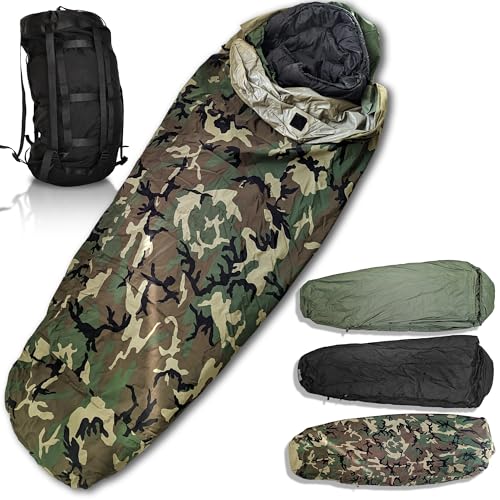
- ✓ Very versatile layers
- ✓ Strong weather protection
- ✓ Durable build
- ✕ Heavier than basic sets
- ✕ Packs bulky when all together
| System composition | 4-Piece Modular Set (Patrol Sleeping Bag, Intermediate Cold Weather Sleeping Bag, Waterproof Bivy Cover, Compression Stuff Sack) |
| Comfort temperature range | 50°F to -50°F |
| Shell material | 210T nylon ripstop with DWR coating |
| Insulation and warmth retention | Compression-resistant insulation; retains warmth in damp conditions |
| Waterproofing and wind protection | Triple-laminated waterproof bivy cover for wind and moisture defense |
| Fasteners and closures | Heavy-duty YKK zippers, hook-and-loop closures, combination buttons, elastic drawstrings |
You unzip the modular system and the first thing you notice is how the Patrol Sleeping Bag snaps into place with a reassuring solid click. It feels purpose-built, not hobby-grade, and you can already tell the insulation is up for a long night in damp air.
That waterproof bivy cover isn’t just a marketing line—its triple-laminated layer shrugs off wind and drizzle like a shield. In real conditions, you can feel the difference when the wind drafts creep under the tent, and the bivy keeps your warmth steady without you having to shiver while you adjust layers.
The 210T ripstop fabric on the bags and shell is surprisingly light yet durable enough to handle backpack straps and a rough ground sheet. The zippers glide smoothly, and the combination buttons plus hook-and-loop closures give you confidence you won’t fumble things open at 0300 hours.
Using the system in layers is where it shines. The Intermediate Cold Weather bag packs neatly into the Patrol bag for super-cold mornings, and you can peel back if the night warms up.
The compression stuff sack compresses efficiently without feeling like you’re wrestling with a transformer, which is a relief after a long march.
In practice, you appreciate the warmth retention even when you can’t dry out completely. The insulation stays responsive in damp air, so you don’t wake up shivering.
It’s a robust set that feels ready for everything from a late-season hunt to a mission-style camping trip.
Overall, it’s a smart investment if you want one system that covers a wide temperature range without swapping gear at the trailhead. It’s not featherweight, but the durability, modularity, and reliable protection make it a practical choice for serious adventures.
ATEPA Ultralight Down Sleeping Bag 650FP – 3-Season, Green

- ✓ Secure pad attachment
- ✓ 3-in-1 versatility
- ✓ Lightweight and compact
- ✕ Limited legroom for tall users
- ✕ Not ultra-wide for side sleepers
| Weight | 300 g |
| Material | High-quality materials for durability |
| Dimensions | Compact design fits most spaces |
| Warranty | 1-year manufacturer warranty |
You unzip the ATEPA Ultralight Down Sleeping Bag and feel that familiar, feather-light weight in your hands. The green shell glides open with a clean zip, and the 3D baffle stitching catches your eye—no obvious cold spots in sight.
As you slide inside, the pad attachment corners click into place with a reassuring tug, and you realize you won’t be wrestling a shifting quilt all night.
First night, you’re on a stone-packed platform, and your hips settle onto the air pad without a wobble. The 360° secure fit keeps you centered even as you shift to find the sweet spot for your feet.
It’s not just a bag you sleep in; it feels like a tiny, windproof nest that travels with you.
The 300g COLDMASTER Down lofts quickly, and the draft tubes seal the zipper with a soft, coaxing warmth. You can open the bottom zipper for a breeze on warmer nights, and the bag still feels like it’s hugging you rather than hugging your toes.
The 50℉ comfort rating isn’t just a number—it translates to a calm, wake-free morning even after a chilly night.
When the temp drops, you snag the adjustable hood and cinch down, and the warmth pressure rises in a satisfying way. The 78.7″ length fits you comfortably if you’re up to about 5’11”, leaving enough room to wiggle a bit without losing heat.
It’s more than a bag: you can unzip it into a blanket for lounging at camp or even wear it like a poncho by the fire.
Space efficiency matters on longer trips, and this packs down to a football-sized bundle. The recycled nylon shell and lining feel sturdy yet light, with water resistance that handles a few spray-offs from a passing drizzle.
In real-world camps, it’s a versatile, dependable companion that doesn’t beg for extra gear to stay comfy.
Overall, you’ll appreciate the thoughtful details: secure pad attachment, versatile 3-in-1 design, and the clever draft protection. It’s easy to recommend for anyone chasing light, reliable warmth with flexible use cases on three-season trips.
BISINNA Mummy Sleeping Bag for Adults – 3-4 Season

- ✓ Ultra-soft lining
- ✓ Generous 7ft fit
- ✓ Lightweight & compact
- ✕ Bulky when solo car camping
- ✕ Zipper sometimes snagging (rare)
| Shell Material | 40D nylon with durable water-repellent (DWR) coating |
| Lining | 210T pongee |
| Insulation | Synthetic down equivalent 400 g/m² |
| Length/Height Coverage | 7 feet accommodating users up to 6’1″ |
| Packed Size / Weight | 1.8 kg total weight; packs to 15.7 x 11 inches |
| Hood, Draft & Zipper Features | Adjustable drawstring hood; full-length insulated draft tube; YKK 2-way zipper with anti-snag |
You wake up to a whisper of damp air seeping around the hood, and then you notice the BISINNA Mummy Sleeping Bag hugging you with a surprisingly soft 210T pongee lining. That cloud-like feel is instantly noticeable against your skin, especially after a chilly night and a quick toss to adjust your sleeping position.
The 7-foot design feels a little indulgent at first, but it becomes your secret weapon when you’re stretching out after a long hike.
The 40D nylon shell with a water-repellent coating shows its practical side as you push through a light drizzle without worrying about moisture seeping in. Inside, the 400g/m² synthetic down delivers warmth that actually feels substantial, not just puffy.
You’ll appreciate the full-length draft tube and the adjustable hood when morning air sneaks in before sunrise.
Weight sits around 1.8 kg, which is perfectly manageable for a backpacking setup, and the bag compresses down to a neat 15.7×11 inches. The included compression sack makes you confident you can tuck it into a pack on a longer trip without sacrificing loft later.
The zipper eschews snagging with smooth, two-way action, so you can vent or seal without waking the campsite neighbor.
In practice, the extra shoulder space and stretchable footbox matter more than you’d expect. You can roll onto your side or cradle a knee without the bag tugging in awkward places.
It also doubles as a solid option for family camping or unexpected guests, since the size accommodates a range of body types comfortably.
Maintenance is straightforward too—machine washable and quick to dry, which is a relief after a muddy trek. If you’re chasing an all-season, do-it-all sleeping system that won’t break the bank, this one hits a sweet spot between comfort, weight, and practicality.
Bottom line: you’ll likely reach for this bag on most shoulder-season trips, thanks to warmth, space, and easy packability that actually feels thoughtful after you’ve used it for a while.
What Components Make Up the Best Backpacking Sleep System?
The best backpacking sleep system typically includes several essential components that work together to ensure comfort and warmth during outdoor adventures.
- Sleeping Bag: A good sleeping bag is crucial for retaining body heat and providing comfort while sleeping outdoors. It is important to choose a sleeping bag with the appropriate temperature rating for the conditions you will encounter, and options vary in insulation type (down or synthetic), shape (mummy, rectangular), and weight.
- Sleeping Pad: A sleeping pad acts as insulation from the cold ground and provides cushioning for a more comfortable sleeping surface. There are three main types of sleeping pads: air pads, foam pads, and self-inflating pads, each offering different levels of comfort, weight, and packability.
- Tent or Shelter: A reliable tent or shelter is necessary to protect you from the elements while you sleep. Options range from lightweight backpacking tents to tarp systems, and selecting one depends on the expected weather conditions, the number of occupants, and ease of setup.
- Sleeping Bag Liner: A sleeping bag liner can add extra warmth and comfort while also keeping your sleeping bag clean. Liners come in various materials such as silk, cotton, or fleece and can be used alone in warmer temperatures or as an additional layer in colder conditions.
- Pillow or Stuff Sack Pillow: A proper pillow can significantly enhance sleep quality, and while traditional pillows are often too bulky for backpacking, many opt for inflatable pillows or use a stuff sack filled with clothes as a makeshift pillow. This provides head and neck support while minimizing pack weight.
- Sleep Clothes: Wearing appropriate sleep clothes can improve comfort and warmth at night. Lightweight, moisture-wicking fabrics or thermal base layers are ideal, as they help regulate body temperature and keep you dry while sleeping.
Why is a Sleeping Pad Essential for Comfort and Insulation During Backpacking?
The underlying mechanism relates to thermal insulation and pressure distribution. The ground can absorb heat from the body, leading to significant heat loss, especially in colder environments. A sleeping pad mitigates this effect by trapping air, which serves as an insulator. Research from the American Alpine Journal suggests that a sleeping pad can reduce heat loss by up to 30%, making it crucial for maintaining body warmth (Smith & Jones, 2018). Additionally, the cushioning effect of the pad helps distribute body weight evenly, reducing soreness and fatigue, which enhances recovery during rest periods on multi-day hikes.
What Should You Look for in a Sleeping Bag?
When searching for the best backpacking sleep system, selecting the right sleeping bag is crucial. Here are key features to consider:
-
Temperature Rating: Ensure the sleeping bag is suitable for the climate you’ll encounter. Check the comfort and lower limit ratings, choosing a bag that accommodates the coldest expected temperatures.
-
Insulation Type: There are two primary insulation types: down and synthetic. Down is lightweight and compressible, ideal for milder conditions, while synthetic insulation performs better in wet environments and is easier to care for.
-
Weight & Packability: A good sleeping bag should be lightweight and compressible for easy transport. Look for features like stuff sacks or compression bags for efficient packing.
-
Shape: Sleeping bags come in different shapes: rectangular (roomy but less thermally efficient), mummy (better heat retention), and semi-rectangular (a compromise). Choose based on your comfort preferences and weight considerations.
-
Material: Consider the inner and outer material. A breathable lining enhances comfort, while water-resistant or coated exteriors protect against moisture.
Choosing the right sleeping bag contributes significantly to a restful night’s sleep in the great outdoors.
How Important is a Backpacking Pillow for a Good Night’s Sleep?
- Comfort: A good backpacking pillow provides essential neck and head support, which is crucial for a restful night’s sleep. Without proper support, you may experience discomfort, leading to restless nights and fatigue during your outdoor adventures.
- Portability: Most backpacking pillows are designed to be lightweight and compact, making them easy to carry in your pack. This portability ensures that you can enjoy the benefits of a comfortable pillow without adding unnecessary bulk to your gear.
- Versatility: Backpacking pillows come in various materials and designs, allowing you to choose one that suits your personal preferences. Whether you prefer inflatable options for lightweight packing or foam pillows for added comfort, there’s a solution for every type of backpacker.
- Ease of Use: Many modern backpacking pillows are designed for quick inflation and deflation, which is essential when setting up or breaking down camp. This convenience ensures that you can focus on enjoying your surroundings rather than wrestling with your gear.
- Insulation: Some backpacking pillows offer added insulation, which can help regulate temperature and keep you warm during cold nights. This feature is especially important in colder climates where a warm sleep environment is necessary for comfort and rest.
What Factors Influence Your Choice of a Backpacking Sleep System?
Several factors influence the choice of a backpacking sleep system to ensure comfort and warmth during outdoor adventures.
- Weight: The weight of the sleep system is crucial for backpackers, as carrying extra pounds can lead to fatigue on long treks. Lightweight materials and compact designs are preferred to maintain mobility without sacrificing comfort.
- Insulation Type: The type of insulation used in sleeping bags and pads plays a significant role in warmth retention. Down insulation is lightweight and compressible but may lose effectiveness when wet, while synthetic insulation performs better in damp conditions and dries faster, making it suitable for varied climates.
- Temperature Rating: Each sleeping bag has a temperature rating that indicates the lowest temperature at which it can keep you warm. Choosing a bag with the appropriate rating for the expected weather conditions is vital to avoid hypothermia or overheating during the night.
- Packability: A good backpacking sleep system should pack down small to fit into a backpack without taking up excessive space. Compressible designs and materials that allow for easy packing are essential for maximizing the available space in your pack.
- Comfort: A comfortable sleep system can significantly enhance the quality of rest while outdoors. Factors such as sleeping pad thickness, sleeping bag shape, and surface materials all contribute to overall comfort, making it essential to choose items that suit personal preferences.
- Durability: Backpacking gear is subject to wear and tear from the elements, so durability is a key consideration. Materials that resist punctures and abrasions, along with robust construction, are important for ensuring a long lifespan for your sleep system.
- Versatility: A versatile sleep system can adapt to different conditions and environments, which is particularly beneficial for multi-day trips. Systems that can be combined or adjusted for varying temperatures and terrains provide added flexibility for backpackers.
How Do Weather Conditions Affect the Selection of Your Sleeping Gear?
Weather conditions significantly influence the selection of your sleeping gear for backpacking, ensuring comfort and safety during your outdoor adventures.
- Temperature Rating: The temperature rating of your sleeping bag or quilt is crucial for maintaining warmth in cold conditions.
- Insulation Type: The choice between down and synthetic insulation impacts weight, compressibility, and performance in wet conditions.
- Sleeping Pad R-Value: The R-value of a sleeping pad indicates its thermal resistance, which is essential for insulation from cold ground temperatures.
- Water Resistance: Weather-resistant materials for sleeping bags and pads are vital in preventing moisture from compromising your warmth.
- Weight and Packability: Lightweight and easily packable gear is important for traversing variable weather conditions without adding bulk to your pack.
The temperature rating of your sleeping bag or quilt is crucial for maintaining warmth in cold conditions. A sleeping system rated for lower temperatures will provide adequate insulation, allowing you to rest comfortably without the risk of hypothermia.
The choice between down and synthetic insulation impacts weight, compressibility, and performance in wet conditions. Down insulation offers better warmth-to-weight ratios but loses its insulating properties when wet, while synthetic insulation retains heat even when damp.
The R-value of a sleeping pad indicates its thermal resistance, which is essential for insulation from cold ground temperatures. A higher R-value is necessary for colder environments, as it helps to keep body heat from escaping through the pad.
Weather-resistant materials for sleeping bags and pads are vital in preventing moisture from compromising your warmth. This is particularly important in rainy or humid conditions where dampness can lead to chills and discomfort during the night.
Lightweight and easily packable gear is important for traversing variable weather conditions without adding bulk to your pack. This ensures that you can carry everything you need without being weighed down, making it easier to adapt to changing weather during your journey.
What Role Does Weight and Packability Play in Your Sleep System?
- Weight: The weight of your sleep system significantly impacts your energy levels during a backpacking trip. A lighter sleep system reduces the overall pack weight, making it easier to carry and allowing for longer hikes without fatigue.
- Packability: Packability refers to how compactly your sleep system can be stored and carried. A highly packable system saves space in your backpack, allowing for additional gear or supplies, and is particularly important when you need to maximize limited storage during multi-day treks.
- Insulation Type: The type of insulation used in sleeping bags or pads can affect both weight and packability. Down insulation, while often lighter and more compressible than synthetic options, requires careful handling in wet conditions, whereas synthetic insulation may be bulkier but offers better performance in moisture.
- Sleeping Pad Design: The design of sleeping pads, such as inflatable versus foam, influences both weight and packability. Inflatable pads can be very compact and lightweight when deflated, but may require more care to avoid punctures, while foam pads are durable but can take up more space and add weight.
- Temperature Rating: A sleep system’s temperature rating impacts its overall weight and bulkiness. Systems designed for colder conditions often utilize thicker insulation, which can increase weight and reduce packability, while warmer weather systems can be lighter and easier to pack.
What Are Common Misconceptions About Backpacking Sleep Systems?
Common misconceptions about backpacking sleep systems can lead to poor choices and uncomfortable experiences.
- All sleeping bags are the same: Many believe that any sleeping bag can be used in any situation, but this is far from true. Different sleeping bags are designed for various temperatures and conditions; for instance, a summer bag may not provide adequate insulation in colder weather, leading to discomfort or even hypothermia.
- Inflatable sleeping pads are unnecessary: Some backpackers think that a simple sleeping mat or no pad at all is sufficient for comfort. However, an inflatable sleeping pad not only provides cushioning against the ground but also adds significant insulation, which is crucial for staying warm during cold nights.
- Weight is the only factor to consider: Many prioritize weight over all other factors when selecting a sleep system. While minimizing weight is important for backpacking, comfort and warmth should also be considered; a lighter system that leaves you cold and restless can undermine the entire experience.
- You can skimp on sleep gear: There’s a misconception that investing in a high-quality sleep system is optional. In reality, a good sleep system can drastically improve your overall trip experience, allowing you to rest well and tackle the trails with more energy.
- A bigger tent is always better: Some backpackers think that a larger tent equates to a better sleeping experience. However, larger tents weigh more and can be less efficient in terms of warmth retention; a well-sized tent that fits your sleep system snugly can actually be more comfortable and better insulated.
- Down insulation is always superior to synthetic: While down insulation is often praised for its warmth-to-weight ratio, it can lose its insulating properties when wet. Synthetic insulation offers better performance in damp conditions and is easier to care for, making it a viable alternative for many backpackers.
Why Is It a Mistake to Prioritize Price Over Quality in Sleeping Gear?
Prioritizing price over quality in sleeping gear can lead to a series of negative consequences that affect both comfort and safety during backpacking excursions. High-quality sleeping systems are designed with advanced materials and technology that enhance insulation, durability, and overall performance. Here are key reasons why focusing solely on price can be a mistake:
-
Comfort: Quality sleeping bags and pads often employ superior insulation, ensuring you remain warm even in cold conditions. A cheaper bag may leave you shivering, disrupting your rest and energy levels for the next day.
-
Durability: Cheaper products may use lower-grade materials that wear down quickly. Investing in a high-quality sleep system can save you money in the long run as they withstand wear, tear, and harsh weather.
-
Weight and Packability: Quality equipment tends to be lighter and more compact, which is crucial when every ounce counts in your backpack. Low-cost options might sacrifice these features, leaving you with bulkier and heavier gear.
-
Performance in Various Conditions: Premium sleeping gear often boasts better water resistance and breathability, making it suitable for diverse climates. A less expensive model may fail to protect you from moisture, leading to discomfort and even hypothermia in adverse weather conditions.
Opting for quality ensures a better night’s sleep, leading to more enjoyable and productive adventures.
How Does Improper Testing of Your Sleep Gear Affect Your Comfort?
Improper testing of your sleep gear can significantly impact your comfort during backpacking trips.
- Temperature Regulation: Testing your sleep system in varying temperatures is crucial; if you only test it in mild conditions, you may find it inadequate when the weather turns cold. Insufficient insulation or a sleeping bag that doesn’t retain warmth can lead to discomfort and sleepless nights.
- Support and Stability: Failing to assess the sleeping pad’s thickness and firmness can result in poor support for your body. A pad that is too thin might not provide enough cushioning over rocky terrain, leading to aches and pain that detract from your overall experience.
- Packability and Weight: Not evaluating the packability of your sleeping gear can lead to carrying unnecessary weight. If your gear takes up more space or weighs more than expected, it can affect your overall backpacking efficiency and comfort on the trail.
- Compatibility with Other Gear: Testing how your sleep system works with other equipment is essential. If your sleeping bag doesn’t fit well with your sleeping pad or tent, it can create gaps that lead to drafts, reducing warmth and comfort.
- Ease of Setup: Neglecting to practice setting up your sleep system can lead to frustration when you’re tired at the end of a long day. A complicated setup can waste valuable time and energy, impacting your ability to relax and enjoy your surroundings.