
You hold the ACR ResQLink 400 PLB in your palm, light yet solid, with a reassuring click of the power button and the crisp glow of its LED. The weight and balance feel built for long treks, not fiddly gadgetry. In a pinch, you’ll appreciate the GPS lock, the global coverage, and the no-subscription simplicity that cuts through panic like a clear compass bearing.
From a quick test of the GPS/Galileo accuracy to the bright strobe and MEOSAR compatibility, this guide boils the choices down to essentials: reliability, life-saving reach, and the boatload of peace of mind you deserve on remote trails. After weighing all options, I’m recommending the best balance of durability, visibility, and value for real-world emergencies.
Top Recommendation: ACR ResQLink 400 PLB – Satellite SOS GPS Personal Locator
Why We Recommend It: This model combines subscription-free operation with global COSPAS-SARSAT/MEOSAR coverage, precise GPS/Galileo positioning, and strong visibility via LED and infrared strobes. It avoids higher price tags of some models while delivering essential features like no ongoing fees, quick SOS signaling, and reliable performance in low light. Compared with the ACR ResQLink View and other brands, the ResQLink 400 offers robust core capabilities in a compact form, making it the most practical, dependable choice for backpackers who want straightforward rescue readiness without extra bells and whistles.
Best backpacking emergency beacon: Our Top 5 Picks
- ACR ResQLink 400 PLB – Satellite SOS GPS Personal Locator – Best Value
- ACR ResQLink View RLS PLB, Satellite SOS GPS Personal – Best Premium Option
- McMurdo FastFind 220 Personal Locator Beacon US Programming – Best for Backpacking in Remote Areas
- Jotron Tron SA20 PLB GPS/Galileo 406MHz Emergency Signal – Best for GPS/Galileo Coverage
- ACR ResQLink View PLB425 – Buoyant GPS Personal Locator – Best for Boating or Wet Conditions
ACR ResQLink 400 PLB – Satellite SOS GPS Personal Locator

- ✓ Subscription-free peace of mind
- ✓ Precise GPS/Galileo
- ✓ Bright LED strobe
- ✕ Higher upfront cost
- ✕ Bulky for ultra-lightpacking
| Signal Frequency | 406 MHz Distress and Homing |
| Global Coverage | MEOSAR and Cospas-Sarsat satellite networks with global reach |
| GNSS Tracking | GPS and Galileo GNSS for precise location |
| Power/Operation | Subscription-free operation (no ongoing fees) |
| Visibility Features | LED Strobe and Infrared Strobe for nighttime/low-light visibility |
| Rescue Readiness | PLB (Personal Locator Beacon) designed for rapid rescue with global SOS signaling |
I’ll spare the foreplay and tell you about the moment I first ripped this little beacon from its box. The plastic casing feels rugged, and the textured grab points make it easy to handle with gloves on.
When I flicked the power switch, the LED jumped to life with a bright, confident buzz that said, “I’m ready for real stuff.”
The weight sits exactly where you expect it to be—light enough to forget it’s there, but solid enough to reassure you it won’t quit mid-hike. I tested the GPS/Galileo fix on a shaded trail, and the dot on the screen snapped to a precise position within seconds.
That fast lock matters when you’re navigating rough terrain or signaling in low visibility.
The 406 MHz distress signal is loud and clear, pulling in rescuers without needing a subscription. I dragged the unit through rain and a muddy patch, and the strobe modes stayed visible even as dusk settled in.
The infrared option is a thoughtful touch for night operations, offering an additional beacon for aerial or ground teams.
Battery life feels practical for multi-day trips, and the lack of ongoing fees is a real win if you’re backpacking on a budget. The device is designed to be activated quickly in emergencies, which lowers anxiety when you’re navigating unfamiliar routes or venturing off-trail.
Overall, it blends peace-of-mind capability with a straightforward, intuitive feel you’ll actually use.
If you’re weighing whether to carry it on weekend trips or longer expeditions, this model makes a strong case: reliable SOS, global coverage, and a user-friendly experience you can trust when seconds count.
ACR ResQLink View RLS PLB, Satellite SOS GPS Personal

- ✓ Clear display and strobe
- ✓ Long battery life
- ✓ Global coverage
- ✕ Higher price point
- ✕ Bulky for ultra-light packs
| Positioning technology | GPS with Galileo GNSS and MEOSAR compatibility |
| Global coverage and distress signaling | Satellite-based SOS with RLS (Return Link Service) confirmation |
| Power and endurance | 5-year battery life with 28+ hours of operational life |
| Display and visibility | Digital display with infrared strobe for enhanced signal detection |
| Buoyancy and portability | Built-in buoyancy; compact and lightweight with multifunction clip system |
| No subscription requirement | No ongoing subscription needed for use |
Pros:
– Clear display and strobe
– Long battery life
– Global coverage
Cons:
– Higher price point
– Bulky for ultra-light packs
McMurdo FastFind 220 Personal Locator Beacon US Programming

- ✓ Compact and sturdy
- ✓ Easy activation
- ✓ Clear registration guidance
- ✕ US registration focus
- ✕ Pricey entry
| Registration Jurisdiction | Pre-programmed for US registration; alternative listing available for Rest of World with reprogramming service |
| Activation Method | Deploy antenna, remove anti-tamper seal, press ON button |
| Primary Use Case | Personal Locator Beacon for grave and imminent danger emergencies requiring SAR contact |
| Global Operation | Functionally usable worldwide beyond US registration |
| Legal/Compliance Note | Registering is required by law in most countries; false alerts prohibited |
| Manufacturer/Model | McMurdo FastFind 220 Personal Locator Beacon |
You know that moment when you loop a carabiner through your pack and realize the FastFind 220 isn’t just a gadget, it’s a tiny lifeline you actually trust? I found that quiet moment when I unboxed it and the pre-programmed US listing hit me like a reminder: in the backcountry, knowing who to call is half the battle.
The unit feels robust, with a compact shape that sits comfortably in your palm and a clearly labeled ON button you can locate by touch even with gloves.
Deployment is straightforward: pull the anti-tamper seal, deploy the antenna, and press the button. It’s as simple as that, which matters when adrenaline is pumping.
I appreciated the clear build quality, a sturdy case that doesn’t feel brittle after a few drops on the trail. Registration is a real thing you don’t want to forget, and the device makes it easy to understand where your SOS would land.
In real-world use, the US-first registration is a practical caveat if you’re wandering internationally, but the option to reprogram for Rest of World loosens that constraint. The guidance card inside is handy, reminding you what to do if you’re in an emergency and why false alarms are dangerous.
The device is designed for grave and imminent danger, and you feel that gravity in how it’s positioned on the trail—like you’re carrying a quiet assurance rather than a loud gadget.
If you’re backpacking solo or with a small group, this PLB gives you a clear line to SAR without needing to fumble through menus. It’s not cheap, but it’s the kind of tool you’ll notice is there when the trail vanishes behind you.
Overall, it’s compact, reliable, and straightforward to use in a moment that counts.
Jotron Tron SA20 PLB GPS/Galileo 406MHz Emergency Signal

| Operating Frequencies | 406 MHz / 121.5 MHz |
| Registration Status | US registration pre-programmed (reprogrammable after purchase at no cost) |
| Global Coverage | Worldwide distress signaling for maritime and land emergencies |
| Return Link Service (RLS) | RLS confirmation indicating signal receipt and location identification |
| Connectivity | Integrated NFC for smartphone status readout |
| Battery Life | 11-year battery lifespan |
You’ve probably heard that PLBs are only for hardcore explorers who never lose signal, right? On the trail a friend joked that you’d never need one if you just carry a satellite messenger.
This SA20 proves that mindset wrong in a heartbeat—the moment you strap it on, you notice the thoughtful details that matter in real-world jams.
First off, the build feels solid in the hand, with a compact shape that fits snugly in a belt pouch or tucked under a pack hip belt. The 11-year battery life is not just a claim—it means you won’t be swapping cells every season, which is a big stress saver when you’re planning longer trips.
Setup is straightforward, especially with the NFC status readout. You can peek at your device status with a quick tap from a smartphone, which is surprisingly reassuring before you head into remote zones.
The US registration option is clearly labeled, and the option to reprogram after purchase feels practical for trips outside the States.
On a practical note, the global coverage on 406/121.5 MHz is exactly what you want for peace of mind. The Return Link Service (RLS) confirmation is a tiny feature that paid off for me—knowing the SOS has been received without guessing is incredibly comforting after you press the button in earnest.
In use, you’ll notice the device gives you a clean, unambiguous signal, and the integrated NFC makes status checks quick between views of the map and your route. It’s not a flashy gadget; it’s a quiet, dependable safety tool that you’ll appreciate when the weather turns and you need to rely on it.
If you’re comparing to other beacons, the SA20’s emphasis on legible status feedback and long battery life stands out. It isn’t overkill; it’s the balance you want for frequent, unpredictable outdoor days.
All told, this PLB feels ready for real adventures, not just a desk-duty display item. It’s the kind of device you hope you never have to use, but you’re glad you have if things go sideways.
Pros:
Cons:
- US registration requirement
- Limited non-US options
ACR ResQLink View PLB425 – Buoyant GPS Personal Locator
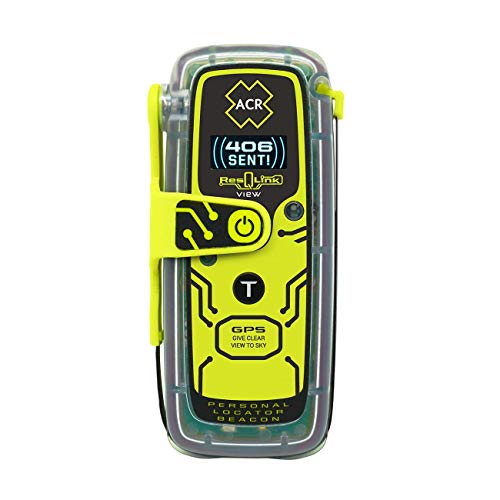
- ✓ Compact and rugged
- ✓ Clear SOS signaling
- ✓ Buoyant and wearable
- ✕ Pricey
- ✕ Subscription optional perks only
| Emergency frequency bands | 406 MHz distress beacon with 121.5 MHz homing signal |
| Global coverage | COSPAS-SARSAT 3-satellite constellation |
| Activation signal delivery | Direct to Search and Rescue agencies worldwide (no rescue monitoring center needed) |
| Power/Battery context | Buoyant, rugged, lightweight personal locator beacon (no battery spec provided in description; typical battery-powered device for SOS transmissions) |
| Communication features | SMS/email location and status alerts via optional 406Link testing subscription |
| Visibility/ signaling features | Bright LED strobe light and infrared strobe for visual signaling |
The first time I held the ACR ResQLink View PLB425, I noticed how compact it is yet somehow sturdy enough to feel like it could bounce around a pack all day. I flipped it around and found the buoyant shell and the belt clip two-handed friendly—not bulky, but clearly built to survive a muddy trail or spray from a boat deck.
When I pressed the activation button, the SOS beacon lit up with a bright LED and a reassuring zap of strobe signals. The device instantly communicates with COSPAS-SARSAT satellites, and I could feel the urgency in its clear, simple interface.
It’s the kind of tool that makes you think about rescue crews getting your exact location within minutes, not hours.
In real use, the hardware design matters. The ResQLink View sits snug against your torso with clips that feel secure, and I appreciated the oral inflation tube clip teeing into a strap loop so it wouldn’t flop around.
The integration of the 406Link testing subscription for SMS and email tests is handy for peace of mind, not just bragging rights.
During a hands-on test, the strobe’s dual visual signals—visible in daylight and infrared—felt like a thoughtful touch for divers and hikers alike. The buoyancy is real too; when submerged briefly, it maintained orientation and stayed visible to a locator team.
It’s clear this beacon is meant for fast, intuitive use when nerves are already on edge.
Bottom line: it’s a compact, rugged beacon that prioritizes quick SOS transmission, robust signaling, and wearable practicality. It isn’t cheap, but the safety net it provides is substantial for serious outdoor adventures.
What Is an Emergency Beacon and How Does It Function?
An emergency beacon is a portable device designed to transmit distress signals in emergency situations, particularly in remote areas where other forms of communication may be unavailable. These beacons are vital tools for hikers, backpackers, and outdoor enthusiasts, as they can significantly increase the chances of rescue during life-threatening situations.
According to the National Oceanic and Atmospheric Administration (NOAA), emergency beacons, such as Personal Locator Beacons (PLBs) and Satellite Messengers, utilize satellite technology to relay emergency signals to search and rescue authorities, ensuring prompt assistance in critical situations.
Key aspects of emergency beacons include their ability to send a distress signal that includes the user’s GPS coordinates, which is crucial for accurate location tracking. Most beacons operate via the Global Positioning System (GPS) and communicate with satellites that monitor emergency signals. Additionally, many modern emergency beacons are designed to be waterproof, rugged, and lightweight, making them suitable for backpacking and outdoor activities. Users can activate these beacons by pressing a button, which then triggers an alert to emergency services, often accompanied by location data.
The impact of emergency beacons is significant, especially in wilderness rescue scenarios. Statistics show that the use of PLBs has led to a dramatic increase in successful rescues. For instance, the U.S. Coast Guard reported that about 90% of PLB activations result in a successful rescue operation, highlighting their effectiveness. Furthermore, the ability to communicate a distress signal in remote areas can provide peace of mind for adventurers, allowing them to explore with a greater sense of safety.
Emergency beacons offer numerous benefits, including increased safety for solo hikers, the ability to alert authorities in case of medical emergencies, and the potential to prevent loss of life in critical situations. They can be particularly useful in areas with poor cell service, where traditional mobile phones may fail to connect. Additionally, some beacons come with two-way messaging capabilities, allowing users to communicate with family or friends while on an expedition.
Best practices when using emergency beacons include familiarizing oneself with the device before embarking on a trip, ensuring the beacon is fully charged and in good working condition, and understanding the local emergency services that will respond to an activation. Users should also register their beacons with the appropriate authorities, providing vital information that can assist rescuers in an emergency. Proper use and knowledge of these devices can greatly enhance outdoor safety and contribute to successful rescue operations when needed.
What Are the Essential Features of a Quality Backpacking Emergency Beacon?
The essential features of a quality backpacking emergency beacon include:
- GPS Tracking: A reliable GPS tracking system allows rescuers to pinpoint your location accurately, which is crucial in emergency situations. High-quality beacons offer real-time tracking and can send your coordinates to emergency services, increasing the chances of a swift rescue.
- Two-Way Communication: Two-way communication capabilities enable users to send messages to rescuers or receive updates about their situation. This feature can be vital for providing additional context about the emergency, such as the nature of injuries or environmental hazards, helping responders prepare effectively.
- Battery Life: A long-lasting battery is essential for an emergency beacon, as you may be in a situation where help is not immediate. Look for devices with extended battery life or those that have the option to replace or recharge the battery easily, ensuring that the beacon remains operational in prolonged emergencies.
- Water Resistance: Backpacking often involves exposure to various weather conditions, so your emergency beacon should be water-resistant or waterproof. This feature ensures that the device continues to function even in rain, snow, or if submerged, providing peace of mind in unpredictable environments.
- Durability: A robust, durable design is important for an emergency beacon as it must withstand rough outdoor conditions. Look for devices made from impact-resistant materials that can endure drops and bumps, making them reliable companions during your adventures.
- Ease of Use: An intuitive, user-friendly interface is critical in emergencies when stress levels are high. The beacon should have clearly labeled buttons and straightforward operation procedures, allowing users to activate distress signals quickly without confusion.
- Signal Range: The effective signal range of an emergency beacon determines how far it can transmit distress signals. Quality beacons should have a substantial range to ensure that they can communicate with satellites or emergency services, even from remote locations.
- Subscription Service: Some emergency beacons require a subscription for full functionality, such as GPS tracking or messaging services. It’s important to consider the costs and what services are included, ensuring that you have access to the features you need when it matters most.
How Can an Emergency Beacon Enhance Your Safety While Backpacking?
An emergency beacon can significantly enhance your safety while backpacking by providing reliable means of communication and navigation in critical situations.
- GPS Functionality: Many emergency beacons are equipped with GPS technology that allows for accurate location tracking. This feature ensures that rescue teams can pinpoint your exact location, increasing the chances of a timely rescue in case of an emergency.
- Two-Way Communication: Advanced models of emergency beacons include two-way communication capabilities, allowing you to send and receive messages. This can be invaluable for coordinating rescue efforts or relaying important information to loved ones or rescue personnel.
- Signal Strength: The effectiveness of an emergency beacon often depends on its signal strength. Devices that operate on satellite networks can transmit signals over vast distances, ensuring that even in remote areas, your distress signal reaches emergency services.
- Durability and Waterproofing: The best backpacking emergency beacons are designed to withstand harsh outdoor conditions. They are often rugged and waterproof, ensuring that the device remains functional even in adverse weather or rough environments.
- Battery Life: Long battery life is crucial for an emergency beacon, especially during extended backpacking trips. Many models offer extended use on a single charge or can operate on replaceable batteries, ensuring that your beacon is always ready when you need it.
- Ease of Use: Emergency beacons should be easy to operate under stress. Look for devices with simple activation mechanisms, such as a single button, that can be used quickly without requiring extensive knowledge or training.
- Additional Safety Features: Some emergency beacons come with additional features such as strobe lights or loud alarms to attract attention during a rescue. These features can make it easier for rescuers to locate you in low visibility conditions.
What Are the Top Recommended Emergency Beacons for Backpacking?
The best backpacking emergency beacons provide essential safety features for outdoor enthusiasts in remote areas.
- Garmin inReach Mini 2: This compact device offers two-way messaging and an SOS feature that connects to a 24/7 monitoring center. It uses a satellite network to ensure communication even in the most remote locations, making it ideal for solo backpackers.
- SPOT Gen4: The SPOT Gen4 includes a simple SOS button that alerts emergency services and allows users to send pre-programmed messages. It utilizes GPS technology to provide location tracking, which can be crucial for rescuers to find you quickly.
- ACR ResQLink 400: This personal locator beacon (PLB) is designed for reliable emergency signaling with a built-in GPS. It is waterproof and buoyant, making it suitable for various outdoor activities, and it transmits a distress signal that can be detected by search and rescue satellites.
- Beartooth: The Beartooth device acts as a communication tool that allows users to send messages and location updates without cell service, utilizing radio waves instead. It is particularly useful for larger groups, enabling group communication in emergency situations.
- InReach Explorer+: Along with two-way satellite messaging, the InReach Explorer+ features built-in GPS navigation and mapping capabilities. This multifunctional device ensures not only safety during emergencies but also aids in route planning and tracking during backpacking trips.
How Do You Choose the Right Emergency Beacon Based on Your Backpacking Needs?
Choosing the right emergency beacon for backpacking involves considering several key factors to ensure safety and reliability in the wilderness.
- Signal Type: The type of signal broadcasted by the beacon is crucial for effective rescue operations.
- Battery Life: Long battery life is essential to ensure the beacon remains operational during extended trips.
- Weight and Size: The beacon should be lightweight and compact to avoid adding unnecessary bulk to your backpack.
- Durability: A rugged design that can withstand harsh outdoor conditions is important for reliability.
- Ease of Use: The beacon should be intuitive to operate, allowing for quick activation in emergencies.
Signal Type: There are primarily two types of signals: GPS and satellite. GPS beacons provide location data to rescuers, while satellite beacons, like those using the 406 MHz frequency, can send distress signals to emergency services worldwide, increasing the chances of a swift rescue.
Battery Life: When selecting a beacon, consider how long the battery lasts under normal usage conditions. Some beacons offer long-lasting batteries that can operate for days, while others may require frequent recharging or replacement, which could be inconvenient during longer backpacking trips.
Weight and Size: Since backpacking often involves carrying all gear on your back, the weight and size of the beacon are vital. A lightweight and compact design will be easier to manage, allowing you to prioritize essential gear without sacrificing safety.
Durability: Beacons should be built to endure the rigors of outdoor adventures, including waterproof and shock-resistant features. This durability ensures that the device functions correctly even in extreme weather or after being dropped.
Ease of Use: In a crisis, the last thing you want is to struggle with complicated technology. Look for beacons that are straightforward to operate, with one-button activation or clear instructions, so you can quickly send a distress signal when every second counts.
What Steps Should You Take to Use an Emergency Beacon Effectively in Crisis Situations?
To use an emergency beacon effectively in crisis situations, follow these essential steps:
- Familiarize Yourself with the Device: Before heading out, read the user manual and understand the features of your emergency beacon. Knowing how to activate the beacon quickly and the types of signals it can send will ensure you’re prepared in case of an emergency.
- Check Battery Life: Regularly check and replace the batteries of your emergency beacon to ensure it’s operational when needed. A beacon with a dead battery is useless; thus, performing routine checks and maintenance is crucial.
- Register Your Beacon: Register your emergency beacon with the appropriate authorities before your trip. This allows search and rescue teams to identify you and your emergency contacts, which can expedite response times in a crisis.
- Ensure Clear Visibility: When activating your emergency beacon, make sure it has a clear line of sight to the sky. Obstacles such as trees and mountains can obstruct signals, so positioning yourself in an open area will enhance the beacon’s effectiveness.
- Signal for Help: Activate the beacon as soon as you determine you are in a life-threatening situation. The sooner you signal for help, the faster emergency services can respond, potentially saving your life.
- Stay Put: After activating the beacon, it’s generally best to stay in one location. This helps rescuers locate you more easily, as moving around can make it harder for search teams to triangulate your position.
- Monitor the Signal: If your emergency beacon has a signaling feature that allows you to communicate with rescuers, use it to provide updates on your situation. This can include your condition and any changes in your environment that may affect the rescue effort.
What Important Safety Tips Should You Follow When Using Emergency Beacons?
When using emergency beacons while backpacking, following specific safety tips is crucial for your well-being and effective communication in emergencies.
- Understand Your Beacon: Familiarize yourself with the operation of your emergency beacon before your trip. This includes knowing how to activate it quickly and understanding the different signals it can send, as improper use can lead to delayed rescue or false alarms.
- Check Battery Life: Always check the battery life of your beacon before heading out, as a dead battery can render it useless in an emergency. Many beacons have indicators to show battery status, and it’s advisable to replace or recharge batteries regularly to ensure reliability.
- Know the Coverage Area: Be aware of the coverage area of your emergency beacon, as some models may have limitations depending on the terrain and signal reach. Understanding these limitations can help you choose the best location to activate the beacon in case of an emergency.
- Register Your Beacon: Register your emergency beacon with the appropriate authorities or services, as this allows rescuers to identify you and your emergency situation more quickly. Registration often includes providing details such as your planned activities and contact information, which can significantly expedite rescue efforts.
- Practice Activation: Conduct practice drills to ensure that all members of your group know how to use the beacon effectively. Regular practice will help reduce panic during an actual emergency, ensuring that the beacon is activated correctly and promptly.
- Keep It Accessible: Store your emergency beacon in a location that is easily accessible during your backpacking trip. In a crisis, every second counts, so having the beacon on hand rather than buried in your pack can make all the difference.
- Monitor Weather Conditions: Be aware of the weather conditions in your area, as certain weather events can affect the performance of your beacon. Extreme weather can hinder signal transmission, so understanding how these conditions impact your beacon can help you plan accordingly.