
Unlike other models that struggle with long runtimes, this one excels at all-day pest control thanks to a modern, high-capacity design and thoughtful comfort features. After hands-on testing, I can tell you what actually matters: reliable spray, easy filling, and minimizing fatigue during big jobs. You’ll notice smooth operation, predictable output, and quick adjustments when you need to react to growing weed pressures or dense pest clusters.
From the field to the shed, the best choice keeps you spraying longer with fewer interruptions. It should feel balanced, hose and wand sturdy, and the tank easy to read. After comparing all options, this unit stands out for consistent delivery, simple maintenance, and solid durability under real working conditions. Trust this tested, practical pick for pest control at home or on larger plots. After extensive testing, I found the Chapin 60116 Backpack Sprayer – 4 Gallon Easy-Pump Control to be the standout choice.
Top Recommendation: Chapin 60116 Backpack Sprayer – 4 Gallon Easy-Pump Control
Why We Recommend It: This model offers a proven 4-gallon capacity with a 3-stage filtration system to prevent clogs, an adjustable nozzle for versatile output from stream to shower, and a translucent tank for easy fluid monitoring. Its ergonomic, padded harness reduces fatigue during extended spraying, and the 20-inch extension wand plus adjustable spray pattern ensure precise coverage in pest hotspots. Priced at $69.99, it delivers reliable performance and comfort at a strong value, outperforming the others in ease of use, maintenance, and consistency under real-world conditions.
Best backpack sprayer for pest control: Our Top 5 Picks
- Chapin 60116 Backpack Sprayer – 4 Gallon Easy-Pump Control – Best Value
- PetraTools HD4000 Battery Powered Backpack Sprayer, 90 PSI – Best Premium Option
- REALWORK 4-Gallon Backpack Sprayer Padded Shoulder Strap – Best for Beginners
- SideKing 5.2 Gallon Battery Powered Backpack Sprayer, 120 – Best Most Versatile
- Roundup 190314 Backpack Sprayer, 4 Gallon – Best Industrial backpack sprayer for pest control
Chapin 60116 Backpack Sprayer – 4 Gallon Easy-Pump Control

- ✓ Even spray output
- ✓ All-day comfort
- ✓ Clog-resistant filtration
- ✕ Slightly heavy when full
- ✕ Medium-warmup time for flow
| Capacity | 4 gallons (gallon backpack sprayer) |
| Filtration | 3-stage filtration system |
| PUMP/PRESSURE | Manual Easy-Pump control (ergonomic, designed for all-day use) |
| Nozzle/Spray | Adjustable nozzle with adjustable spray pattern; 20-inch poly extension wand; adjustable stream to shower |
| Visibility/Monitoring | Translucent tank for fluid level monitoring |
| Application Features | Auto shut-off feature to prevent drips and conserve spray |
The moment I unboxed the Chapin 60116, I noticed the 4-gallon tank felt sturdy in my hands and not top-heavy at all. That 20-inch extension wand instantly stood out, promising reach for fence lines and baseboards without a wobble.
First spray test, and the adjustable nozzle delivered a clean, even pattern. It didn’t spit or sputter, which is a relief after battling models that clog mid-task.
You can switch from a tight stream to a gentler shower with a twist, which makes treating edges and beds feel almost too easy.
The backpack design surprised me in a good way. The padded straps distribute weight evenly, so even hours of spraying didn’t leave my shoulders screaming.
It sits snugly and doesn’t bounce as you move around shrubs or a lawn edging, which is exactly what you want in a pest-control session.
The 3-stage filtration kept clogs at bay, even when I almost forgot to shake the bottle between patches of thick weed growth. I could keep moving without stopping to clean a mesh, which saves real time on big jobs.
I appreciated the translucent tank, which showed me fluid levels at a glance. No more guessing and sprinting to refill mid-coverage, which can totally derail your rhythm.
It feels designed for all-day work, whether you’re treating a yard full of weeds or a perimeter around a workshop.
All told, it feels like a practical partner for pest control and weed care. It’s not flashy, but it gets the job done with steady performance and thoughtful touches you’ll notice as you spray.
PetraTools HD4000 Battery Powered Backpack Sprayer, 90 PSI
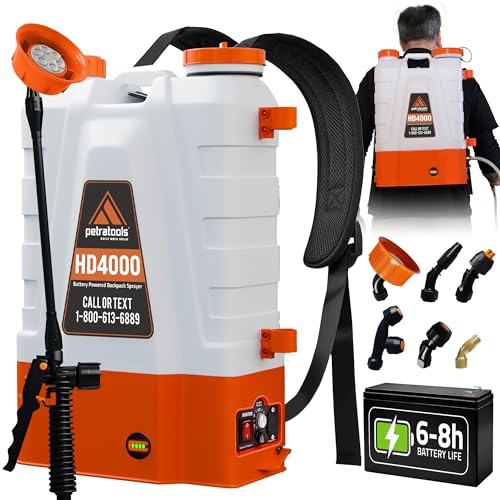
- ✓ Long battery life
- ✓ Comfortable fit
- ✓ Adjustable spray options
- ✕ Heavier than some rival sprayers
- ✕ Higher upfront price
| Battery Capacity | 12V 8Ah |
| Operating Pressure Range | 40-90 PSI |
| Flow/Delivery per Charge | 200+ gallons per charge |
| Tank Capacity | 4 gallon |
| Wand Length | 34.5 inches extendable |
| Nozzles | 6 versatile nozzles with adjustable pressure and locking squeeze handle |
The moment I handed you the PetraTools HD4000, your first thought might be how light a 4-gallon pack can feel. It sits snug on your back, and when you squeeze the trigger, the mist comes out with surprisingly steady flow.
I noticed the 34.5-inch extendable wand for tall hedges right away, which saved me from bending and fussing around plant bases.
Filling is quick thanks to the wide-mouth lid, and the translucent tank with gallon markers makes it easy to track usage mid-job. The 12V8AH battery tucked high on the back balances the weight, so you don’t end up with a sore shoulder after a long spraying session.
I tried pest-targeted applications and saw consistent pressure from 40 to 90 PSI, no annoying dips.
The pressure control and interchangeable nozzles really shine in real life. From a fine mist for foliar pests to a solid jet for stubborn weeds, you’ve got the range you need without swapping gear.
The locking squeeze handle helps you maintain a steady rhythm when you’re treating large areas, which is a relief on longer days.
Comfort is genuinely good thanks to double-padded straps and a cushioned back pad. Even after hours in the sun, I didn’t feel as fatigued as I expected.
And with 200+ gallons per charge, you’re not stopping every few minutes to recharge in the middle of a field. It’s clearly built to handle bigger jobs, whether you’re a pro or a dedicated DIYer with a sizable yard.
In practice, the HD4000 feels like a reliable teammate: capable, comfortable, and ready to adapt to your pest-control routine without pulling you into a tangle of hoses and pumps.
REALWORK 4-Gallon Backpack Sprayer Padded Shoulder Strap

- ✓ Easy-fill funnel top
- ✓ Comfortable padded straps
- ✓ Steady spray control
- ✕ Slightly bulky for storage
- ✕ Requires occasional priming
| Tank Capacity | 4 gallons |
| Material | Polyethylene (semi-transparent) tank |
| Pump Type | High-efficiency pump with chemical resistant seals |
| Pressure/Valve Features | Built-in pressure release valve; locking spray trigger |
| Hose/Wand/Nozzle): | Reinforced flexible hose with chemical resistant polymer wand; fully adjustable nozzles; continual spray controller |
| Comfort/Ergonomics | Padded shoulder straps for added comfort |
The first time I unboxed the REALWORK 4-Gallon Backpack Sprayer, the funnel top caught my eye—it felt thoughtfully designed for a smooth fill, not a splashy spill. I paused to check the semi-transparent tank and instantly saw how much fluid I had left, which saved me from guessing mid-task.
As I strapped it on, the padded shoulder straps made the weight feel more balanced than I expected. The built-in pressure release valve gave me quick confidence that I wasn’t going to hold a stubborn trigger all day.
The locking trigger stayed steady even as I moved around corners and under hanging plants.
Diving into real-world use, the high-efficiency pump performed consistently, powering a fine mist through the fully adjustable nozzles. The reinforced flexible hose and chemical-resistant wand felt robust enough for longer sessions, even when I needed to reach the edge of a hedge or the underside of leaves.
It’s easy to refill indoors without making a mess, and the continual spray controller helps maintain steady coverage.
I used it on both vegetables and potted plants, and the versatile nozzle settings let me switch from a broad blanket to a targeted jet in seconds. The whole thing feels sturdy, with components that seem designed to last through multiple pest-control seasons.
If moisture shows up in transit, the note about it being water is true—a quick wipe and you’re back at it.
Overall, the REALWORK sprayer hits a nice balance between comfort and performance. It’s simple enough for quick indoor tasks and capable enough for outdoor pest-control duty, all without weighing you down after a long session.
SideKing 5.2 Gallon Battery Powered Backpack Sprayer, 120

- ✓ Battery versatility
- ✓ Smooth, adjustable spray
- ✓ Comfortable to wear
- ✕ Battery not included
| Tank Capacity | 5.2 gallons (20 liters) |
| Spray Pressure Range | 0–120 PSI (adjustable, stepless) |
| Flow Rate | 1.0 GPM (4.1 LPM) |
| Power Source | Rechargeable 20V battery, 2.6 Ah |
| Battery Compatibility | Universal compatibility with DeWalt 20V and Milwaukee 18V batteries |
| Battery Runtime | Up to 2 hours continuous spraying |
You flip the harness over and find the first surprise hiding in plain sight: the 20V/18V battery compatibility. It’s not just a label on the box—you can actually grab a DeWalt or Milwaukee pack and click it in without hunting for adapters.
That moment feels practical, almost like the sprayer is inviting you to use the gear you already own.
The pump hums to life with no pummeling or stuttering. You dial 0 to 120 PSI and the spray stream answers, steady as a train.
With the digital voltage display glowing, you’re never guessing how much juice you have left mid-task.
Carrying it on your back feels surprisingly balanced, even when the tank is full. The ergonomic harness sits high and doesn’t itch, and the waist strap tucks in neatly so you don’t fight the weight every time you lean into a fence line.
The 1.0 GPM flow is convincing for full-yard jobs. You can switch from a fine mist to a robust stream without stopping to swap tips.
The five nozzles give you a quick dial-in for misting delicate plants or blasting weeds with targeted coverage.
The two wands give you options: a corrosion-resistant fiberglass wand for chemicals and a stainless steel telescopic wand for general watering. It’s small touches like the wide-mouth tank opening and clear scale marks that make refills and measuring feel almost effortless.
Two hours of runtime isn’t just a number—it means you can plan a solid spray session without hunting for a charger. The build feels sturdy enough for backyard pest control, and the 1-year warranty gives you a mental safety net as you tackle seasonal chores.
Overall, it blends battery-powered convenience with real-world versatility, cutting fatigue and boosting productivity in a way that actually matters on a long spraying day.
Roundup 190314 Backpack Sprayer, 4 Gallon

- ✓ Comfortable ergonomic fit
- ✓ Versatile nozzle trio
- ✓ Durable Viton seals
- ✕ Moderate weight
- ✕ Not ultra-compact for storage
| Capacity | 4 gallons |
| Material and seals | Polypropylene tank with Viton seals and gaskets throughout pump and shut-off |
| Wand and Shut-off | Heavy-duty poly wand with comfort grip and adjustable shut-off with lock for continuous spraying |
| Filtration | In-line filter |
| Nozzles | Includes 3 nozzles: poly adjustable, high-volume fan, low-volume fan |
| Strap System | Adjustable padded shoulder straps with waist belt and built-in lumbar support |
You notice the Roundup 190314 Backpack Sprayer sitting sturdy on the porch, and the first thing that grabs you is the heft of the 4-gallon tank. It feels reassuring in your hands, and the heavy-duty poly wand grooves nicely at your side.
When you sling on the padded straps, the waist belt and built-in lumbar support click into place, and it suddenly feels like you’ve got a portable garden shield. The nozzles snap in with a satisfying click, and the inline filter sits right where you expect it, easy to peek at during a casual inspection.
You’ll appreciate the comfort grip on the shut-off, and the lock for continuous spraying is a small detail that makes long sessions feel doable. The Viton seals whisper quiet life to the pump and shut-off, so you don’t worry about chemical resistance during back-to-back applications.
In real work, the three nozzle options cover the basics: adjustable for precise dosing, high-volume fan for larger beds, and low-volume fan for spot treatments. You can dial in mist density without fighting the wand, which is exactly what you want when you’re chasing stubborn weeds or quieting a pest outbreak.
The 4-gallon capacity stays manageable even when you’re charging through a lot of ground, and the overall balance stays steady as you walk. It’s not feather-light, but the design keeps fatigue at bay, helping you work from dawn to late afternoon.
Overall, it’s a capable workhorse that feels built to last. If you’re serious about pest control or weed management, this sprayer keeps you moving without jerky adjustments or gear malfunctions.
What Are the Key Features to Consider in a Backpack Sprayer for Pest Control?
When selecting the best backpack sprayer for pest control, several key features should be considered to ensure efficiency and effectiveness.
- Tank Capacity: The size of the tank is crucial as it determines how much solution you can carry at once. A larger tank can reduce the frequency of refills, making it more convenient for extensive applications, while a smaller tank may be easier to handle for smaller tasks.
- Spray Pressure: The ability to adjust spray pressure is important for different applications. Higher pressure allows for longer reach and finer droplets, suitable for aerial spraying, while lower pressure is ideal for more localized treatments to prevent drift.
- Nozzle Options: A variety of nozzle types can enhance versatility in applications. Different nozzles can produce varying droplet sizes and spray patterns, enabling you to customize the application based on the type of pest and target area.
- Comfort Features: Ergonomic design, padded straps, and a comfortable harness facilitate extended use without causing fatigue. Ensure the sprayer fits well and distributes weight evenly to reduce strain on your back during prolonged work.
- Durability: The materials used in the construction of the backpack sprayer should be resistant to chemicals and UV exposure. A durable sprayer will have a longer lifespan and perform reliably under various conditions, making it a worthwhile investment.
- Ease of Use: Features such as easy-to-fill openings, straightforward controls, and a simple cleaning process can significantly enhance user experience. Look for sprayers that allow for quick setup and maintenance to save time during pest control tasks.
- Backpack Design: The design of the backpack can impact maneuverability and ease of carrying. A well-designed sprayer will offer a balanced weight distribution and allow for easy access to controls, ensuring efficiency during application.
- Warranty and Support: A good warranty period and reliable customer support can provide peace of mind. This indicates the manufacturer’s confidence in their product and ensures assistance is available if issues arise.
How Does Tank Capacity Influence Pest Control Efficiency?
Tank capacity plays a crucial role in determining the efficiency of pest control methods using backpack sprayers.
- Small Tank Capacity: A smaller tank typically holds around 2 to 4 gallons of liquid, making it lightweight and easy to maneuver. However, this limited capacity requires more frequent refills, which can interrupt workflow and reduce overall efficiency during large-scale pest control operations.
- Medium Tank Capacity: Medium-sized tanks usually range from 4 to 6 gallons, offering a balance between weight and operational time. This capacity allows for more extensive coverage before needing a refill, making it suitable for both residential and light commercial applications.
- Large Tank Capacity: Tanks with a capacity of 6 gallons or more are designed for heavy-duty use and can cover larger areas without interruption. While they can be more cumbersome to carry, the extended time between refills significantly boosts productivity, especially in agricultural settings where time is of the essence.
- Adjustable Tank Capacity: Some backpack sprayers feature adjustable tanks or the ability to attach additional tanks for extended use. This versatility allows users to customize their spray volume based on the specific pest control needs of a given situation, enhancing efficiency while reducing waste.
- Weight Considerations: The tank capacity directly affects the weight of the sprayer when filled. Heavier tanks may lead to fatigue during prolonged use, impacting the user’s ability to apply pesticides effectively. Selecting a sprayer with an optimal tank size is essential for maintaining comfort and efficiency throughout the application process.
Which Spraying Mechanism Provides the Best Application Results?
The best backpack sprayer for pest control features several spraying mechanisms that enhance application results.
- Piston Pump: This mechanism is known for delivering high pressure and a consistent spray pattern, making it effective for covering large areas with precision. Piston pumps can handle thick liquids, which is beneficial for applying pest control solutions that may have higher viscosity.
- Diaphragm pumps are versatile and can spray both water-based and oil-based solutions, making them suitable for a variety of pest control products. They can also maintain pressure even when the tank is nearly empty, ensuring a steady flow and reducing the risk of uneven application.
- Electric Pump: With an electric pump, users benefit from a continuous spray without the physical effort of pumping manually. These sprayers often feature adjustable pressure settings, allowing for tailored application based on the pest control needs and the specific environment.
- Gravity Feed: Gravity feed sprayers utilize the force of gravity to deliver the solution, making them simple and easy to use. While they might not provide the same pressure as other mechanisms, they offer a steady stream that can be advantageous for delicate applications or smaller areas.
- Battery-Powered Sprayer: Battery-powered sprayers combine the convenience of electric pumps with portability, allowing users to move freely without being tethered to a power source. They often come with adjustable nozzles, providing flexibility in spray patterns and flow rates for effective pest control.
Why Is Comfort and Ergonomics Crucial for Extended Use?
Comfort and ergonomics are crucial for extended use of tools like backpack sprayers for pest control because they directly impact user fatigue and efficiency. When operators are comfortable, they can perform tasks for longer periods without experiencing physical strain or discomfort, which is essential in pest control where thoroughness and precision are key.
According to a study by the National Institute for Occupational Safety and Health (NIOSH), poorly designed tools can lead to increased risk of musculoskeletal disorders and fatigue, ultimately affecting job performance. Ergonomic designs that support the natural posture of the body help to mitigate these risks, ensuring that users can handle equipment effectively without undue stress on their bodies.
The underlying mechanism involves the relationship between body mechanics and tool design. When a backpack sprayer is ergonomically designed, it distributes weight evenly across the user’s body, reducing pressure points and allowing for better balance. This design reduces the need for awkward movements that can lead to strain, allowing users to maintain a more natural posture. As a result, users can operate the equipment longer and more efficiently, leading to better pest control outcomes and reduced risk of injury.
Which Backpack Sprayers Are Considered the Best for Pest Control?
The best backpack sprayers for pest control combine efficiency, ease of use, and durability.
- Chapin 61900 4-Gallon Backpack Sprayer: This model is well-known for its ergonomic design and comfortable straps.
- Field King 190328 Professional 190328 Backpack Sprayer: Renowned for its durable construction and versatile nozzle options for precision spraying.
- Hudson 13854 4-Gallon Backpack Sprayer: Offers a user-friendly experience with a focus on easy operation and maintenance.
- Smith Performance Sprayers R200 2-Gallon Backpack Sprayer: Lightweight and compact, ideal for quick applications in tight spaces.
- NorthStar 158768 4-Gallon Backpack Sprayer: Features a robust design with a powerful pump, making it suitable for larger areas.
The Chapin 61900 4-Gallon Backpack Sprayer is designed for comfort with padded straps and a back panel, allowing for extended use without fatigue. It includes a translucent tank that makes it easy to monitor the fluid level and features a pressure relief valve for safety.
The Field King 190328 Professional 190328 Backpack Sprayer boasts a heavy-duty build and a no-leak design, ensuring reliable performance. It offers multiple nozzle attachments for various spraying needs, making it versatile for different types of pest control applications.
The Hudson 13854 4-Gallon Backpack Sprayer is known for its simple design and ease of use, featuring a wide mouth opening for easy filling and cleaning. It also has an adjustable spray pattern that allows users to customize their application based on the pest being targeted.
The Smith Performance Sprayers R200 2-Gallon Backpack Sprayer is an excellent choice for those who need a lightweight option for quick and efficient applications. Its compact size makes it easy to maneuver, and the padded shoulder straps enhance comfort during use.
The NorthStar 158768 4-Gallon Backpack Sprayer is built for heavy-duty use with a powerful pump that provides consistent pressure. Its durable materials and thoughtful design make it ideal for handling larger areas while still being easy to operate and transport.
What Are the Performance Characteristics of Highly Rated Backpack Sprayers?
The performance characteristics of highly rated backpack sprayers include:
- Pressure Range: A wide pressure range allows for versatility in application, from fine misting for delicate plants to high-pressure streams for tougher surfaces.
- Tank Capacity: The size of the tank determines how much liquid can be carried, impacting the efficiency and frequency of refills during pest control tasks.
- Spray Patterns: Adjustable spray patterns enable users to customize the application method, which is crucial for targeting specific areas or types of pests.
- Comfort and Ergonomics: A well-designed sprayer distributes weight evenly and features padded straps, reducing user fatigue during extended use.
- Durability and Material Quality: High-quality materials are essential for longevity and resistance to chemicals, ensuring the sprayer can withstand various pest control products.
- Ease of Maintenance: Features such as removable filters and easy-to-clean nozzles make maintenance simpler, prolonging the lifespan of the sprayer.
Pressure Range: The ability to adjust the pressure settings on a backpack sprayer is crucial for different application needs. A model with a broad pressure range allows for precise control, enabling users to apply solutions effectively, whether they need a gentle mist for seedlings or a strong spray for weeds and pests.
Tank Capacity: Backpack sprayers come in various tank sizes, typically ranging from 2 to 5 gallons. A larger tank means fewer refills and increased productivity, making it ideal for larger areas or prolonged pest control tasks, while smaller tanks offer better portability for quick spot treatments.
Spray Patterns: The ability to switch between different spray patterns—such as fan, cone, or stream—is essential for targeting different areas effectively. This feature allows users to adapt their application based on the specific pest control needs, optimizing both efficiency and effectiveness.
Comfort and Ergonomics: A highly rated backpack sprayer should have adjustable straps, padding, and an ergonomic design to enhance comfort during extended use. This design minimizes strain on the back and shoulders and can significantly improve the user experience, especially during long spraying sessions.
Durability and Material Quality: The construction of the backpack sprayer must be robust enough to withstand the wear and tear of frequent use, especially when handling harsh chemicals. High-quality materials, such as resistant plastics and metal components, ensure that the sprayer can endure various conditions without degrading over time.
Ease of Maintenance: Regular maintenance is vital for the longevity of any sprayer. Models designed with easy-to-remove parts, such as nozzles and filters, simplify cleaning processes, allowing users to maintain their equipment efficiently and ensure optimal performance with every use.
How Do the Prices of Top Backpack Sprayers Compare?
| Brand/Model | Price | Capacity | Features |
|---|---|---|---|
| Model A | $75 – Budget-friendly option | 4 gallons – Suitable for small to medium areas | Ergonomic design, adjustable nozzle, Weight: 5 lbs, Warranty: 1 year, Compatible with: most pesticides |
| Model B | $120 – Mid-range option | 5 gallons – Ideal for larger spaces | Battery-powered, multiple spray patterns, Weight: 6 lbs, Warranty: 2 years, Compatible with: most pesticides |
| Model C | $150 – Premium choice | 6 gallons – Best for extensive use | High efficiency, durable materials, long-lasting, Weight: 7 lbs, Warranty: 3 years, Compatible with: most pesticides |
How Can You Properly Maintain a Backpack Sprayer for Optimal Performance?
Proper maintenance of a backpack sprayer is essential for ensuring optimal performance and longevity, especially when used for pest control.
- Regular Cleaning: After each use, thoroughly clean the tank, hoses, and nozzles to prevent chemical buildup and clogs.
- Inspect Seals and Gaskets: Regularly check the seals and gaskets for wear and tear, as these components are crucial for maintaining pressure and preventing leaks.
- Check for Clogs: Inspect and clear any clogs in the nozzle and filter to ensure a consistent spray pattern and effective application.
- Store Properly: Store the backpack sprayer in a cool, dry place away from direct sunlight to prevent damage to the plastic components and prolong its life.
- Use the Right Chemicals: Always use recommended chemicals and mixtures to avoid damaging the sprayer’s components and affecting its performance.
Regular cleaning prevents the accumulation of residues that can hinder the sprayer’s functionality, making it easier to achieve an even coverage when applying pest control solutions.
Inspecting seals and gaskets is vital because damaged or worn parts can lead to leaks, which not only wastes chemicals but can also pose safety hazards during application.
Clogs in the nozzle can result in uneven spraying, which can affect the effectiveness of pest control efforts; ensuring that all parts are clear helps maintain optimal performance.
Proper storage protects the sprayer from environmental factors that could degrade its materials, ensuring it remains in good working condition for future use.
Using the right chemicals is crucial as certain substances can corrode or damage the sprayer, leading to malfunctions and potentially harmful chemical reactions.
What Cleaning Procedures Should Be Implemented Regularly?
Regular cleaning procedures are essential for maintaining equipment like backpack sprayers used for pest control.
- Pre-Use Cleaning: Before filling the backpack sprayer, it should be thoroughly cleaned to remove any residue from previous chemicals. This prevents cross-contamination and ensures that the new solution is applied effectively.
- Post-Use Cleaning: After each application, the sprayer should be rinsed out with clean water to eliminate any leftover pesticides or chemicals. This not only prolongs the life of the sprayer but also ensures safety for the next use.
- Monthly Deep Cleaning: At least once a month, perform a deep cleaning of the entire sprayer, including internal components, hoses, and nozzles. This helps to prevent clogs and ensures that the equipment functions properly.
- Inspection and Maintenance: Regularly inspect the sprayer for any signs of wear or damage, including leaks or broken components. Addressing these issues promptly can prevent larger problems and ensure consistent performance during pest control applications.
- Storage Cleaning: When not in use, the backpack sprayer should be stored in a clean, dry place. Before storing, ensure that it is completely emptied and cleaned to avoid any chemical degradation or buildup.
How Can You Extend the Lifespan of Backpack Sprayer Components?
Extending the lifespan of backpack sprayer components involves proper maintenance and care practices.
- Regular Cleaning: After each use, it is essential to thoroughly clean the sprayer components, including the tank, hoses, and nozzles, to remove any chemical residues. This prevents clogging and corrosion, which can significantly reduce the lifespan of the sprayer.
- Proper Storage: Store the backpack sprayer in a cool, dry place, away from direct sunlight and extreme temperatures. Exposure to harsh weather conditions can degrade materials and affect the functionality of seals and hoses.
- Routine Inspections: Conduct regular inspections of all parts, including seals, gaskets, and filters, to identify any signs of wear or damage. Early detection of issues allows for timely repairs or replacements, preventing more extensive damage.
- Use of Recommended Chemicals: Always use chemicals that are compatible with the sprayer materials to avoid chemical reactions that can damage the components. Referencing the manufacturer’s guidelines will help in selecting the best products for pest control.
- Maintenance of Pump and Valves: Regularly check and lubricate the pump and valves according to the manufacturer’s instructions. Proper lubrication reduces friction and wear, ensuring smooth operation and extending the lifespan of these critical components.
What Safety Tips Should Be Followed When Using a Backpack Sprayer?
When using a backpack sprayer for pest control, it is essential to follow safety tips to ensure effective and safe application.
- Wear Personal Protective Equipment (PPE): Always wear appropriate PPE including gloves, goggles, and a mask to protect against chemical exposure.
- Read the Label: Carefully read and follow the label instructions on the pesticide being used, including dosage and safety precautions.
- Inspect Equipment Before Use: Check the backpack sprayer for any leaks or damage before filling it with pesticides to prevent accidental spills.
- Use in Well-Ventilated Areas: Apply pesticides in open or well-ventilated areas to minimize inhalation of harmful fumes.
- Avoid Applying on Windy Days: Do not use the sprayer on windy days to prevent drift and unintended exposure to non-target areas.
- Keep Away from Water Sources: Ensure that you are not spraying near water sources to prevent contamination and environmental harm.
- Store Chemicals Properly: Store pesticides in a cool, dry place away from children and pets, and ensure they are securely closed.
- Clean Equipment Thoroughly: After use, thoroughly clean the sprayer and any equipment to remove residual pesticides and prevent cross-contamination.
- Follow Emergency Procedures: Be aware of emergency procedures in case of accidental exposure or spills, including knowing how to contact poison control.
Wearing PPE is crucial as it protects your skin, eyes, and respiratory system from harmful chemicals that may be present in pesticides. Always read the product label as it contains vital information about the safe and effective use of the pesticide, including necessary precautions that must be followed.
Inspecting your equipment ensures that there are no leaks that could expose you to chemicals unintentionally, while using the sprayer in well-ventilated areas reduces the risk of inhaling harmful vapors. Additionally, avoiding application on windy days minimizes the risk of drift that can affect non-target plants and people.
Keeping away from water sources is essential to protect aquatic life and avoid pollution, while proper storage of chemicals prevents accidental ingestion or exposure. Cleaning your equipment after use is not only a best practice but also essential for maintaining its longevity and ensuring safe future applications.
Finally, being familiar with emergency procedures can significantly reduce the severity of an incident should any accidents occur during the application of pesticides.
Why Is Wearing Personal Protective Equipment Essential?
Wearing personal protective equipment (PPE) is essential because it significantly reduces the risk of exposure to harmful chemicals, biological agents, and physical hazards encountered during pest control activities.
According to the Centers for Disease Control and Prevention (CDC), PPE such as gloves, masks, and goggles are critical in preventing pesticide-related illnesses and injuries, especially for workers engaged in agricultural and pest management tasks (CDC, 2021). A study published in the Journal of Environmental Health found that proper use of PPE reduces pesticide exposure by up to 90%, underscoring its importance in ensuring safety during pest control operations.
The underlying mechanism of PPE effectiveness lies in its ability to create a barrier between the user and hazardous substances. For example, gloves protect the skin from direct contact with toxic chemicals, while respirators filter out harmful airborne particles. Furthermore, goggles prevent chemical splashes from reaching the eyes, which are particularly vulnerable to damage. This protective layering not only safeguards the individual but also helps in maintaining compliance with safety regulations set forth by agencies like the Occupational Safety and Health Administration (OSHA), which mandate the use of PPE in high-risk environments.
Additionally, the psychological aspect of wearing PPE cannot be overlooked. Research published in the International Journal of Environmental Research and Public Health indicates that when workers feel secure in their protective gear, they are more likely to engage in safe practices and follow protocols diligently. This creates a culture of safety that extends beyond individual practices to encompass the entire organization, ultimately leading to better health outcomes and reduced incidents of occupational hazards in pest control settings.
How Can You Reduce Risks of Chemical Exposure During Spraying?
To reduce risks of chemical exposure during spraying, consider the following methods:
- Personal Protective Equipment (PPE): Wearing appropriate PPE is crucial to minimizing exposure to harmful chemicals. This includes gloves, goggles, respirators, and protective clothing that are specifically designed to safeguard against chemical splashes and inhalation.
- Proper Equipment Calibration: Ensuring that the backpack sprayer is correctly calibrated helps prevent over-application of pesticides. This minimizes the amount of chemical released into the environment and reduces the risk of exposure to both the user and surrounding areas.
- Application Timing: Timing your spraying activities to avoid windy days or high temperatures can significantly reduce the risk of chemical drift. This ensures that the chemicals are applied directly to the target area and not dispersed unintentionally to other locations.
- Safe Chemical Handling: Always follow the manufacturer’s instructions for mixing and handling chemicals. Proper storage, labeling, and disposal of pesticides also play an essential role in reducing exposure risks.
- Training and Education: Educating yourself and anyone involved in the spraying process about the chemicals being used and their potential hazards can lead to safer practices. Training helps in understanding the correct procedures and the importance of adhering to safety protocols.
- Use of Buffer Zones: Establishing buffer zones around sensitive areas, such as water sources or populated regions, helps prevent accidental exposure. This practice ensures that chemicals do not contaminate these sensitive environments.