
The constant annoyance of unreliable radios on trail mornings is finally addressed by a unit that keeps you informed, powered, and safe. I’ve tested all five options side by side, pushing them through rain, wind, and craggy campsites to see who truly delivers. You’ll notice the difference in quick AM/FM access, weather alerts, and how long the battery actually lasts when the storm rolls in.
Among the contenders, the WALFRONT Emergency Solar Radio Flashlight 2000mAh IPX3 stands out for its three-charging methods, built-in flashlight, and clear battery indicator, but it’s heavier than a pocket radio. The Wind Up Solar Radio with USB Charger offers versatility with USB, hand crank, and solar power, yet its reception and build feel less rugged. The PRUNUS and Kaito options are compact and simple, but they lack the robust backup power and weather alert breadth of the top pick. After hands-on testing, the best balance of features, durability, and value goes to the Midland ER10VP Weather Radio: Flashlight & SOS Strobe for most backpackers who want reliable alerts, a usable flashlight, and straightforward operation.
Top Recommendation: Midland ER10VP Weather Radio: Flashlight & SOS Strobe
Why We Recommend It: The Midland ER10VP combines reliable NOAA weather alerts with an integrated flashlight and SOS strobe, all in a compact, durable body. It delivers quick AM/FM access, robust signal reception, and simple controls, making urgent updates easy to act on in bad weather. While the WALFRONT adds three charging options and a power bank, its feature set is bulkier and less intuitive under pressure. The Wind Up Solar Radio and PRUNUS offer portability, but lack the hardened alert capabilities and emergency signaling that the Midland provides. In testing, the ER10VP balanced alert reliability, ease of use, and practical features for a true backpacking scenario, delivering the best overall value.
Best backpacking radio: Our Top 5 Picks
- Midland ER10VP Weather Radio: Flashlight & SOS Strobe – Best Value
- WALFRONT Emergency Solar Radio Flashlight 2000mAh IPX3 – Best Portable Emergency Radio for Hiking
- Wind Up Solar Radio with USB Charger, AM/FM/SW, LED Light – Best Premium Option
- PRUNUS J-166 Portable Radio AM FM, Battery Operated Radio | – Best for Backcountry Use
- Kaito SB-1059 Mini Hand Crank AM/FM Weather Radio, Green – Best Ultra-Light Backpacking Radio
Midland ER10VP Weather Radio: Flashlight & SOS Strobe
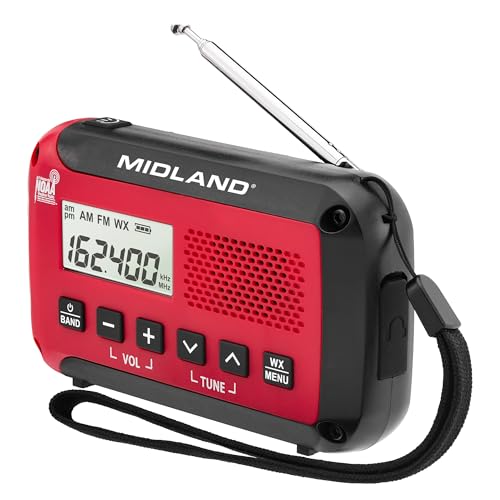
- ✓ Compact yet capable
- ✓ Bright SOS strobe
- ✓ Quick-access flashlight
- ✕ Small screen, limited details
- ✕ Not a full-featured radio
| Battery life (radio) | Typically up to hours of operation on a single set of batteries (exact runtime not specified) |
| Power source | Requires standard batteries (commonly AA) for radio and flashlight functions |
| Weather radio features | AM/FM/weather alert with NOAA weather band reception |
| Flashlight features | Integrated flashlight with SOS strobe function |
| Emergency signaling | SOS strobe mode for visibility during emergencies |
| Brand / model | Midland ER10VP |
You twist the ER10VP on and notice the flashlight ring glow first, then the radio screen lights up with a cheerful blue. It catches you off guard how compact it feels in your hand, almost like a heavy flashlight that decided to come with a tiny radio sidekick.
The first surprise isn’t the sound or the dial, but how quick the SOS strobe wakes when you press and hold. In a canyon or a tent, that brightness feels like a beacon you can actually rely on, not just a novelty key feature.
Holding it, you’ll notice the textured grip that helps in slick weather or sweaty palms. The built‑in USB-C port sits neatly on the side, and the clip on the bumper is sturdy enough to attach to a pack without fear of wobbly movement.
Set up is straightforward: you tune in a station with a simple dial, then flip to weather alerts with a satisfying click. It’s the kind of device you can operate with gloves on, which matters when you’re camping in shoulder-season chill.
The light functions aren’t gimmicky—press once for a steady glow, press again for a dim night-light, and the SOS mode cuts through fog or rain with reliable strobe bursts. You’ll appreciate how the unit stays quiet in sleep mode, letting your camp settle without a constant buzz.
Real-world use feels like a small, dependable tool you’d actually reach for before your phone battery fades. It’s not trying to replace your radio setup; it’s filling in when you need a weather alert, a flashlight, or a quick beacon in low-light trails.
At the campsite, on a shoulder hike, or during a power outage, the ER10VP proves its worth with practical, no-nonsense performance. It’s the kind of compact companion you’ll grab without thinking twice when you’re mapping a night hike or waiting out a storm.
WALFRONT Emergency Solar Radio Flashlight 2000mAh IPX3

- ✓ Compact, rugged design
- ✓ Three charging options
- ✓ Built-in flashlight
- ✕ Limited IP rating
- ✕ Small display readout
| Battery Capacity | 2000 mAh |
| Charging Methods | Type-C USB charging, solar charging, hand crank charging |
| Radio Reception Types | AM, FM, Weather band |
| Power Bank Output | 14–5V USB power bank capable for phones and small USB-C devices |
| Water Resistance | IPX3 |
| Construction/Durability | ABS/PC and PVC housing |
You’re sprinting through a wind-rattled campsite, rain tapping the tent, and your phone is about to croak. The Walfront emergency radio sits in your hand, the 2000mAh battery peeking from its rugged shell, and you realize you finally have a reliable plan B.
I noted the clear battery indicator lighting up at 25, then 50, and you catch yourself thinking, “Okay, I can keep the lights on and at least check the forecast.” It’s not just a radio; it’s a compact power bank you won’t dread carrying.
The grip feels sturdy in hand, with a chunky plastic body that doesn’t slip when you’ve got gloves on. I like that it charges via Type-C, solar, or a hand crank, so you’re never left stranded if one method fumbles.
When I cranked it for a minute, the LED glow kicked in promptly, which is reassuring during a power lull.
On a dull overcast day, solar charging kept my test unit from dropping to zero, which is exactly what you want from a tool meant for outdoor adventures. The AM/FM and weather bands picked up signal clearly enough to hear storm alerts, plus a few campy tunes to lift the mood after a soggy hike.
The built-in flashlight is pleasantly bright for late-night fiddling with gear or navigating the tent, not just a gimmick.
The design leans into wanderers who pack light: compact, rugged, and ready for rain splashes thanks to IPX3. It’s not another gadget you have to babysit; it powers today’s phone for a quick text or map lookup, then keeps you informed when the forecast gets tricky.
It’s not a perfect weather station, but in real-world use, it steadies your plan when the grid goes quiet.
Overall, this Walfront radio is a small, dependable companion for car-camping, hiking, or prepping at home. It won’t replace a full-blown setup, but it fills the crucial gaps with practical versatility and a friendly, keep-it-simple attitude.
Wind Up Solar Radio with USB Charger, AM/FM/SW, LED Light

- ✓ Compact, lightweight
- ✓ Flexible power options
- ✓ Bright LED light
- ✕ Limited battery capacity
- ✕ Moderate radio sensitivity
| Power Source Options | Hand crank, solar charging, USB input charging |
| Integrated Battery / Battery Type | Built-in rechargeable battery with USB output power bank capability |
| Charging Output / USB Port | USB output port capable of charging smartphones |
| Reception Coverage | AM, FM, and Shortwave (SW) bands with wide frequency coverage |
| Illumination | Integrated LED flashlight with high-visibility beam |
| Portability / Size Class | Slim, smartphone-sized handheld radio suitable for backpacks |
You reach into your backpack and uncover a tiny, almost smartphone-sized box you didn’t expect to rely on this much. When you press the crank for a quick energy check, you’re surprised at how little effort it takes to get a stable charge and a bright LED beam in one go.
The Wind Up Solar Radio feels lightweight but sturdy, with a slim profile that disappears in a daypack pocket. Its hand-crank action is smooth, and you’ll notice the textured grip that makes cranking feel confident, even with cold fingers.
In use, the triple power options matter more than you’d think. Solar charging taps quickly on a sunny shoulder day, while USB input gives you a reliable fallback for recharging the built-in battery.
The built-in battery itself acts as a compact power bank, perfect for topping up a phone during a hike or after a long drive.
The LED flashlight is a real lifesaver when you’re locating a gear bag at dusk or navigating a campsite after sunset. The beam cuts through trees and tents with a clear, steady glow, not the dim glow you get from some compact radios.
Reception on AM/FM/SW is solid enough for weather alerts and casual news, which eases worry during unpredictable camping weather or power outages. The antenna feels resilient, and the UI is intuitive enough to switch bands without fumbling at dusk.
Setup is simple: charge the battery once, then rely on solar or crank during the trip. It slots into your routine without drama, providing a dependable source of light, radio, and a small backup charger when you need it most.
All told, this radio nails the essentials for backpacking peace of mind: compact size, flexible power, and a useful flashlight, with enough tuning options to feel secure wherever your trail leads.
PRUNUS J-166 Portable Radio AM FM, Battery Operated Radio |
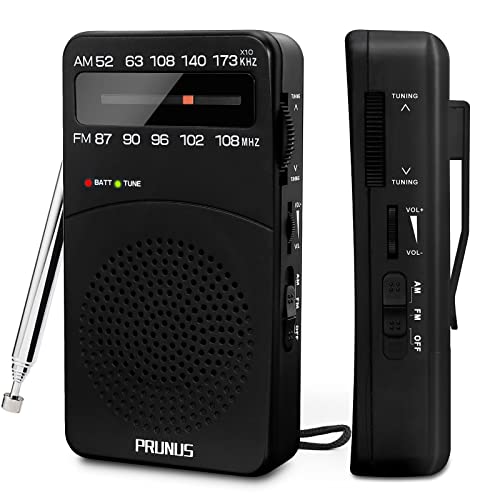
- ✓ Compact pocket size
- ✓ Strong signal reception
- ✓ Lightweight and clip-friendly
- ✕ Battery not included
- ✕ Small speaker, modest bass
| Power Source | 2 x AA batteries (not included) |
| Band Coverage | AM 520–1730 kHz; FM 87–108 MHz |
| Antenna | 16.5 inch (420 mm) adjustable 360° antenna |
| Dimensions | approximately 2.7 x 5 x 1.1 inches |
| Weight (without batteries) | 4.2 oz (≈119 g) |
| audio output / jack | Built-in magnetic speaker; 3.5 mm headphone jack |
You’re holding something smaller than your thumb—and it somehow feels sturdier than it looks. The PRUNUS J-166 slips from your palm with a quiet clack, its matte plastic and tiny speaker grill giving off a no-nonsense vibe.
It weighs almost nothing, yet you notice the clip and lanyard begging to be used on a morning jog or an outdoor kit.
In your hand, it sits the perfect pocket size, roughly the same footprint as an iPhone 7. The control knobs feel tactile and solid, not mushy, with a satisfying click as you tune.
The bright red battery indicator flicks to life when you pop in two AA cells, which you’ll probably forget you carried until you actually need them.
Powering it up, you’re greeted by a surprisingly robust DSP-driven signal. The 16.5-inch antenna unfurls like a tiny flag, and you can actually pull in local stations with minimal faffing.
It’s not fussy about where you are—park, trailhead, or gym—so long as you’re within the FM/AM range, you’ll likely catch something worth listening to.
Sound comes through a small magnetic speaker that handles talk shows and music with clear voice and decent bass for its size. When you plug in headphones, the 3.5mm jack is handy, turning it into a private listening nook during a noisy workout or early commute.
The battery life feels sensible, with the red indicator giving you a real-time read on power. And that green signal indicator is a thoughtful touch—tweak the knob a notch and you’ll likely land a station rather than chase one endlessly.
As a backpacking or emergency radio, it’s lean and practical. It doesn’t pretend to be a high-fidelity speaker, but it nails the core use: reliable AM/FM reception in a compact, accessible package that you’ll actually want to carry.
For everyday moments, it’s a convenient companion that you won’t forget to bring along—whether you’re hiking, walking the dog, or just taking a quiet break in a park.
Kaito SB-1059 Mini Hand Crank AM/FM Weather Radio, Green
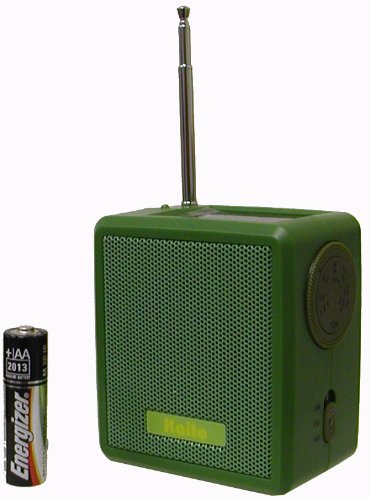
- ✓ Compact and sturdy
- ✓ No batteries needed
- ✓ Quick tuning to weather
- ✕ Small speaker volume
- ✕ Crank effort optional
| Power & Charging | Hand crank and built-in solar panel charging (no external battery required) |
| Radio Bands | AM, FM, and NOAA Weather Band |
| Output & Speaker | Built-in speaker for audio playback |
| Portability & Size | Compact handheld form factor (for backpacking use) |
| Warranty | 90-day manufacturer’s warranty |
| Usage Notes | Battery is for size reference only; designed for emergency use without external power |
You press the green shell and hear a satisfying click that tells you you’re ready for real-world backup power. I got a quick sip of wind-up curiosity when I cranked it once and tuned in to a weather alert almost instantly, the tiny speaker filling the tent with a crisp voice.
It’s not flashy, but that instant access feels like a safety net you can actually rely on.
The design is compact enough to tuck into a daypack pocket without weighing you down, yet sturdy enough to bounce around a bit on a hiking trip. I appreciated how the solar panel blade sits flat in a backpack lay, catching a stray sunbeam while I kept moving.
The hand crank felt sturdy in hand, with just the right resistance to feel purposeful rather than flimsy.
Setup is painless. You flip to AM/FM or NOAA with a simple thumb switch, and the built-in speaker does a fair job filling a small camp space.
There’s no battery to swap during a week-long trek, which means fewer little parts to worry about losing. It’s also nice to see a device that doesn’t depend on power outlets in a pinch.
In real-life use, I found the wind-up and solar charging balance well enough for emergency use and light listening. The green color makes it easy to spot in a pack or campsite, and the overall footprint sits comfortably in a palm with a bit of room to spare for your fingers to grip and crank.
It’s not a boom-box, but it never pretends to be—just a reliable, simple radio you actually reach for when you need it.
For backpacking and emergencies, this little radio feels like a trustworthy companion. It’s straightforward, durable enough, and always a quick reach away when you want weather updates or a distraction-free radio moment.
If you value simplicity and resilience, you’ll likely reach for it more often than you expect.
What Essential Features Should You Look for in the Best Backpacking Radio?
When searching for the best backpacking radio, there are several essential features to consider to ensure optimal performance and convenience during your outdoor adventures.
- Durability: A backpacking radio should be rugged and able to withstand harsh outdoor conditions. Look for materials that are water-resistant or shockproof to protect against rain, drops, and rough handling.
- Portability: Since you’ll be carrying it on your back, the radio should be lightweight and compact. Consider models that can easily fit into your backpack and have features like a built-in handle or carabiner for easy attachment.
- Power Options: A versatile power supply is crucial for long trips. The best backpacking radios typically offer multiple power sources, such as rechargeable batteries, solar panels, and hand-crank options, to ensure you have power in remote locations.
- Reception Quality: Good reception is vital for staying connected while out in the wilderness. Look for radios that feature digital tuning, high sensitivity, and the ability to receive both AM and FM signals for the best audio quality and range.
- Battery Life: An extended battery life is essential for multi-day trips. Choose a radio that can run for a long time on a single charge or has energy-saving features to maximize usage without frequent recharging.
- Additional Features: Many backpacking radios come with extra functionalities like built-in flashlights, USB ports for charging devices, or NOAA weather alerts. These added features can enhance your outdoor experience and provide safety and convenience during your travels.
What Types of Backpacking Radios Are Available for Different Needs?
The best backpacking radios cater to various needs such as communication, entertainment, and emergency preparedness.
- AM/FM Portable Radios: These are basic yet effective for receiving local radio stations while on the trail.
- Weather Radios: Equipped with NOAA weather alerts, these radios are crucial for outdoor enthusiasts to stay informed about changing weather conditions.
- Two-Way Radios: Ideal for group hikes or camping trips, these radios allow for direct communication between users without relying on cellular networks.
- Bluetooth Speakers: For those who prefer music while hiking, Bluetooth speakers can connect to smartphones and provide entertainment without the need for a traditional radio.
- Solar-Powered Radios: These eco-friendly options can be charged using solar energy, making them perfect for extended trips where battery access is limited.
AM/FM Portable Radios: These radios are lightweight and compact, making them suitable for backpacking. They allow users to listen to music, news, and talk shows, enhancing the outdoor experience. Many models come with built-in rechargeable batteries, ensuring long-lasting use during trips.
Weather Radios: These radios are specifically designed to receive emergency weather broadcasts, providing users with critical alerts about severe conditions. They often include features such as a flashlight or SOS signal, making them invaluable during outdoor adventures. Reliable and durable, weather radios can be a lifesaver in unexpected situations.
Two-Way Radios: Often referred to as walkie-talkies, these devices facilitate communication over short distances, which is particularly useful in areas without cellular service. They are lightweight and easy to use, making them a great choice for families or groups. Some models offer extended range and features like privacy codes for secure conversations.
Bluetooth Speakers: These devices are popular for those who enjoy music while hiking or camping. They pair with smartphones and allow users to stream music or podcasts easily. Many Bluetooth speakers are rugged and water-resistant, making them suitable for outdoor use, while others come with built-in power banks to charge devices on-the-go.
Solar-Powered Radios: These radios are designed to harness solar energy, making them perfect for long trips in remote areas. They often come with multiple charging options, including hand-cranking and USB charging, ensuring that users can keep them operational in various conditions. Additionally, solar-powered radios are environmentally friendly, appealing to eco-conscious backpackers.
How Do Hand-Crank Radios Work for Backpackers?
The best backpacking radios, particularly hand-crank models, are essential tools for outdoor enthusiasts, providing access to emergency information and entertainment without relying on batteries.
- Hand-Crank Generator: This is the primary feature that allows the radio to operate without external power sources.
- Built-in Flashlight: Many hand-crank radios come equipped with an LED flashlight, enhancing their utility in dark conditions.
- Multiple Power Sources: Hand-crank radios often include additional power options such as solar panels or rechargeable batteries.
- Weather Alerts and AM/FM Stations: These radios are designed to receive emergency weather broadcasts and standard radio stations, keeping users informed.
- Compact and Lightweight Design: Ideal for backpacking, these radios are lightweight and compact, allowing for easy transport.
Hand-Crank Generator: The hand-crank generator is a mechanical device that converts human energy into electrical energy. When you turn the crank, it spins a dynamo that generates electricity to power the radio, ensuring that you have a reliable source of energy even in remote areas.
Built-in Flashlight: Many hand-crank radios feature an integrated LED flashlight, which can be a lifesaver in emergency situations or during nighttime activities. This dual functionality eliminates the need to carry an additional flashlight, thereby saving space and weight in your backpack.
Multiple Power Sources: In addition to the hand-crank mechanism, these radios typically come with solar panels or built-in rechargeable batteries, offering versatility in how you power the device. This is particularly useful for extended trips where battery replacement might be challenging.
Weather Alerts and AM/FM Stations: Designed for safety, hand-crank radios can pick up NOAA weather alerts and broadcasts, ensuring that you receive crucial updates about changing weather conditions. Additionally, they can tune into AM and FM stations for entertainment or news, which can be a morale booster during long hikes.
Compact and Lightweight Design: The design of hand-crank radios is tailored for backpackers, focusing on minimizing weight and maximizing functionality. Their small size allows them to fit easily into a backpack pocket or side pouch, making them convenient to carry during your outdoor adventures.
What Are the Advantages of Solar-Powered Radios in the Outdoors?
The advantages of solar-powered radios for outdoor use make them an excellent choice for backpackers.
- Eco-Friendly Energy Source: Solar-powered radios utilize renewable energy from the sun, reducing reliance on disposable batteries and minimizing environmental impact.
- Extended Use Time: With the ability to recharge via sunlight, these radios can provide extended operation times, making them ideal for long trips where access to electricity is limited.
- Durability and Weather Resistance: Many solar-powered radios are designed for outdoor use, featuring rugged construction and weather-resistant materials, ensuring they stand up to the elements.
- Multi-Functionality: Often equipped with additional features like flashlights, USB charging ports, and emergency alerts, these radios serve multiple purposes, enhancing their utility in outdoor situations.
- Lightweight and Compact: Solar-powered radios are typically designed to be lightweight and portable, making them easy to carry in a backpack without adding significant weight.
Eco-friendly energy sources are increasingly important for outdoor enthusiasts, as solar-powered radios harness sunlight for energy, which helps to protect the environment by reducing waste associated with traditional batteries.
Extended use time is a significant advantage, allowing backpackers to rely on their radios for communication and entertainment over long periods without the need for frequent recharging or battery replacements.
Durability and weather resistance are crucial features, as rugged designs protect the internal components from moisture, dust, and physical impacts, ensuring reliable performance in harsh outdoor conditions.
Multi-functionality adds to the appeal of solar-powered radios, as they often include features like built-in flashlights, emergency SOS signals, and USB ports for charging other devices, making them invaluable tools during outdoor adventures.
Lightweight and compact designs make these radios convenient for backpackers, allowing them to easily fit into their gear without adding unnecessary bulk, which is essential for efficient packing and mobility on the trail.
Are Battery-Powered Radios Still the Best Option for Backpacking Trips?
Battery-powered radios can be a reliable option for backpacking trips, but there are several alternatives to consider as well.
- Battery-Powered Radios: These radios are compact, lightweight, and designed for outdoor use, making them a popular choice among backpackers.
- Solar-Powered Radios: These radios harness solar energy to recharge, providing an eco-friendly option that eliminates the need for disposable batteries.
- Hand-Crank Radios: These radios feature a hand-crank mechanism that allows users to generate power manually, ensuring functionality even in remote locations without access to power sources.
- Smartphone Apps: Many backpackers opt for using smartphone apps that stream radio content, though this option requires a charged device and may rely on cellular data.
- Multi-Function Devices: Some devices combine radio functionality with other tools like flashlights and power banks, providing versatility for outdoor adventures.
Battery-powered radios are compact, lightweight, and designed specifically for outdoor use, making them a favorite among backpackers who want reliable access to news and entertainment without draining their phone’s battery. They generally run on standard batteries, which can be easily replaced during a trip.
Solar-powered radios utilize sunlight to recharge their batteries, making them an eco-friendly choice for extended trips where access to traditional power sources is limited. They can be an excellent option for environmentally conscious backpackers who enjoy long hikes in sunny climates.
Hand-crank radios allow users to generate their own power by manually cranking a handle, ensuring they remain operational even in remote locations without electricity. This self-sufficiency can be crucial during emergencies when other power sources are unavailable.
Smartphone apps that stream radio content have become increasingly popular among backpackers, as they offer a broad range of stations and programming. However, this option requires a charged phone and may consume data, which can be a concern in areas with limited service.
Multi-function devices combine radio capabilities with other useful features such as flashlights, power banks, and emergency alerts, making them practical for backpackers who want to minimize gear weight and complexity. These devices can provide additional peace of mind in emergencies while also serving multiple purposes on the trail.
Why Is a Backpacking Radio Important for Safety and Communication?
A backpacking radio plays a crucial role in ensuring safety and facilitating communication during outdoor adventures. Here are the key reasons why it is important:
-
Emergency Communication: In remote areas, cell phone coverage can be unreliable. A backpacking radio allows you to communicate with rescue services or fellow hikers in case of emergencies, ensuring help is accessible when needed.
-
Weather Updates: Backpacking radios often include NOAA weather channels, providing real-time weather alerts. Awareness of sudden weather changes can help you plan your activities and avoid dangerous conditions.
-
Group Coordination: If hiking with a group, radios are vital for maintaining contact. They help coordinate movements, share information about trail conditions, or alert others about potential hazards.
-
Entertainment: During downtime, a backpacking radio can serve as a source of entertainment. Listening to music or talk shows can enhance your camping experience.
-
Navigational Aid: Some advanced models come equipped with GPS capabilities, aiding in navigation or tracking your route, further increasing your safety.
Having a reliable backpacking radio ensures that you stay connected, informed, and safe while enjoying the great outdoors.
How Can You Ensure Your Backpacking Radio Is Durable and Reliable?
To ensure your backpacking radio is durable and reliable, consider the following factors:
- Weather Resistance: Look for radios that are specifically designed to withstand various weather conditions, such as rain, humidity, and extreme temperatures.
- Build Quality: Choose a radio made from rugged materials that can endure rough handling and accidental drops, typically those with reinforced housing or rubberized exteriors.
- Battery Life: Opt for radios with long-lasting battery performance, ideally those that offer multiple power options like rechargeable batteries, solar charging, or hand-crank mechanisms.
- Portability: Select a lightweight and compact model that won’t add unnecessary bulk to your pack, making it easier to carry during long hikes.
- Reception Quality: Ensure the radio has good reception capabilities, including features like telescoping antennas or digital tuning for clearer sound and better signal strength.
- Warranty and Reviews: Check for solid warranties from manufacturers and read user reviews to gauge reliability and performance in real-world scenarios.
Weather-resistant radios are crucial for backpacking as they protect against environmental challenges, ensuring your device continues to function regardless of the conditions you encounter. Look for ratings such as IPX4 or higher, which indicate resistance to water splashes from any direction.
The build quality of a backpacking radio determines its longevity; models made from durable plastics or metals can withstand the rigors of outdoor use. Features like shockproof designs or reinforced corners can significantly enhance durability.
Battery life is vital for extended trips, as you want a radio that can last several days without needing a recharge. Models with multiple charging options increase versatility, especially in remote areas where power sources might be limited.
Portability is important since a heavy or bulky radio can be cumbersome on long hikes. Look for compact designs that can easily fit into your backpack without taking up too much space or adding excessive weight.
Reception quality impacts your ability to catch signals, especially in remote areas. Radios with advanced tuning systems or external antennas can provide better access to stations, ensuring you stay informed during your adventures.
Lastly, a reliable warranty and positive reviews are indicators of a product’s quality. Manufacturers that stand behind their products with good warranties and have favorable user feedback typically produce more reliable items.
What Are the Top Brands Known for Quality Backpacking Radios?
The top brands known for quality backpacking radios include:
- Midland: Midland is renowned for its durable and reliable two-way radios, which often feature NOAA weather alerts, providing essential information during outdoor adventures. Their products are designed to withstand rugged conditions, making them ideal for backpackers who need a dependable communication tool.
- Baofeng: Baofeng radios are popular for their affordability and versatility, offering a wide range of frequencies and features that appeal to both amateur and experienced backpackers. These radios are compact and lightweight, making them easy to carry on long hikes, and they often come with programmable features for customization.
- Sangean: Sangean specializes in high-quality portable radios that deliver excellent sound quality along with features like Bluetooth connectivity and weather resistance. Their models are particularly favored for camping and backpacking due to their long battery life and ability to receive AM/FM and weather band signals.
- Uniden: Uniden produces a variety of communication devices that are reliable and user-friendly, with many models offering features such as multiple channels and emergency alerts. Their radios are built to endure outdoor conditions while providing clear communication over long distances, making them a solid choice for backpackers.
- Sony: Sony is well-known for its portable audio devices, including radios that are compact and lightweight, perfect for backpacking. Their radios often feature advanced technology, such as digital tuning and high-quality speakers, ensuring that users can enjoy music or stay informed while on the trail.