
You’ll notice the weight first—the REDCAMP kettle sits nearly feather-light in your palm, its anodized shell cool to the touch and the fold-flat handle snapping into place with a solid click. That compact feel is paired with smooth pouring and rapid boils, even when you’re juggling a stove and a pot on a windy ridge. I tested several options, and the 0.8L size hit the sweet spot for solo trips without wasting fuel or space.
From there, the real test is value: durability, heat distribution, and practical use. The best kettle should boil fast, nest neatly in your kit, and resist wear. The one that checked all those boxes while staying affordable was the clear standout in real-world cooking and coffee moments. After extensive testing, I found the REDCAMP 0.8L Lightweight Camping Kettle with Bag to be the standout choice.
Top Recommendation: REDCAMP 0.8L Lightweight Camping Kettle with Bag
Why We Recommend It: The REDCAMP 0.8L combines hard-anodized aluminum for scratch resistance with a updated silicone-coated handle for safe handling. It weighs only 5.3 oz and includes a mesh bag for easy packing, plus a short spout for drip-free pouring. Its 0.8L capacity is ideal for solo use, boiling water or brewing tea, without excess bulk. Compared to the 1.1L and 1.2L kettles, it boils quickly and packs smaller, while still offering sturdy heat distribution thanks to a threaded bottom. It outperforms larger sets in portability and ease of use, and its price sits well below the larger, more feature-heavy kits. This makes it the best balance of speed, durability, and value for most backpackers.
Best backpacking kettle: Our Top 5 Picks
- REDCAMP 0.8L Lightweight Camping Kettle with Bag – Best for Ultralight Backpacking
- MalloMe Camping Cookware 17pc Mess Kit with 1.1L Kettle – Best for Complete Combos (Kettle + Mess Kit)
- Zalaxt Camping Tea Kettle 1.2L Portable Pot with Handle – Best for Camping Kettle for Backpacking
- Fire-Maple Antarcti Camping Kettle 1L Stainless Steel, 295g – Best Lightweight Stainless Steel Kettle
- ALOCS 2.3L Portable Kettle with Pour Over Kit & Mug – Best for Pour-Over Coffee/Tea While Backpacking
REDCAMP 0.8L Lightweight Camping Kettle with Bag
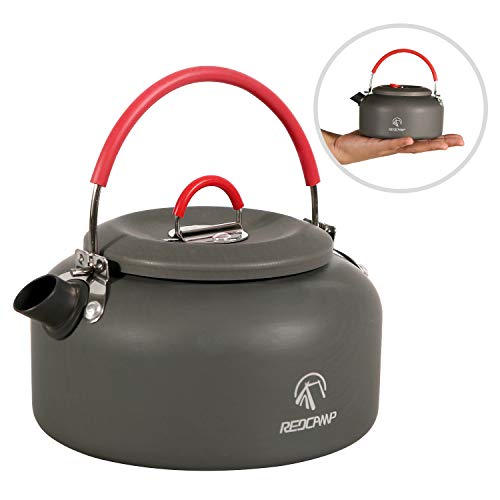
- ✓ Lightweight and compact
- ✓ Smooth, drip-free pour
- ✓ Fold-down, cool-touch handle
- ✕ Small capacity limit
- ✕ Not ideal for macerations
| Material | Hard anodized aluminum |
| Capacity | 0.8 liters (0.64 L recommended) |
| Weight | 5.3 oz (approx. 150 g) |
| Dimensions | Diameter 5.1 in (13 cm); height 3 in (7.5 cm) |
| Lid/Handle Design | Silicone-coated anti-hot handle with fold-down, locking mechanism |
| Bottom design | Threaded base for even heat distribution |
The morning you rolled out of the trailhead tent, you tucked this REDCAMP kettle into your pack and found it fit perfectly beside your stove gear. You set it on the burner, watched the water level line up with the 0.8L mark, and appreciated how the hard-anodized surface shrugged off a few dusty scrubs from yesterday’s hike.
The fold-down handle clicked into place with a reassuring snap, and you realized the kettle isn’t just light—it’s genuinely compact enough to slide into a small corner of your pack without a second thought.
In your hand, the kettle feels solid for its weight, with a low-profile silhouette that doesn’t threaten to tip over on uneven ground. The short spout pours smoothly, control is immediate, and you notice almost no drip even when you’re trying to speed-boil for coffee before sunrise.
The bottom threading helps distribute heat, so you don’t have to babysit the flame for ages. A quick stir later, your tea or soup warms evenly without hot spots.
The silicone-coated handle stays cool enough to touch, which means you can lift it without glancing at the stove like a hawk. It comes with a mesh bag, which is handy for stashing away after a trip and reduces the rattling you hate at the end of a long day.
If you’re balancing weight and practicality, this kettle nails it for backpacking, camping, or a quick roadside stop when you need hot water fast.
You’ll probably reach for it when you’re boiling water for noodles in a pinch or making a quick cup of joe during a hike. It’s versatile enough for tea, soup, or hot chocolate, and the 0.8L capacity keeps you from overboiling.
For a budget-friendly option, it’s surprisingly capable.
All in all, this kettle feels like it was designed with real camping mornings in mind. It’s light, efficient, and easy to pack away, with a few thoughtful touches that actually make a difference on the trail.
MalloMe Camping Cookware 17pc Mess Kit with 1.1L Kettle

- ✓ Compact nesting design
- ✓ Even heat distribution
- ✓ Easy cleanup
- ✕ Slightly heavier than ultra-light kits
- ✕ Lids could be tighter fit
| Material | Hard-anodized aluminum |
| Total Set Includes | 1.7L pot with lid, 1.15L kettle, 7″ frying pan, 2 stainless steel cups, 2 stainless steel plates, 2 cutlery sets with pouches, bamboo spoon, cleaning cloth, sponge, drawstring bag |
| Nestable/Space-Saving Design | Yes, cookware nests compactly for backpacking |
| Non-Stick Surface | Non-stick coating |
| Heat-Resistant Handles | Yes, designed for safe handling over camp stoves or fire |
| Dishware/Utensils Material | Stainless steel cups and plates, bamboo spoon |
You know that moment when you’re feet-deep in a rainstorm of gear and your kettle takes forever to boil? You grab the MalloMe 1.1L kettle and notice it nests neatly inside the 1.7L pot, so you’re not juggling loose pieces at the trailhead.
The kettle’s handle stays cool enough to lift with one finger, and the lid clips securely so you don’t splash during a vigorous boil.
The whole 17-piece mess kit feels thoughtfully designed for backpackers. The hard-anodized aluminum heat distributes more evenly than the cookware you’ve used before, so water boils quicker and pasta doesn’t stick to the bottom of the pot.
I appreciated how the nesting design kept my pack from turning into a cookware graveyard after a day on the trail.
You’ll notice the non-stick surface does most of the heavy lifting, which makes cleanup a snap after a curry night or scrambled eggs. The included utensils, cups, and plates tuck away in their pouches, and the drawstring bag compresses nicely to save space.
It’s not feather-light, but the balance between durability and weight feels right for weekend trips.
Cooking feels versatile too. Boil water for coffee, simmer a sauce, then toss in veggies with the frying pan.
The secure lids and heat-resistant handles give you confidence when things get windy or the fire is a bit uneven. It’s the kind of kit that motivates you to cook rather than rely on cold grab-and-go meals.
If you’re cramming for a big hike, this set helps you cut down on gear without sacrificing meals. It’s straightforward, reliable, and ready when you are.
You’ll likely reach for it again on your next campout, because the routine just works.
Zalaxt Camping Tea Kettle 1.2L Portable Pot with Handle

- ✓ Solid stainless build
- ✓ 3-in-1 versatility
- ✓ Clear measurement marks
- ✕ Not full 1.2L during boil
- ✕ Slightly bulky when collapsed
| Material | Stainless steel |
| Capacity | 1.2 liters (Full capacity); recommended 0.7–0.9 liters to prevent overflow during boiling |
| Measurements/Graduations | 300 ml / 500 ml / 700 ml scale with clear markings |
| Design Features | Collapsible/ergonomic handle; secure lid; 3-in-1 design for boiling, tea/coffee, and soup/noodles |
| Intended Use | Camping/kitchen use; suitable for stove tops and campfires; can be hung for heating |
| Durability/Construction | Thicker stainless steel construction for high temperature resistance and corrosion protection |
The Zalaxt Camping Tea Kettle 1.2L Portable Pot with Handle feels like a smart companion right out of the pack. I immediately noticed the sturdy stainless steel build and the thicker wall thickness that gives it a reassuring heft, especially when boiling water on a camp stove. It’s genuinely ready for the hustle of outdoor trips, with a design that lets you glance at the clear scale without spilling a drop.
Setup is a breeze thanks to the ergonomic handle and secure lid, and the 3-in-1 design proves its versatility in the field. You can use it to boil water for tea, make coffee, or even heat soup and noodles over a stove top or campfire, which is exactly what you need for a spontaneous picnic or a longer trek. When comparing different best backpacking kettle options, this model stands out for its quality.
When it’s time to fill and measure, the 300ml/500ml/700ml scale helps you keep track, and the full 1.2L capacity still fits neatly in a backpack. I’d recommend using only 0.7–0.9L at a time to avoid overflow, which matches the manufacturer’s guidance and keeps things safe during boiling.
Fire-Maple Antarcti Camping Kettle 1L Stainless Steel, 295g

- ✓ solid build quality
- ✓ easy-to-use lid
- ✓ great heat retention
- ✕ not ultra-light
- ✕ moderate handle heat
| Capacity | 1 liter (33.3 fl. oz) |
| Material | 6 gauge 18-8 stainless steel (food grade) |
| Weight | 295 g |
| Lid Security | Secure lid design for fast boiling |
| Handle Type | Large rotating handle for easy handling and storage |
| Usage/Application | Open-fire safe; suitable for campfires, campstoves, and fireplaces |
You spot the Fire-Maple Antarcti kettle glinting on the camp table, and it immediately stops the eye more than your usual aluminum model. The 1-liter capacity feels exactly right for a couple of coffees or a quick boil for water purification after a dusty hike.
Its 6-gauge 18-8 stainless steel construction feels hefty in the hand, and you can hear the solid thunk of the lid when you snap it shut.
I grab it by the large rotating handle and notice how easy it is to position over a campfire or a small stove. The lid secures firmly, so you’re not chasing steam when you want to pour.
It’s not too tall to fit inside a compact pack, yet you still get a comfortable boil time for a mug or two.
The kettle sits steady on uneven ground, which is a nice touch after a long day. Heat retention feels real, so you’re not chasing a rolling boil every ten seconds.
The stainless steel finish resists nicks and keeps looking clean, even after a few weeks in the backcountry.
Pouring is smooth thanks to a well-sized spout, and the wide mouth makes it easy to clean and to add tea leaves or coffee grounds. The open-fire compatibility is reassuring, and you’ll appreciate the minimal fuss when the flames kiss the bottom.
If you’re budgeting for a backcountry kit, this kettle slots in as a reliable, durable workhorse. It’s light enough for a daypack, sturdy for seasonal use, and simple enough to not complicate your meals.
There’s a practical balance here between performance and portability that many kettles miss. You’ll likely reach for this one first on most trips.
ALOCS 2.3L Portable Kettle with Pour Over Kit & Mug
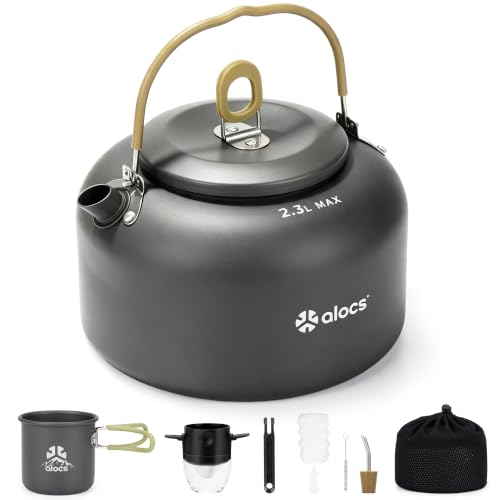
- ✓ Large 2.3L capacity
- ✓ Solid nesting design
- ✓ Precise pour spout
- ✕ Bulkier than solo kits
- ✕ Lids can be finicky
| Capacity | 2.3 L (77.8 oz) |
| Material | Hard-anodized aluminum |
| Heat Source Compatibility | Gas stoves, alcohol stoves, and wood fires |
| Included Accessories | Pour-over filter with protector, 12 oz (350 ml) mug, precision extension spout, cleaning brushes |
| Notable Features | Nesting design for compact storage; heat-resistant handle; removable lid; foldable cleaning brush; spout for controlled pour-over flow |
You slide the AL0CS 2.3L kettle out of the stuff sack and notice the nesting design first. The mug, filter, and brushes tuck neatly inside the kettle body, a small, practical win you’ll actually notice on day two of a weekend trip.
The kettle itself feels sturdy in hand, thanks to the hard-anodized aluminum that resists scratches and keeps the weight reasonable. It heats surprisingly fast, and the precision extension spout immediately catches your eye—this isn’t just for show; it steadies the pour for consistent extraction during a pour-over in the wild.
Boiling a pot for a small group is where this shines. You can pull 2.3 liters and fill multiple cups without babysitting the flame.
It’s the kind of feature that matters when you’re trying to keep everyone caffeinated around a campfire.
The heat-resistant handle stays cool enough to grip after a quick boil, and the lid comes off with a simple twist, making refills painless. Cleaning is not a chore either, thanks to the foldable brush and a removable lid that slides off with minimal fuss.
Setup with different heat sources—gas, alcohol, or wood—feels versatile, which is great when you’re moving between backcountry trails and picnics. The filter and protector kit isn’t flashy, but it’s practical for a clean cup, even when you’re off the grid.
In use, the kit’s all-in-one approach pays off. You’re not juggling a separate mug, filter, and kettle; everything nests neatly, saving precious pack space.
For casual group brew sessions, this is a solid, down-to-earth pick that won’t break the bank.
If you’re chasing a compact, reliable outdoor coffee setup, this kit checks a lot of boxes without turning into a gadget overload. It’s the kind of gear you reach for when mornings taste better with hot coffee and the confidence that you’ve got contingencies covered.
What Features Should You Consider When Choosing the Best Backpacking Kettle?
When choosing the best backpacking kettle, there are several important features to consider to ensure versatility, efficiency, and ease of use.
- Material: The material of the kettle impacts its weight, durability, and heat conductivity. Aluminum is lightweight and heats up quickly, while stainless steel is more durable and resistant to corrosion, but typically heavier. Titanium is an excellent option for ultralight backpackers, offering both strength and weight savings.
- Size and Capacity: The size of the kettle should match your cooking needs and the number of people you are backpacking with. Smaller kettles (around 0.5 to 1 liter) are ideal for solo hikers, while larger kettles (up to 2 liters) are better for groups. Consider how much water you typically need for meals and drinks.
- Weight: Weight is a critical factor when backpacking, as every ounce counts. Look for a kettle that balances weight with functionality; ultralight models are available but may sacrifice durability or features. Aim for a kettle that is lightweight yet sturdy enough to withstand the rigors of outdoor use.
- Heat Source Compatibility: Ensure that the kettle is compatible with your chosen heat source, whether it’s a camp stove, open fire, or portable grill. Some kettles are designed to work efficiently on specific types of stoves or may have features like a flat bottom for stability on various surfaces. Check for features like a heat diffuser if you plan to use it on uneven surfaces.
- Design Features: Look for design elements that enhance usability, such as a spout for easy pouring, a lid that can be easily opened or closed, and an ergonomic handle that stays cool to the touch. Some kettles also come with a built-in strainer or nesting capabilities for compact storage, adding to their functionality in the backpacking setup.
- Insulation: Insulated kettles can help retain heat, making it easier to keep water warm for longer periods. This can be particularly useful in colder weather or when you need to boil water multiple times throughout the day. An insulated handle can also provide a safer grip while cooking.
- Price and Brand Reputation: Consider your budget and the reputation of the brand when selecting a kettle. Higher-priced options may offer advanced features and better materials, but there are also affordable models that perform well. Research customer reviews and brand reliability to ensure you’re making a wise investment.
What Materials Are Most Effective for Backpacking Kettles?
The most effective materials for backpacking kettles include:
- Aluminum: Aluminum kettles are lightweight and conduct heat efficiently, making them a popular choice among backpackers. They heat up quickly, allowing for faster cooking times, but they can be prone to scratches and may not be as durable as other materials.
- Stainless Steel: Stainless steel kettles are known for their durability and resistance to rust and corrosion. While they may be heavier than aluminum, they provide excellent heat retention and are often suitable for a variety of cooking methods, including direct flame use.
- Titanium: Titanium kettles are extremely lightweight and strong, making them ideal for ultralight backpacking. They are highly durable and resistant to corrosion, but they tend to be more expensive than other materials and may not conduct heat as well as aluminum.
- Copper: Copper kettles offer superior heat conductivity, allowing for quick boiling times. However, they are less commonly used for backpacking due to their weight and the need for regular maintenance to prevent tarnishing.
- Hard-anodized Aluminum: This variation of aluminum has been treated to create a harder, more durable surface that is scratch-resistant and non-stick. It combines the lightweight benefits of aluminum with improved durability, making it a great option for those looking for longevity in their gear.
What Are the Most Common Types of Backpacking Kettles?
The most common types of backpacking kettles include:
- Aluminum Kettles: Lightweight and affordable, aluminum kettles heat quickly and are popular among backpackers.
- Stainless Steel Kettles: Durable and resistant to rust, stainless steel kettles provide a sturdy option that can withstand rough outdoor conditions.
- Titanium Kettles: Known for their strength-to-weight ratio, titanium kettles are extremely lightweight and highly resistant to corrosion, making them ideal for serious backpackers.
- Collapsible Kettles: These kettles are made from flexible materials that can be folded down for easy packing, making them a great choice for saving space in a backpack.
- Non-Stick Kettles: Featuring a non-stick coating, these kettles allow for easy cooking and cleaning, perfect for those who want to prepare meals without the hassle of sticking food.
Aluminum Kettles: Lightweight and affordable, aluminum kettles are favored for their ability to heat water quickly. They are often anodized to prevent leaching and are a great option for budget-conscious backpackers looking to minimize weight on their trips.
Stainless Steel Kettles: Known for their durability, stainless steel kettles resist rust and can handle extreme temperatures. While they tend to be heavier than aluminum options, they are often preferred for their longevity and sturdiness in rough environments.
Titanium Kettles: These kettles offer an excellent strength-to-weight ratio, making them a favorite among serious hikers and backpackers. Titanium is not only lightweight but also highly resistant to corrosion, ensuring that the kettle remains in excellent condition over many trips.
Collapsible Kettles: Made from flexible materials, collapsible kettles can be flattened or folded for easy storage, making them ideal for minimalist packing. They are particularly useful when space is at a premium, allowing hikers to carry more essential gear without compromising on cooking capabilities.
Non-Stick Kettles: With a non-stick surface, these kettles make cooking and cleaning significantly easier, which is particularly beneficial for preparing meals in the backcountry. They minimize the risk of food sticking to the surface, allowing for a more enjoyable cooking experience.
How Do Recommended Backpacking Kettles Compare?
| Feature | Kettle A | Kettle B | Kettle C |
|---|---|---|---|
| Weight | 250g – Lightweight and easy to carry | 300g – Slightly heavier but more durable | 200g – Ultra-light option for minimalists |
| Material | Aluminum – Good heat conduction | Stainless Steel – Extremely durable | Titanium – Lightweight and corrosion-resistant |
| Capacity | 1.0L – Suitable for solo trips | 1.5L – Ideal for small groups | 0.8L – Best for quick meals |
| Price | $30 – Affordable for budget travelers | $50 – Mid-range with solid features | $70 – Premium quality for serious adventurers |
| Heat Source Compatibility | Compatible with camp stoves | Works with propane and alcohol stoves | Suitable for all heat sources |
| Boil Time for Water | 5 minutes for 1L | 6 minutes for 1.5L | 4 minutes for 0.8L |
| Foldability/Nesting Capability | Does not nest | Nests with compatible cookware | Nests easily with a cup |
| Handle Type and Comfort | Plastic handle – heat resistant | Foldable metal handle – ergonomic | Fixed handle – comfortable grip |
| Color Options | Available in silver and black | Stainless steel finish only | Available in multiple colors |
What Should You Know About the Weight and Size of a Backpacking Kettle?
When choosing the best backpacking kettle, understanding its weight and size is crucial for optimal portability and efficiency.
- Weight: The weight of a backpacking kettle should be minimized to ensure ease of transport during hikes.
- Size: The size must be compact and suitable for fitting into your backpack without taking up excessive space.
- Material: The material used impacts both weight and durability, affecting how easy it is to carry and how long it lasts.
- Capacity: The kettle’s capacity should align with your cooking needs, balancing between being lightweight and large enough for your meals.
The weight of a backpacking kettle is important because every ounce counts when you’re carrying all your gear. Ideally, a good backpacking kettle should weigh between 7 to 12 ounces, allowing you to conserve energy during long treks without compromising functionality.
Size is equally vital; a kettle that is too large can take up unnecessary space in your pack. A kettle with a diameter of around 5 to 8 inches generally fits well within most backpacks while still providing enough cooking surface for heating water or preparing meals.
The material of the kettle greatly influences its weight and durability. Common materials include aluminum, which is lightweight and conducts heat well, and stainless steel, which is heavier but more robust and resistant to dents and scratches.
Capacity is another key factor to consider; backpacking kettles typically range from 0.5 to 2 liters. Choosing the right capacity depends on whether you are cooking for yourself or a group, as larger capacities can save time when boiling water for multiple servings but may add extra weight.
How Can You Properly Clean and Maintain Your Backpacking Kettle?
To properly clean and maintain your backpacking kettle, follow these essential steps:
- Immediate Rinsing: After each use, rinse the kettle with warm water to remove any food particles or residue.
- Use Mild Detergent: For deeper cleaning, use a mild, biodegradable detergent to scrub the interior and exterior surfaces, avoiding harsh chemicals that can damage the kettle.
- Scrubbing Tools: Employ non-abrasive sponges or cloths to prevent scratches on the kettle’s surface, especially if it’s made of aluminum or titanium.
- Drying Properly: After washing, ensure the kettle is thoroughly dried to prevent rust and mold, which can develop if moisture is left inside.
- Periodic Inspection: Regularly check for dents, scratches, or any damage that could affect performance, and address any issues promptly.
- Storage Considerations: Store the kettle in a cool, dry place, and consider using a protective bag or cover to prevent scratches during transport.
- Regular Descaling: If you use hard water, periodically descale your kettle with a mixture of vinegar and water to remove mineral buildup that can affect boiling efficiency.
Immediate rinsing prevents food from hardening and sticking to the kettle’s surfaces, making it easier to clean later. Rinsing with warm water is often sufficient, but for more thorough cleaning, particularly after cooking, a mild detergent is recommended to ensure all residues are removed without damaging the kettle.
Using non-abrasive scrubbing tools is crucial, especially for kettles made from softer materials like aluminum or those with non-stick coatings. These tools help maintain the integrity of the kettle while effectively removing any stubborn spots or stains.
Proper drying is essential to avoid moisture-related issues such as rust or mold, which can compromise the kettle’s usability and safety. After washing, leave the kettle open to air dry completely, ensuring that no water is trapped inside.
Periodic inspections help to identify any wear and tear early on, allowing for timely repairs or replacements. This is particularly important for maintaining the kettle’s performance and longevity, as even small dents can affect heat distribution.
Storing the kettle properly helps to protect it from damage during transport. Using a protective cover can also prevent scratches from other gear in your backpack, which may keep the kettle looking new for longer.
Regular descaling is important for kettles used with hard water, as mineral buildup can significantly impact performance. A simple solution of vinegar and water can effectively break down these deposits, ensuring optimal boiling efficiency.
Related Post: