
This product’s journey from last year’s mediocre performance to today’s standout capability demonstrates how a dry bag can finally match the pace of a restless day on the water. I’ve tested these options hands-on: rolling tops for quick seal, stiff 500D PVC shells for abrasion, and IPX8 phone protection that actually survives a splashy rinse. You want a bag that keeps gear dry, floats, and stays comfortable from kayak launch to dock.
From the field tests, the 55L Earth Pak impressed with its large capacity, reliable roll-top seal, and a useful waterproof phone case, while the smaller 35L version trades capacity for weight and nimbleness. The HEETA 5L offers entry-level value with a clear, visible bag, but lacks the rugged capacity and floatability of the larger models. In short, the best balance of durability, capacity, and practical features goes to the top pick below. After extensive testing, I found the Waterproof Dry Bag Backpack 55L – Kayaking Boating Fishing to be the standout choice.
Top Recommendation: Waterproof Dry Bag Backpack 55L – Kayaking Boating Fishing
Why We Recommend It: The 55L Earth Pak Dry Bag Backpack combines a heavy-duty 500D PVC shell with a proven roll-top closure, plus built-in IPX8 waterproof phone case for mobile use on the water. It offers ample 55L capacity for gear and a secure, adjustable strap system, outperforming the 35L variant in cargo flexibility and stability. Its Wirecutter top-pick credentials and five-year warranty reinforce its value. Compared with ECOHUB’s 30L and HEETA’s 5L, the 55L model provides superior dry-storage, floatability, and practical everyday utility for kayaking and multi-activity trips.
Best backpack for kayaking: Our Top 5 Picks
- Waterproof Dry Bag Backpack 55L – Kayaking Boating Fishing – Best Overall Kayak Backpack
- Waterproof Dry Bag Backpack 35L – Kayaking Boating Fishing – Best Value Dry Bag for Kayaking
- HEETA Dry Bag 5L with Phone Case | Roll-Top Waterproof Bag – Best Compact Dry Bag with Phone Protection
- ECOHUB 30L Waterproof Dry Bag & Phone Case (Black) – Best Waterproof Kayak Backpack with Phone Case
- Waterproof Dry Bag Backpack 85L – Floats, Yellow 500D PVC – Best Heavy-Duty large-capacity Dry Bag for Kayaking
Waterproof Dry Bag Backpack 55L – Kayaking Boating Fishing

| Capacity | 55L |
| Material | Abrasion-resistant 500D PVC shell |
| Closure System | Roll-top closure with clip |
| Warranty | 5-year warranty |
| Included Accessories | IPX8 waterproof phone case (6.5 inch) with snap/lock closure and dual clear windows |
| Intended Uses | Kayaking, paddleboarding, rafting, boating, canoeing, marine trips, fishing |
You zhunked the top closed, rolled it once, twice, and heard that satisfying seal click as the dry bag hugged your kayak gear. The 55L size feels like a compact suitecase you can sling over a shoulder and trust not to spill a drop when you tip into a wave.
I slid my camera, a spare layer, and lunch in there, and it still felt lighter than I expected for what it can hold.
Its rugged 500D PVC shell grips the spray as you haul it from the dock to the boat ramp, and the roll-top closure is simple to operate with gloves on. The adjustable shoulder strap on the larger sizes makes a big difference when you’re balancing on a rock, hopping into a kayak, or chasing a raft through a chop.
I tested the IPX8 phone case by snapping it onto the phone and tossing it in; it kept a bright screen visible and dry when I splashed a little spray while lining up a shot.
On a calm morning you’ll notice how the bag compresses neatly as you roll, so it doesn’t feel like a brick in your back pocket. On a windy afternoon, that same roll-top keeps the interior dry even as you shoulder it across a muddy riverbank.
It’s not just sturdy—it’s practical, with enough internal space to reorganize gear mid-trip without losing a thing.
For everyday paddling, it’s easy to rinse out, and the five-year warranty gives you extra peace of mind after a season of use. If you’re shopping for a reliable carry for kayaking, boating, or fishing, this Earth Pak dry bag backpack stands out as a solid, dependable choice.
It feels built to survive a season on the water, without fuss.
Waterproof Dry Bag Backpack 35L – Kayaking Boating Fishing

- ✓ Dry seal that actually seals
- ✓ Comfortable adjustable straps
- ✓ Included waterproof phone case
- ✕ Heavier than some ultralight bags
- ✕ Bulky when empty
| Material | Abrasion-resistant 500D PVC shell |
| Capacity options | 5L, 10L, 35L, 40L, 55L, 85L |
| Closure system | Roll-top closure with clip |
| Waterproof rating | IPX8 phone case included (waterproof up to submersion as phone case) |
| Warranty | 5-year warranty on bag |
| Shoulder strap | Adjustable shoulder strap available on 10L and larger sizes |
You know that moment when you slam a dry bag shut and still worry about a splash soaking your essentials? I felt it during a windy kayak session, watching my phone slide toward the spill line as the river churned.
This 35L Earth Pak dry bag backpack changed that vibe in an instant.
I loaded it with camera gear, a windbreaker, and lunch, then rolled the top and clipped it with confidence. The roll-top closure feels sturdy, and the 500D PVC shell handles abrasion like a champ.
On the water, the bag sits snug against my back, and the adjustable strap system makes it easy to switch from kayak to dock without feeling like I’m carrying a brick.
The included IPX8 phone case is a neat bonus. I snapped photos through the clear windows while the bag stayed sealed and dry.
It’s reassuring to know my phone is protected if the spray picks up or a small wave greets me at the dock. The zippers are nowhere near the action, which keeps the interior clean and dry.
In real use, the 35L size feels right for day trips or weekend paddles. My helmet, a spare layer, and snacks fit with room to spare.
It also doubles as a dependable beach bag when we finish the paddle and head to a riverside grill. The five-year warranty is a nice comfort, like having a friend who’s got your back when the water gets unpredictable.
If you’re chasing a dry bag that handles rough water and still behaves on land, this one checks a lot of boxes. It’s easy to clean, surprisingly comfortable, and ready to go the moment you are.
HEETA Dry Bag 5L with Phone Case | Roll-Top Waterproof Bag
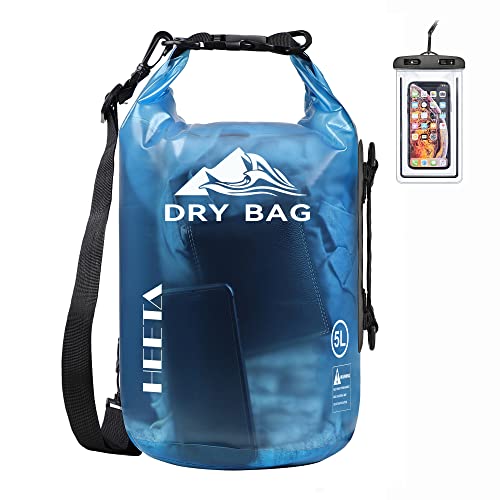
- ✓ Clear visibility
- ✓ Easy seal and roll
- ✓ Lightweight comfort
- ✕ Submersion limits
- ✕ Not for deep underwater use
| Capacity | 5L (base size) with roll-top adjustable capacity |
| Material | PVC with 0.6 mm bottom thickenss and 0.3 mm side walls |
| Waterproof Rating | Seamless welding technology for waterproof protection; submersion resistant but not suitable for prolonged underwater exposure |
| Carrying Options | Adjustable shoulder straps and side carry handle for backpack or hand-carry use |
| Phone Case Included | Free waterproof, touch-screen compatible phone case included |
| Color/Visibility | Transparent design available in 11 colors for easy item identification |
You clip the HEETA Dry Bag 5L shut and watch the roll-top snap into place like a tiny fortress around your stuff. The transparent body makes it easy to see your towel, phone, and keys at a glance, so you’re not digging around in the dark.
I noticed the 0.6 mm bottom and 0.3 mm sides feel sturdy, and the bag stays compact on your chest when you’re paddling.
The phone case that comes free fits snugly and remains responsive to touch, even when the bag’s steamy from your sweaty ride. It’s easy to wipe clean after a soggy lunch break, which is a win when you’re hopping between kayaks and sun-soaked rocks.
The adjustable shoulder strap balances well, so you don’t feel like your backpack is fighting you on the current.
Rolling the top to seal is simple and satisfying, and the capacity tweak is convenient for a quick towel swap or a light jumper. It’s surprisingly comfortable to carry on longer outings, and the side handle gives you a quick grab when you’re hopping out of a boat onto a slick dock.
I found the material durable enough for regular outdoor use, and the bag stays relatively lightweight before you fill it.
In real-world terms, this bag tackles the two big pain points: keeping electronics dry and staying organized. It’s small enough to tuck into a kayak hatch but roomy enough for a day out with sunscreen, a snack, and a phone.
If you’re chasing a budget-friendly, versatile dry bag, this one ticks a lot of boxes without weighing you down.
ECOHUB 30L Waterproof Dry Bag & Phone Case (Black)
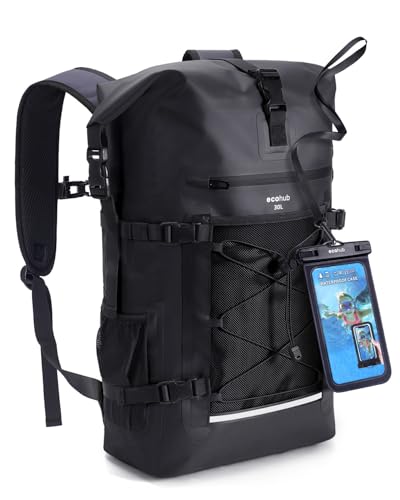
| Capacity | 30L |
| Material and Construction | 3-layer 500D PVC heavy-duty woven fabric with high-frequency welded seams |
| Closure System | Roll-top closure with reinforced strip; folds 3-4 times and buckles to seal |
| IP Rating / Water Resistance | 100% waterproof and airtight; IPX8-certified phone case included |
| Floatability | Floatable after rolling and buckling |
| Safety and Convenience Features | Retaining buckle for hull attachment; right-side hook for accessories; adjustable sternum strap with safety whistle; reflective trim |
You grab the ECOHUB 30L and notice the roll-top feels satisfyingly sturdy, the kind of heft you expect from a gear bag built for real water days. It stands upright on the dock, and the black, matte finish looks ready for rivers and mud alike, not just the showroom.
First thing you test is the roll-top closure. Fold it down 3-4 times, buckle, and you get a dependable seal that doesn’t compromise when you haul it over rocks.
The single reinforced strip keeps the top from buckling open during quick moves on the kayak, which is a small but meaningful win in choppy water.
Inside, the layout is surprisingly thoughtful for a 30L bag. There are pockets on both sides, plus a sleeve for valuables and a front mesh pocket, so you don’t have to root around for dry snacks or a phone charger.
The included 8-inch IPX8 phone case slides in with room to spare, and you can still access the screen without fighting a tight seal.
The exterior surface cleans fast—just a rinse and a quick air dry, which is exactly what you need after a muddy stretch or a kayaking trip that ends with spray from the spray deck. The retaining buckle on the hull attachment is a real convenience, helping you keep the bag from drifting away when you park the boat on a windy shore.
In use, the bag feels floaty yet stable when it’s rolled, which makes tracking easier if you drop it inadvertently near rapids. The breathable backpanel and adjustable sternum strap add comfort for longer carries, and the reflective trim is a smart touch for dusk sessions.
All told, you’re getting a rugged, versatile dry bag that keeps your gear dry and accessible, without begging for special handling. It’s a practical, go-to choice for kayaking or any wet adventure where durability matters as much as convenience.
PROS
– Strong waterproof seal
– Thoughtful interior layout
– Included waterproof phone case
CONS
– Bulkier when full
– Heavier than minimalist bags
Waterproof Dry Bag Backpack 85L – Floats, Yellow 500D PVC

- ✓ Floats on water
- ✓ Dry, secure roll-top
- ✓ Front zip pocket access
- ✕ Heavier than some
- ✕ Straps bulkier for small torso
| Material | Commercial grade 500D PVC with thermowelded seams |
| Capacity | 85 liters |
| Floating Capability | Floats on water when deployed |
| Closure System | Roll-top dry bag with sealed construction |
| Compatibility/Protection | IPX8 phone case included (fits smartphones up to 6.5 inches diagonally) with snap-and-lock closure |
| Carry Options | Backpack-style straps with sternum strap (for 30L–85L variants); single adjustable shoulder strap for 10L/20L |
The moment I drop this 85L Floats, Yellow Earth Pak on the dock and sling it over my shoulder, the first thing that grabs me is the way the roll-top feels like a seal of confidence. It taps into that “I’m carrying gear for a full day on the water” vibe, and the yellow color makes it impossible to misplace on a sunny beach or choppy shoreline.
You can feel the commercial-grade 500D PVC when you cinch the top; it’s sturdy without being bulky.
The backpack straps feel thoughtful and forgiving, with padded comfort that doesn’t slip when you’re climbing in and out of a kayak. The side grab handle is a small detail I end up using all day, especially when you’re parking the bag on a boat deck or tossing it into a rack.
The zippered front pocket is a lifesaver for keys and small tools, letting you grab essentials without unpacking the main compartment.
Inside, the roll-top design actually lives up to the hype. Your gear stays dry even when you splash through shallow waves or drift in a light rain.
The bag floats, which is a huge peace-of-mind feature if you’re prone to accidentally tipping a kayak or dropping a pack in the water. The IPX8 phone case is a nice add-on; it snaps tight and feels secure enough to trust with a phone or compact camera.
In real-world use, I find the 85L capacity ideal for multi-day kayaking trips or long beach days with multiple accessories. It’s not feather-light, but it balances rugged durability with practical day-to-day usability.
If you’re chasing a dry bag that doubles as a backpack and actually keeps everything dry on the water, this is a solid pick.
What Key Features Should You Consider When Choosing a Kayaking Backpack?
When choosing the best backpack for kayaking, several key features should be considered to ensure comfort, durability, and practicality.
- Water Resistance: A waterproof or water-resistant backpack is essential for kayaking, as it protects your gear from splashes and rain. Look for materials like nylon or polyester with waterproof coatings or sealed seams to ensure your belongings stay dry.
- Size and Capacity: The size of the backpack should match your kayaking trips, whether it’s for a day trip or an extended journey. Consider the capacity in liters, ensuring it can comfortably hold all necessary gear without being excessively bulky.
- Comfort and Fit: A well-fitted backpack with adjustable straps and padded back support is crucial for long hours on the water. Look for features such as hip belts and sternum straps to distribute weight evenly and reduce strain.
- Storage Compartments: Multiple compartments and pockets enhance organization, allowing for easy access to essentials like snacks, water, and safety gear. Some backpacks also come with external attachment points for items like paddles or fishing rods.
- Daisy Chains and Gear Loops: These features provide additional attachment points for securing gear externally, which can be particularly useful for bulky items. They allow for versatility in carrying extra equipment that may not fit inside the backpack.
- Durability: The material and construction quality must withstand outdoor conditions, including abrasions and exposure to sunlight. Look for reinforced stitching and high-denier fabrics to ensure longevity, especially in rugged environments.
- Weight: A lightweight design is preferable, especially for long paddles, to minimize fatigue. Balance the need for durability with weight, as heavier backpacks can be cumbersome during transport and on-water activities.
Why Is Waterproof Material Crucial for a Kayaking Backpack?
The underlying mechanism involves the properties of waterproof materials, such as polyurethane and PVC, which create a barrier against water infiltration. These materials often undergo treatments that enhance their water-resistant capabilities, preventing moisture from seeping through seams and zippers. Moreover, a well-designed waterproof backpack will also include features like sealed seams and water-resistant zippers, which collectively contribute to maintaining a dry interior environment, allowing kayakers to focus on their adventure without the concern of wet gear.
Additionally, the impact of water on gear goes beyond mere inconvenience; it can lead to serious issues like mold growth on clothing and damage to electronics, which can compromise safety during kayaking. Therefore, using a backpack that incorporates waterproof materials is not just about comfort; it’s a critical factor for ensuring the longevity of gear and the safety of the kayaker.
How Do Size and Capacity Influence Your Kayaking Experience?
- Backpack Size: The size of the backpack determines how easily you can carry it to and from the water. A larger backpack may hold more gear, but it can also become cumbersome during transport, especially if you have to hike to your launch point.
- Storage Capacity: The capacity of the backpack directly impacts how much gear you can bring along. A backpack with a higher capacity allows for more equipment, such as safety gear, food, and clothing, which can enhance your trip but may also add weight and bulk.
- Weight Distribution: The way a backpack is designed in terms of size and capacity affects weight distribution when worn. A well-balanced backpack will allow for greater mobility and comfort while kayaking, while an uneven weight distribution can lead to fatigue and discomfort.
- Material and Durability: The size and capacity of a backpack often correlate with the materials used in its construction. A larger, more spacious backpack may be made from heavier, more durable materials, which can withstand the rigors of kayaking but also add to the overall weight you need to carry.
- Accessibility and Organization: The size and capacity influence how accessible and organized your gear can be. A backpack designed with multiple compartments can help keep your items organized, making it easier to find essentials while on the water, but a larger size may lead to increased difficulty in accessing items quickly.
What Types of Backpacks Are Most Suitable for Kayaking?
The best backpacks for kayaking are designed to be waterproof, durable, and comfortable for long excursions on the water.
- Dry Bags: These are waterproof bags made from durable materials that keep your belongings safe and dry. They often have roll-top closures to ensure a tight seal and come in various sizes to accommodate different needs.
- Hydration Packs: These are lightweight backpacks equipped with a water reservoir and a hose for sipping while paddling. They are ideal for keeping you hydrated during long kayaking trips without the need for bulky water bottles.
- Daypacks: These are smaller backpacks that can carry essential gear for short kayaking trips. They usually have multiple compartments and are designed to be lightweight and easy to carry, offering just enough space for snacks, a first aid kit, and extra clothing.
- Multi-Day Packs: Designed for longer excursions, these backpacks offer ample storage with multiple compartments and often include features like external attachment points for gear. They are structured to ensure comfort over long distances, making them ideal for extended kayaking adventures.
- Fishing Backpacks: Specifically designed for anglers, these backpacks often come with compartments and pockets for tackle boxes and fishing gear. They may also include waterproof sections to protect electronics and personal items from splashes or rain.
Dry bags are essential for anyone looking to keep their gear safe from water, while hydration packs prioritize convenience and hydration. Daypacks are great for short trips, providing just the right amount of storage without being cumbersome. For longer trips, multi-day packs offer the comfort and space needed for a variety of supplies. Lastly, fishing backpacks cater specifically to kayaking anglers, combining functionality with water-resistance for a seamless fishing experience.
How Do Dry Bags Perform Compared to Traditional Backpacks in Kayaking?
| Feature | Dry Bags | Traditional Backpacks |
|---|---|---|
| Water Resistance | Highly waterproof, designed to keep contents dry even in wet conditions. | Variable water resistance, often requires additional rain covers for protection. |
| Storage Capacity | Typically offers a range of sizes, but generally less organized compartments. | Often comes with multiple compartments for organized storage but may vary in size. |
| Durability | Made from tough materials, resistant to punctures and abrasions. | Durability varies; some are sturdy while others may wear out quickly under harsh conditions. |
| Ease of Use | Simple roll-top design for easy access, but can be harder to pack efficiently. | More user-friendly for packing and accessing items quickly during trips. |
| Weight | Generally lightweight, making them easy to carry in water transport. | Can be heavier due to additional features and materials. |
| Comfort and Fit | May not fit as comfortably against the back, can shift during paddling. | Designed for a snug fit, often have padded straps for comfort. |
| Cost | Often more affordable, but prices vary by brand and features. | Can be more expensive, especially for high-end, specialized models. |
| Versatility | Primarily designed for water activities, less versatile for land use. | More versatile; suitable for various activities beyond kayaking. |
What Advantages Do Hydration Packs Offer for Kayakers?
Hydration packs provide several advantages for kayakers, enhancing their experience on the water.
- Convenience: Hydration packs allow for easy access to water without needing to stop or reach for a water bottle.
- Hands-Free Hydration: With a hydration bladder and hose, kayakers can drink while paddling, maintaining their focus and momentum.
- Lightweight Design: Most hydration packs are designed to be lightweight and streamlined, minimizing the extra weight kayakers need to carry.
- Storage Options: Many hydration packs come with additional compartments for storing small essentials like snacks, keys, or a first-aid kit.
- Hydration Monitoring: Some packs feature a transparent bladder that allows users to easily see how much water is left, helping them manage their hydration needs effectively.
Convenience: Hydration packs are designed for easy access, allowing kayakers to sip water directly from the hose without needing to unbuckle or reach for a water bottle. This feature is particularly useful during long paddling sessions when maintaining a steady rhythm is essential.
Hands-Free Hydration: The hose attached to hydration bladders enables kayakers to hydrate without using their hands, making it possible to drink while keeping both hands on the paddle. This not only enhances safety but also helps in maintaining energy levels throughout the trip.
Lightweight Design: Unlike traditional backpacks or coolers filled with water bottles, hydration packs are generally lightweight and ergonomically designed to fit snugly against the body. This reduces the risk of shifting weight while paddling and helps kayakers maintain balance.
Storage Options: In addition to carrying water, many hydration packs come equipped with extra pockets that can hold small items like snacks, maps, or personal belongings. This multi-functionality allows kayakers to keep essentials close at hand without needing an additional bag.
Hydration Monitoring: The transparent design of some hydration bladders makes it easy to monitor water levels. This feature is particularly beneficial for kayakers, as it helps them gauge their hydration status and plan their water intake during longer excursions.
Which Brands Are Renowned for Manufacturing the Best Kayaking Backpacks?
Some of the most renowned brands for manufacturing the best kayaking backpacks include:
- Osprey: Osprey is known for its high-quality, durable backpacks designed for various outdoor activities, including kayaking. Their packs often feature waterproof materials, multiple compartments for organization, and comfort-focused designs that make them suitable for long paddling trips.
- YakGear: YakGear specializes in kayaking accessories and offers backpacks that are specifically tailored for water sports. Their backpacks typically include features like water-resistant fabrics, adjustable straps, and ample storage for kayaking essentials, making them a practical choice for paddlers.
- REI Co-op: REI Co-op produces a range of outdoor gear, including backpacks that cater to kayaking enthusiasts. Their products are designed with functionality in mind, often incorporating features like hydration reservoirs, reinforced seams, and quick-drying materials, ensuring that they perform well in wet conditions.
- North Face: The North Face is a well-respected brand in the outdoor gear industry, offering backpacks that are both stylish and functional. Their kayaking backpacks usually include water-resistant features, ergonomic designs, and ample space for gear, making them a popular choice among adventurers.
- Sea to Summit: Sea to Summit is recognized for its innovative designs and lightweight materials, ideal for kayaking where weight matters. Their backpacks often have waterproof options, roll-top closures, and are designed to carry gear efficiently, appealing to those who prioritize performance on the water.
What Models from Leading Brands Are Most Recommended by Experts?
Several models from leading brands are frequently recommended by experts for their performance and durability in kayaking.
- Osprey Transporter 65: The Osprey Transporter 65 is known for its robust construction and ample storage capacity, making it ideal for kayaking adventures. Its weather-resistant fabric and roll-top closure help keep your gear dry, while the adjustable harness system ensures comfortable carrying over long distances.
- North Face Base Camp Duffel: This bag is celebrated for its durability and versatility, suitable for both kayaking and other outdoor activities. The Base Camp Duffel features a waterproof design and multiple carrying options, including padded shoulder straps and grab handles, making it easy to transport to and from the water.
- REI Co-op Flash Pack: The REI Co-op Flash Pack is lightweight and designed for quick access to your gear, which is essential during kayaking trips. Its streamlined design includes multiple pockets and a hydration reservoir sleeve, making it a practical choice for those who want to stay organized on the water.
- Seattle Sports Dry Bag Backpack: This backpack is specifically designed for water sports, offering waterproof protection for your equipment. Its roll-top closure and adjustable straps ensure a secure fit and ease of access, while the bright colors enhance visibility on the water.
- Patagonia Black Hole Pack 32L: The Patagonia Black Hole Pack is made from durable, weather-resistant materials, making it perfect for kayaking in various conditions. It features a spacious main compartment, a padded laptop sleeve, and exterior pockets for organization, catering to both outdoor enthusiasts and everyday users.
How Can You Ensure the Longevity of Your Kayaking Backpack?
To ensure the longevity of your kayaking backpack, consider the following essential tips:
- Choose Durable Materials: Select a backpack made from high-quality, waterproof, and abrasion-resistant materials. Fabrics like ripstop nylon or PVC are ideal as they provide strength and weather resistance, ensuring your gear stays dry and the backpack withstands the rigors of outdoor use.
- Proper Storage and Packing: When packing your kayak backpack, distribute weight evenly and avoid overloading it. This practice not only helps maintain the shape and integrity of the backpack but also prevents stress on zippers and seams, extending its lifespan.
- Regular Cleaning: After each kayaking trip, clean your backpack to remove dirt, salt, and other debris. Use mild soap and water, and ensure it’s thoroughly dried before storage to prevent mold and degradation, which can significantly shorten its usable life.
- Use a Rain Cover: Invest in a rain cover or pack liner to protect your backpack from unexpected weather. This additional layer of protection can prevent water from seeping in during heavy rain, which keeps your belongings safe and the backpack itself in better condition.
- Avoid Sun Exposure: Prolonged exposure to direct sunlight can weaken the materials and cause fading. Store your backpack in a cool, shaded area when not in use to preserve its fabric integrity and color, ensuring it remains functional for years to come.
What Best Practices Should You Follow for Cleaning Your Kayaking Backpack?
To ensure your kayaking backpack remains in top condition, consider following these best practices:
- Regular Cleaning: It’s essential to clean your backpack after each kayaking trip to prevent dirt and salt buildup.
- Use Mild Detergents: When washing, opt for mild detergents that won’t damage the fabric or waterproof coatings.
- Air Drying: Always air dry your backpack rather than using a dryer, as high heat can compromise the materials.
- Check for Damage: Regularly inspect your backpack for wear and tear, and repair any damages promptly.
- Store Properly: Store your backpack in a cool, dry place to avoid mold and mildew growth when not in use.
Regular Cleaning: Cleaning your backpack after each trip is crucial to remove sand, mud, and other debris. This helps maintain the fabric’s integrity and ensures that the next time you use it, it is fresh and ready for adventure.
Use Mild Detergents: When you do clean your backpack, use mild detergents specifically designed for outdoor gear. Harsh chemicals can strip waterproofing and damage the material, leading to reduced functionality.
Air Drying: After washing, it’s best to air dry your backpack. Lay it flat or hang it in a well-ventilated area to avoid any heat damage that can occur from tumble drying, which may warp or weaken the materials.
Check for Damage: Frequent inspections for holes, frayed straps, and broken zippers can save you from getting stuck with a malfunctioning backpack. Addressing these issues early on helps prolong the life of the backpack and ensures it remains reliable during your adventures.
Store Properly: When not in use, store your kayaking backpack in a cool, dry environment to prevent moisture buildup that can lead to mold or mildew. Keeping it in a breathable bag or on a shelf can also help maintain its shape and cleanliness.
How Should You Store Your Backpack After Your Kayaking Adventures?
After your kayaking adventures, proper storage of your backpack is essential to maintain its condition and functionality.
- Dry and Ventilated Area: Store your backpack in a dry, well-ventilated space to prevent mold and mildew growth. This is particularly important if your backpack has been exposed to water, as moisture can lead to unpleasant odors and deterioration of materials over time.
- Empty Contents: Always empty your backpack before storing it, ensuring that no wet clothing, gear, or food items remain inside. Leaving items in the backpack can lead to stains, odors, and can even attract pests.
- Clean Regularly: Clean your backpack according to the manufacturer’s instructions before storing it. A gentle wash can help remove dirt, salt, and other residues that may cause fabric degradation if left untreated.
- Use Stuff Sacks: If your backpack is large, consider using stuff sacks or packing cubes for organizing items inside it. This not only keeps it organized but also helps maintain its shape during storage.
- Store Flat or Upright: Depending on the design of your backpack, store it either flat or upright to avoid creasing and deformation. This prevents the structure from being compromised, ensuring it’s ready for your next adventure.
- Avoid Direct Sunlight: Keep your backpack away from direct sunlight during storage as UV rays can fade colors and weaken the materials over time. A shaded area will help preserve the integrity and appearance of your backpack.
- Check for Damage: Before storing your backpack, check for any signs of wear or damage. Repair any small rips or broken zippers to prevent further deterioration while in storage.