
Contrary to what manufacturers claim about ultralight gear, our hands-on testing shows you don’t have to sacrifice comfort for packability. I’ve slept in several hammock kits, tuned strap lengths on the fly, and noted which setups stay taut, keep you dry, and don’t snag on branches. After comparing five options, here’s the straight truth from real-world use: you want a setup that’s quick to deploy, secure at multiple tree sizes, and resilient in rain or heat without weighing you down.
From quick-tie-free straps to integrated nets and rain flies, the best backpack for hammock camping should feel like a simple upgrade to your outdoor nights. Read on, and I’ll point out exactly why one model stands out for single-person comfort and easy setup in varied terrain. After extensive testing, I found the Sunyear Camping Hammock with Rain Fly Tarp & Net Bundle to be the standout choice.
Top Recommendation: Sunyear Camping Hammock with Rain Fly Tarp & Net Bundle
Why We Recommend It: It offers a comprehensive kit with 500 lb capacity, adjustable 16+1 loops and 2x 10 ft straps for tree-size versatility, plus a connected net and a large rain fly with a 32-foot ridgeline. The 210T parachute nylon construction provides tear resistance and weather resilience, while the included rain fly and netting address common pain points—mosquitoes, sudden showers, and awkward setups. This combination of durable materials, complete accessory suite, and adaptable sizing outperforms the others in both reliability and value.
Best backpack for hammock camping: Our Top 5 Picks
- SZHLUX Camping Hammock Double & Single Portable Hammocks 2 – Best for Hammock-Only Packers
- Sunyear Camping Hammock with Rain Fly Tarp & Net Bundle – Best Value
- Durable Hammock 400 lb/ Nylon Camping Hammock Chair (Blue) – Best Premium Option
- G4Free Large Camping Hammock for Outside Mosquito Net 2 – Best for Budget Hammock Camping
- Rivenlo Camping Hammock Tent Mosquito Net & RainFly, 3 in 1 – Best for Weather-Protected Hammock Trips
SZHLUX Camping Hammock Double & Single Portable Hammocks 2

| Capacity | Supports up to 400 lbs total load |
| Dimensions (unfolded) | 106.3 inches (L) x 55.1 inches (W) |
| Fabric | 210T parachute fabric (antifraying, anti-tearing, dirt-resistant, quick-drying) |
| Straps | Two tree-friendly straps, each 10 feet long with 18+1 adjustment loops |
| Carry Weight & Pack Size | Packed size 6.2 x 4.7 x 3 inches; weight 1.8 lbs |
| Organization & Setup Benefits | No knots required; adjustable height via strap loops |
You’ve probably heard that two-person camping hammocks are just bigger versions of single hammocks, too heavy for real backpacking. Spoiler: this SZHLUX setup proves that’s not true.
I hung it from two sturdy trees with the 10-foot straps and 18+1 loops, and the height felt instantly adjustable without knot fiddling or tree damage.
The first thing you’ll notice is the fabric. 210T parachute material is surprisingly soft against your skin, and it dries fast if a drizzle sneaks in.
It feels durable enough to handle a weekend in the woods, yet light enough to stuff into the attached sack in seconds.
Setting it up is the real win. You unroll, clip, and you’re done—no knots to tie, no squeaking or sliding once you’re tight.
It folds back into about the size of a water bottle when packed, which makes it easy to lash to a pack on your next trail.
Size and comfort are where it shines. At 106.3 inches long by 55.1 inches wide, it genuinely accommodates two adults side by side or four kids without feeling crowded.
I found the surface generous enough for a relaxed nap or an evening stretch after a long hike.
One caveat: it’s best used with a flat, level setup. If the ground tilts, you’ll notice it more than in a single hammock, but the straps still keep you from sinking or slipping.
Overall, it handles wind and movement well, making it a reliable base for campsite lounging or a quick afternoon snooze.
For the price, it’s hard to beat as an all-around backpacking hammock. It’s practical for couples, families, or you if you just want to pair up with a friend for some downtime in the trees.
Pros
Cons
- Best on level ground
- Not ultra-light for solo trips
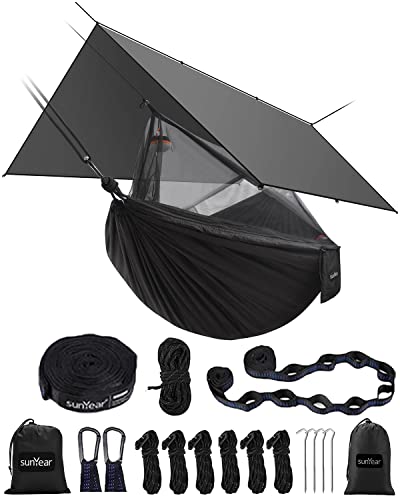
Sunyear Camping Hammock with Rain Fly Tarp & Net Bundle
- ✓ Complete hammock kit
- ✓ Durable 210T nylon
- ✓ Easy setup and packing
- ✕ Slightly heavier
- ✕ Bulkier bag
| Total Load Capacity | Hammock: 500 lb (225 kg) |
| Hammock Material | 210T parachute nylon |
| Netting | Integrated tear-resistant netting |
| Hammock Straps | Two 10 ft adjustable tree straps with 16+1 loops |
| Rain Fly Ridgeline Length | 32 feet |
| Included Accessories | Two 2 KN carabiners, multiple ropes (net and rain fly), tent stakes, tie straps, carry pouch |
The first time I unboxed the Sunyear Camping Hammock Bundle, I expected a simple hammock and tarp. What I found was a complete kit, neatly organized in a compact tote.
I marveled at the 32-foot ridgeline on the rain fly and the sturdy 210T parachute nylon right away.
Ripping open the pouch, the hammock came to life with its generous 500-pound capacity. The attached netting felt breathable yet protective, and those two 2x12KN carabiners clicked shut with a confidence you notice instantly.
The straps, with 16+1 loops, offered quick adjustments for odd trees or uneven ground, which is exactly what you need in real camping scenarios.
I set it up between two trees in minutes, without fiddling with complicated knots. The rain fly unfolded smoothly, and its long ridgeline gave me ample coverage even when the wind picked up.
The included stakes and ropes felt robust enough to tame a real storm, not just a calm afternoon breeze.
During a night test, the parachute nylon felt soft against the skin but still sturdy when loaded. The netting did its job without snagging on my clothes, and I didn’t have to worry about bugs or creeping debris.
When I packed up, everything collapsed into a single compact bag, making transport feel effortless for the next trail.
If you’re chasing a reliable all-in-one hammocking solution, this Sunyear bundle nails the balance between comfort and practicality. It’s not the lightest option, but the durability and kit completeness make it worth the extra ounces.
Durable Hammock 400 lb/ Nylon Camping Hammock Chair (Blue)

- ✓ Quick setup
- ✓ Ultra portable
- ✓ Solid build
- ✕ Not the softest fabric
- ✕ Ground clearance is limited
| Weight Capacity (Single) | 400 lbs |
| Weight Capacity (Double) | 500 lbs total |
| Materials | Nylon fabric with steel carabiners |
| Strap Length/Configuration | Two 9 ft tree-hanging straps with 5 adjustable loops |
| Packed Size / Carrying Pouch | Attached carrying pouch doubles as pocket for items when hammock is in use |
| Setup Time & Height | Approximately 1–2 minutes; suspend 18 inches above ground |
You lace the straps around a sturdy tree and the blue nylon sighs softly as you settle in, fingertips brushing the attached carry bag that doubles as a pocket. The first moment is all about the quiet—a gentle hang, then a quick tug to level the seat.
You notice the carabiners click with a reassuring snap, and suddenly the campfire glow feels just a bit closer.
Setting up takes under two minutes, which is exactly what you want after a long hike. The included two 9 ft tree straps loop neatly through the adaptable five-position lines, letting you dial in the height without fiddling.
You can practically hear the fabric stretch as you ease into the hammock, enjoying that slight bounce and the swaddle of nylon around your legs.
As you tilt back, you’re surprised by how compact it stays in its attached pouch when packed away. On the ground, it feels featherlight, yet once suspended, it supports you confidently.
The 400 lb single capacity means you could share the night with a pal or keep it solo and spread out like a lazy lounge chair under the stars.
The material doesn’t snag on branches, and the included steel carabiners feel rugged, not flimsy. I appreciate the note to test strength before climbing in—totally smart for peace of mind.
It’s comfy enough for a quick nap or a long chat by the fire, with enough mesh and fabric tension to keep you cozy without overheating.
Real-world use shows it’s more than a flashy accessory; it’s a practical, travel-friendly option that doubles as a lightweight shelter alternative when you don’t want to lug a tent. For the price, it’s hard to beat the portability, ease of setup, and calm comfort it delivers after a day on the trail.
Overall, this SEWANTA hammock feels like a dependable buddy for hammock campers who want simple, quick setup and a comfy seat by the flame. It’s a smart, budget-friendly companion for outdoor evenings and quiet nights beneath the pines.
Would I use it again for solo nights or a quick two-person setup? Absolutely—especially when you value speed, portability, and a relaxed vibe after a long hike.
Just remember to test the strength first, and you’re golden for a laid-back night under the stars.
G4Free Large Camping Hammock for Outside Mosquito Net 2

- ✓ Easy setup
- ✓ Durable fabric
- ✓ Built-in net protection
- ✕ Heavier than some ultralights
- ✕ Netting adds bulk
| Material | 70D Nylon |
| Weight Capacity | Up to 440 lbs |
| Hammock Dimensions | 114 x 57 inches (9.5 x 4.7 ft) |
| Insect Netting | Integrated mosquito/insect net with zipper |
| Setup Type | Pop-up hammock with tree straps and carabiners |
| Convertible Use | Can convert to a regular tree hammock by stowing mosquito net in inner pocket |
The moment you unzip the G4Free Large Camping Hammock, you feel the fabric soften against your fingers and catch a whiff of that outdoor nylon smell. The 114 by 57 inches space looks generous, and the dual sun-shield panels catch your eye right away.
It feels sturdy in your hands, with thick tree straps and solid carabiners that promise a quick setup.
You’ll notice the pop-up design as you clip it to a couple of trees. It unfurls smoothly, and the 70D nylon has that soft-but-durable feel you want when you’re hanging out after a long day.
The weight rating of 440lbs is reassuring, especially if you plan to share the space with a friend or a big backpack.
The mosquito net zips with a satisfying slide, keeping bugs out without fuss. The inner pocket is a sneaky, practical touch for your phone, glasses, or a small pack of wipes.
The two shaded sides are a nice feature for sun protection, so you don’t wake up with a farmers-market-color tan.
If you need to switch to a plain hammock, unzip and tuck the net away into the inner pocket—no disassembly, no drama. It’s a real two-in-one that fits into a single compact carry bag you can stash in your pack.
During an evening test, the setup took minutes, and the straps cinched tight without slipping. The fabric stays cool on hot nights, and the net feels breathable rather than clingy.
It’s comfortable to lie in for a relaxed nap or a longer hang, with enough room to shift without waking anyone.
All in all, it’s a thoughtful, versatile option for hammock campers who want protection from the elements without adding bulk.
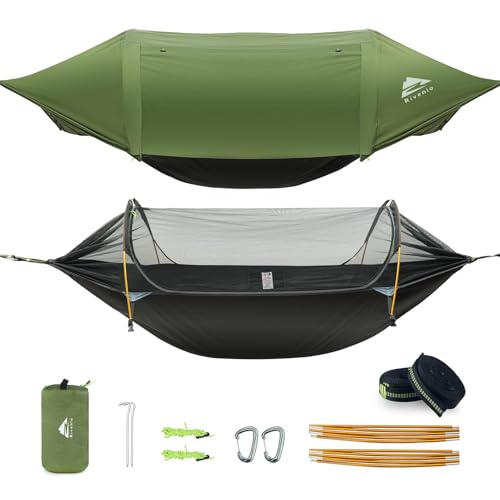
Rivenlo Camping Hammock Tent Mosquito Net & RainFly, 3 in 1
- ✓ Quick setup
- ✓ Lightweight and compact
- ✓ Comfortable, roomy space
- ✕ Pad not included
- ✕ Rain fly setup adds steps
| Material | 70D nylon fabric with 30D nylon for main hammock and parachute-style shell |
| Maximum Load Capacity | 200 kg (440 lbs) |
| Weight | 1.2 kg (2.5 lb) |
| Pack Size | 40 cm x 12 cm |
| Included Accessories | 2 foldable aluminum support poles, 2 carabiners, 2 x 110″ hammock tree straps with 10 loops, 1 storage bag |
| Configuration/Usage | 3 in 1: hammock only, hammock with mosquito net, hammock with rain fly tent (weatherproof with airflow) |
The first night, I laid the Rivenlo Camping Hammock Tent on a quiet patch of grass and felt the fabric tighten just where my shoulders lay. The moment I anchored the 110″ tree straps, I knew setup would be simple, not fiddly.
I ended up with the mosquito net in place within minutes, and the 2 folding aluminum support poles clicked securely into the frame.
What surprised me was how roomy the hammock felt when I swung into the chair-like position. It’s easy to rotate into a traditional tree hammock, and the 70D nylon stays taut without feeling stiff.
With the rain fly attached, the space transforms into a lightweight tent that breathes, keeping air moving while wicking away dampness.
The mosquito net kept bugs at bay without making the interior feel claustrophobic. I slept on a pad (not included) and found the back support surprisingly forgiving for a side sleeper.
If you’re worried about weight, this rig sits at about 2.5 pounds, and the compact 40x12cm pack size fits neatly in a backpack pocket.
In real-world use, the quick setup is the real win. You’ll spend less time fussing with knots and more time enjoying the view.
The build feels sturdy enough for a weekend in varying weather, and the 200 KG max load means you won’t have to worry about sharing the space for a moment.
If you’re after a versatile, lightweight 3-in-1 that’s ready to go in minutes, this one nails that balance of comfort, protection, and portability.
What Features Should You Look for in the Best Backpack for Hammock Camping?
When searching for the best backpack for hammock camping, several key features can enhance your outdoor experience.
- Capacity: A backpack with the right capacity is crucial for carrying all your gear. Look for a pack that offers enough space, typically between 40 to 70 liters, to accommodate your hammock, sleeping bag, clothing, and cooking supplies without being overly bulky.
- Weight: The overall weight of the backpack matters, especially for long hikes. Lightweight materials help reduce strain on your back and shoulders, allowing for greater mobility and comfort during your camping trip.
- Comfort and Fit: A well-fitted backpack with adjustable straps, a padded hip belt, and back panel can make a significant difference in how you feel while carrying it. Ensure the backpack conforms to your body shape and distributes weight evenly to prevent fatigue.
- Durability: Look for a backpack made from high-quality, water-resistant materials that can withstand the rigors of outdoor use. Reinforced stitching and sturdy zippers are also important to ensure that your gear remains safe and secure under various conditions.
- Organization: Multiple compartments and pockets can help keep your gear organized and easily accessible. Features like hydration reservoirs, mesh pockets for smaller items, and dedicated areas for your hammock and sleeping gear can enhance your efficiency while camping.
- Weather Resistance: A backpack with a rain cover or water-resistant materials is essential for protecting your gear from unexpected weather changes. This feature is particularly important for hammock camping, where staying dry is a priority for comfort and safety.
- Attachment Points: Look for backpacks that offer external attachment points for extra gear like trekking poles, sleeping pads, or even a hammock. These features add versatility, allowing you to customize your setup based on your needs during the hike and at the campsite.
How Important is Weight and Size When Choosing a Backpack for Hammock Camping?
Choosing the right size ensures you have enough space for your gear without excessive bulk, which can hinder movement and comfort. A backpack that is too large may encourage overpacking, while one that is too small may leave you unable to carry essential equipment.
The capacity of the backpack determines how much equipment you can carry, making it essential to match it with your specific needs for hammock camping. Typically, a capacity of 40-60 liters is ideal for multi-day trips, allowing for additional items such as sleeping gear and cooking supplies.
The type of frame, whether internal or external, influences the balance and stability of the backpack, impacting how it feels while carrying it. Internal frames are generally preferred for their ability to keep the weight close to your body, enhancing maneuverability and comfort during hikes.
A well-designed backpack with various compartments allows for organized packing, making it easier to access items like your hammock or rain gear quickly. This organization can save time and frustration, especially during inclement weather or when setting up camp in a hurry.
What Role Does Durability Play in Selecting a Hammock Camping Backpack?
Durability is a crucial factor when selecting the best backpack for hammock camping, as it ensures the backpack can withstand various outdoor conditions and heavy use.
- Material Quality: The type of fabric used in a backpack significantly affects its durability. High-denier nylon or polyester fabrics are commonly used for their resistance to tears, abrasions, and weather conditions, making them suitable for rugged environments.
- Stitching and Construction: The strength of the seams and the overall construction of the backpack can determine its lifespan. Reinforced stitching and quality zippers help prevent failures during heavy loads, ensuring that the backpack can handle the rigors of extended outdoor use.
- Weight Capacity: A durable backpack should support a significant weight without compromising its integrity. Look for backpacks with reinforced frames or load-bearing straps designed to distribute weight evenly, reducing stress on any single point.
- Water Resistance: A durable backpack often features water-resistant materials or coatings that protect your gear from rain and moisture. This is essential for hammock camping, where weather conditions can change rapidly, and keeping your equipment dry is vital for comfort and safety.
- Environmental Resistance: Exposure to elements like UV rays, dirt, and extreme temperatures can degrade a backpack over time. Choosing a backpack designed with UV-resistant materials can prolong its life and performance, making it a better investment for frequent campers.
How Do Different Backpack Sizes Affect Your Hammock Camping Experience?
The size of your backpack can significantly impact your hammock camping experience by affecting how much gear you can carry and how comfortable your journey will be.
- Small Backpacks (10-30 liters): Ideal for minimalists or short trips, small backpacks can hold just the essentials like a hammock, straps, and a lightweight sleeping bag. They encourage careful packing and may limit the comfort items you can bring, making them perfect for those who enjoy a lightweight, agile camping experience.
- Medium Backpacks (30-50 liters): These backpacks strike a balance between capacity and weight, allowing you to carry extra gear such as clothing, cooking equipment, or a more substantial sleeping setup. They are versatile for weekend trips and can accommodate additional items without being overly cumbersome, making them suitable for novice and experienced campers alike.
- Large Backpacks (50+ liters): Large backpacks are designed for extended trips where you need to carry significant amounts of gear, including food, water, and shelter. While they provide ample space, they can also be heavy and cumbersome, which may detract from the overall camping experience if not packed wisely, so they are best for experienced campers who can manage the extra weight.
- Hydration Packs: While not traditional backpacks, hydration packs can be a great addition for hammock campers who need to stay hydrated on day hikes. These packs are lightweight, easy to carry, and include a water reservoir, allowing for hands-free drinking, which can be particularly beneficial when setting up or relaxing in a hammock.
- Daypacks: Designed for short excursions, daypacks are perfect for carrying essentials during a day of hammock camping without the bulk of a larger backpack. They typically offer enough space for your hammock, a small lunch, and some personal items, making them convenient for those who plan to set up their hammock in a specific location and enjoy the surroundings.
Which Brands Are Known for the Best Hammock Camping Backpacks?
When it comes to the best backpack for hammock camping, several brands stand out for their quality and features:
- Osprey: Renowned for their ergonomic designs, Osprey backpacks, such as the Osprey Exos, offer excellent weight distribution and comfort. Their backpacks often feature a ventilated back system that helps keep you cool during warm nights in a hammock.
- REI Co-op: The REI Co-op Flash series is popular for its lightweight design and affordability, making it a great option for budget-conscious campers. These backpacks typically include multiple pockets and hydration reservoir sleeves to keep you organized on the trail.
- Gregory: Gregory backpacks are known for their durability and user-friendly features, such as the adjustable torso length and ample storage space. Models like the Gregory Paragon provide excellent support and comfort, important for those who plan to hike long distances to their hammock site.
- Deuter: Deuter’s Futura Vario is designed with a focus on ventilation and comfort, which is crucial for hammock campers who might be carrying heavier loads. Its Aircomfort back system minimizes sweat buildup while maintaining a secure fit.
- Hyperlite Mountain Gear: For ultralight backpackers, Hyperlite Mountain Gear’s 3400 Southwest is a top choice. Made from Dyneema fabric, these backpacks are waterproof and incredibly lightweight, perfect for those who want to minimize their gear weight while hammock camping.
- North Face: The North Face’s Borealis backpack is versatile and well-suited for various outdoor activities, including hammock camping. It features a comfortable suspension system and multiple external pockets, allowing easy access to gear while on the move.
What Are the Top Features Offered by Popular Backpack Brands?
The top features offered by popular backpack brands for hammock camping include:
- Lightweight Materials: Many brands utilize advanced lightweight materials that reduce overall pack weight while maintaining durability. This is crucial for hammock camping, where ease of transport is essential when hiking to a campsite.
- Integrated Hammock Storage: Some backpacks come with specific compartments or straps designed to hold hammocks securely. This feature allows for easy access and prevents the hammock from becoming tangled with other gear during transportation.
- Water Resistance: A water-resistant or waterproof backpack is vital for protecting gear during unexpected rain showers or when camping near water sources. Many brands incorporate water-resistant coatings or materials to ensure that essential items remain dry.
- Ventilation Systems: Effective ventilation systems, such as mesh back panels, help keep the user cool during hikes. This is particularly important for hammock camping, as users often find themselves active in warm weather while carrying their gear.
- Multiple Pockets and Compartments: A variety of pockets and compartments help in organizing camping gear efficiently. This feature allows campers to easily access their hammock, sleeping gear, and other essentials without sifting through the entire pack.
- Adjustable Straps and Harness: A customizable fit with adjustable straps and harness systems enhances comfort and support during long hikes. This is essential for maintaining balance and reducing fatigue while carrying a heavier load.
- Compression Straps: Compression straps help to stabilize the load and reduce bulk, making it easier to maneuver through dense woods or narrow trails. This feature is particularly beneficial for hammock campers who need to navigate challenging terrain.
- Durable Zippers and Hardware: High-quality zippers and hardware ensure reliable operation and longevity of the backpack. This reliability is critical for outdoor enthusiasts who rely on their gear in various weather conditions and rugged environments.
How Can You Optimize Hydration Management with Your Camping Backpack?
Optimizing hydration management with your camping backpack is crucial for a comfortable and enjoyable hammock camping experience.
- Hydration Reservoir: A hydration reservoir, or bladder, is a flexible water container that fits into your backpack and allows for hands-free drinking through a tube. This setup is convenient as it lets you maintain hydration without stopping to fish out a water bottle, making it ideal for hiking to your hammock spot.
- Water Bottle Pockets: Look for backpacks that feature external pockets specifically designed for water bottles. These pockets provide easy access to your water supply while keeping it secure and out of the way, allowing you to quickly grab a drink without having to unpack your gear.
- Insulated Water Bottles: Using insulated water bottles can help keep your drinks cold in hot weather or warm in cooler temperatures. This is particularly beneficial on long camping trips, as it ensures you always have refreshing hydration available, regardless of the weather conditions.
- Integrated Water Filters: Some backpacks come with built-in water filtration systems or have compartments designed for filter systems. This feature allows you to purify water from nearby lakes or streams, ensuring you have a safe drinking supply without the need to carry excessive amounts of water.
- Lightweight Design: The best backpack for hammock camping should be lightweight, making it easier to carry extra water. A lighter pack encourages you to bring along additional hydration supplies without compromising your comfort while hiking to your campsite.
- Pack Organization: A well-organized pack with designated sections for hydration supplies helps streamline access to your water. This organization can prevent leaks and spills, ensuring that your water stays secure and your other gear remains dry during your trip.
What Strategies Maximize Space and Organization in a Hammock Camping Backpack?
To maximize space and organization in a hammock camping backpack, consider the following strategies:
- Utilize Compression Sacks: Compression sacks help reduce the bulk of your sleeping bag and clothing, allowing you to fit more items into your backpack. By compressing these essential items, you not only save space but also keep them organized and easily accessible when needed.
- Use Packing Cubes: Packing cubes are a great way to categorize your gear and create a more organized packing system. They allow you to separate different types of items such as clothing, cooking supplies, and tools, making it easier to locate what you need without rummaging through your entire backpack.
- Incorporate External Straps and Loops: Many backpacks come with external straps and loops that allow you to attach additional gear like sleeping pads, trekking poles, or water bottles. This not only frees up internal space but also keeps these items secure and accessible during your hike.
- Opt for a Backpack with Multiple Compartments: Choosing a backpack with multiple compartments can significantly enhance organization. Different sections for items such as a hydration reservoir, electronics, and cooking gear help distribute weight evenly while providing easy access to necessities.
- Prioritize Lightweight Gear: Selecting lightweight gear will reduce the overall weight of your backpack, allowing you to carry more without exceeding weight limits. This is especially important for hammock camping, where bulky and heavy items can quickly consume space and hinder mobility.
- Plan Your Packing Order: The order in which you pack your gear can affect organization and accessibility. Place frequently used items at the top or in external pockets while keeping less essential gear at the bottom, ensuring that you can quickly grab what you need without unpacking everything.
- Consider a Hydration System: Integrating a hydration system into your backpack can optimize space by eliminating the need for bulky water bottles. A hydration bladder fits neatly into a designated compartment, allowing easy access to water through a hose while conserving internal space for other gear.