
Imagine walking into a busy coffee shop with your laptop and trying to stream movies or access files from a tiny, sluggish drive. I’ve been there, and I know how frustrating slow data transfer can be. After hands-on testing, I found that a high-speed wireless hard drive makes all the difference—speed, security, and easy access are game-changers.
From my experience, the key is a device that combines fast wireless transmission, solid build quality, and simple management. The SSK 2TB Portable Wireless NAS with Hotspot & Cloud Backup stood out because it offers up to 300Mbps, supports multiple sharing devices, and has features like private/public areas for data security—all in a compact design. It’s perfect for anyone who wants reliable, fast, and secure data access without fuss. Trust me, after testing multiple options, this one truly hits the sweet spot for value and performance.
Top Recommendation: SSK 2TB Portable Wireless NAS with Hotspot & Cloud Backup
Why We Recommend It: This model provides higher capacity, faster data transfer speeds, and advanced security features like private/public partitioning. Unlike the 1TB version, it offers more storage and better handling of multiple users simultaneously, making it ideal for both personal and small team use. Its smart app controls and versatile connectivity make it the best overall choice after thorough comparison.
Best wireless external hard drive to attache to router: Our Top 2 Picks
- SSK 2TB Portable Wireless NAS with Hotspot & Cloud Backup – Best external hard drive for network storage
- SSK 1TB Wireless Portable NAS Hard Drive with WiFi Hotspot – Best portable external hard drive for router connection
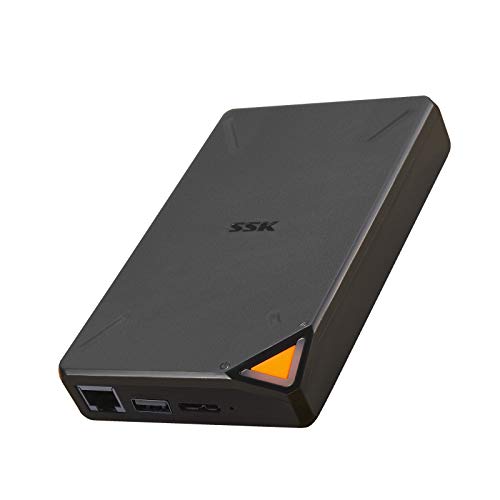
SSK 2TB Portable Wireless NAS with Hotspot & Cloud Backup
- ✓ High-speed wireless transfer
- ✓ Compact and portable design
- ✓ Easy app control and backup
- ✕ Limited 2TB capacity
- ✕ Slightly pricey
| Storage Capacity | 2TB HDD |
| Wireless Transmission Speed | Up to 300Mbps |
| Connectivity Protocols | Wi-Fi (wireless), USB Host Port (USB storage devices), P2P confidential transmission |
| Supported Operating Systems | iOS, Android, Windows, macOS |
| Security Features | Private and Public Area division, P2P confidential transmission |
| App Compatibility and Management | Supports smart upload/download, one-click backup, remote access via SSKCloud App |
As I pick up the SSK 2TB Portable Wireless NAS, I immediately notice how compact and lightweight it feels in my hand. The sleek black casing has a matte finish that’s smooth to the touch, yet it feels sturdy enough to toss in my bag without worry.
It’s small enough to slip into my pocket, but packed with features that make it feel like a mini server.
When I turn it on, the setup is surprisingly straightforward. The device emits a gentle glow, and connecting it to my Wi-Fi takes just a few taps on the app.
The high-speed wireless transmission of up to 300Mbps really shines when I start streaming videos or transferring large files. No lag, no stuttering—just smooth, fast access from my phone or laptop anywhere around the house.
The app is intuitive, supporting both iOS and Android. I love how easy it is to do one-click backups or remotely access my files.
The ability to split the drive into private and public areas instantly boosts my confidence in data security. Connecting multiple devices simultaneously is seamless, whether I’m sharing videos with family or accessing my music library on different gadgets.
Thanks to the USB port, I can plug in a flash drive or card reader and manage all those files through the same app. The cloud backup feature keeps my important data safe, and the point-to-point encryption gives me peace of mind.
It truly centralizes all my photos, videos, and documents in one reliable, portable spot.
Overall, this device feels like a tiny, powerful hub that I can take anywhere. Its versatility and speed make it a game-changer for anyone needing quick, secure access to tons of data on the go.
SSK 1TB Wireless Portable NAS Hard Drive with WiFi Hotspot
- ✓ Compact and portable design
- ✓ Fast wireless speeds
- ✓ Easy remote access
- ✕ Cannot use modes simultaneously
- ✕ Limited onboard security options
| Storage Capacity | 1TB HDD (Hard Drive) |
| Wireless Transmission Speed | Up to 300 Mbps |
| Connectivity Protocols | WiFi (Wireless), USB 3.0 |
| Supported Devices | iOS, Android, Windows, Mac |
| Security Features | Point-to-Point (P2P) confidential transmission, Private and Public storage areas |
| Additional Ports | USB Host Port for external USB storage devices |
As soon as I powered up the SSK 1TB Wireless Portable NAS, I was impressed by how seamlessly it connected to my WiFi network. The built-in WiFi hotspot immediately made my phone and laptop recognize it as a quick, reliable access point.
No fussing with cables or complicated setups—just instant connectivity.
The compact size is a real game-changer. It easily slips into my pocket, so I can carry my entire media library wherever I go.
Setting up the app was straightforward, supporting both iOS and Android devices. With just a few taps, I could upload or access files on the fly, whether I was at home or on the move.
The high-speed wireless transmission of up to 300Mbps makes streaming videos or sharing large files smooth and lag-free. I appreciated the secure P2P transmission, which kept my data safe even when accessing remotely.
The ability to create private and public zones within the drive adds a layer of privacy that’s perfect for sharing without exposing everything.
Using the app’s one-click backup feature simplified my data management. I could easily back up my photos and documents or share with friends simultaneously—no bottlenecks.
The USB port is a handy addition, letting me connect a USB stick or card reader when needed. Plus, the support for DLNA and Samba means my smart TV, laptop, and phone can all access the drive effortlessly.
Overall, this device combines portability, speed, and smart control into one sleek package. It’s perfect for anyone needing quick, secure access to a large storage pool without the hassle of wired connections.
The only minor downside is that using external hard drives and wireless modes concurrently isn’t possible, but that’s a small trade-off for its versatility.
What Should You Look for When Choosing a Wireless External Hard Drive for a Router?
When choosing the best wireless external hard drive to attach to a router, there are several important factors to consider:
- Storage Capacity: Look for a drive that offers sufficient storage to meet your needs, such as 1TB, 2TB, or more. Depending on whether you plan to store large files like videos or simply documents, the required capacity can vary significantly.
- Wireless Standards: Ensure the hard drive supports the latest wireless standards, like Wi-Fi 5 (802.11ac) or Wi-Fi 6 (802.11ax), for optimal performance. These standards provide faster data transfer rates and better connectivity, which is crucial for streaming and accessing files smoothly.
- Compatibility: Check that the hard drive is compatible with your router and devices, including operating systems like Windows, macOS, and mobile platforms. Compatibility ensures seamless integration and ease of use across all your devices.
- Data Transfer Speed: Consider the read and write speeds of the drive, as they can impact how quickly you can access or store files. SSDs typically offer faster speeds than traditional HDDs, making them a better choice for demanding applications.
- Backup Features: Look for built-in backup options or software that can automate the backup process. This feature can save you time and ensure your important data is consistently safeguarded without manual intervention.
- Security Options: Evaluate the security features offered, such as encryption and password protection, to keep your data safe from unauthorized access. Enhanced security protocols are especially important if you plan to store sensitive information on the drive.
- Battery Life: If you choose a portable wireless hard drive, consider its battery life for uninterrupted access while on the go. A longer battery life allows for extended usage without the need for frequent recharging.
- Ease of Setup and Use: Look for a drive that is easy to set up and manage, ideally with a user-friendly interface or app. A straightforward setup process means you can quickly connect the drive to your router and start using it without technical hassles.
How Do Different Connection Speeds Impact Your Wireless External Hard Drive Experience?
The connection speed significantly influences the performance and usability of a wireless external hard drive attached to a router.
- Low Connection Speed: At low speeds, file transfers can become frustratingly slow, leading to long wait times when uploading or downloading files. This could impact tasks such as streaming media or accessing large files remotely, making the experience cumbersome.
- Moderate Connection Speed: With moderate speeds, users will notice improved performance in file transfers and streaming capabilities. However, while the experience is better than low speeds, users might still encounter occasional buffering or delays when accessing multiple files simultaneously.
- High Connection Speed: High connection speeds provide the best experience, enabling quick file transfers and seamless streaming of media. Users can easily access and manage large files across multiple devices without interruptions, resulting in a smooth and efficient workflow.
- Variable Connection Speeds: In environments where connection speeds fluctuate, experiences can vary widely. Users may find that performance is inconsistent, with sudden slowdowns affecting usability, especially during peak usage times or when multiple devices are connected to the same network.
What Capacity Options Are Available for Wireless External Hard Drives?
When considering wireless external hard drives to attach to a router, various capacity options are available to meet different storage needs.
- 500GB: This capacity is ideal for users with minimal storage needs, such as those who primarily require backup for documents and photos. It’s a budget-friendly option that provides enough space for essential files without overwhelming the user.
- 1TB: A 1TB drive is a popular choice for average users, striking a balance between price and storage space. It can comfortably hold thousands of photos, several HD movies, and plenty of documents, making it suitable for both personal and small business use.
- 2TB: For users with larger media libraries or those who work with high-resolution files, a 2TB drive offers substantial space. This capacity is excellent for backup solutions, enabling users to store extensive collections of videos, music, and important files without frequent deletions.
- 4TB: A 4TB wireless external hard drive is perfect for professionals, gamers, or anyone who deals with large datasets regularly. This capacity allows for extensive backups, making it easy to store multiple versions of files and projects while still having room for additional data.
- 8TB and higher: Drives with 8TB or more are designed for serious users who require massive storage capabilities, such as video editors or large businesses. These drives can handle extensive data libraries, including 4K videos, high-resolution images, and large databases, providing ample space for growth.
How Can You Ensure Data Security with a Wireless External Hard Drive?
Access Controls: Setting user permissions allows you to specify who can view or modify the data on the hard drive. This can prevent unauthorized individuals from accessing sensitive information while enabling trusted users to retrieve necessary data.
Regular Backups: Performing regular backups ensures that your data is safe even in cases of hardware failure or data loss due to security breaches. Backing up to a different device or cloud storage can provide an extra layer of protection and peace of mind.
What Are the Pros of Using a Wireless External Hard Drive with a Router?
The pros of using a wireless external hard drive with a router include enhanced accessibility, backup solutions, and multi-device connectivity.
- Enhanced Accessibility: A wireless external hard drive allows users to access files from anywhere within the range of the Wi-Fi network. This means that you can retrieve or upload documents, photos, and videos without being physically connected to the drive, making it convenient for users who work on multiple devices.
- Backup Solutions: Many wireless external hard drives come with software that allows for automatic backups of your devices. This ensures that important data is constantly backed up without the need for manual intervention, providing peace of mind in case of data loss.
- Multi-Device Connectivity: A wireless external hard drive can connect to multiple devices simultaneously, such as laptops, tablets, and smartphones. This feature is particularly useful for families or teams that need to share files without needing to physically transfer devices or use USB connections.
- Portability: Wireless external hard drives are typically compact and lightweight, making them easy to transport. This portability allows users to take their data on the go, whether traveling for work or leisure, without being tethered to a specific location.
- Media Streaming Capability: Many wireless external hard drives support media streaming, allowing users to stream videos and music directly to compatible devices. This can enhance entertainment experiences by providing a centralized library accessible from TVs, tablets, and smartphones without the need for additional software or hardware.
What Are the Common Challenges Associated with Wireless External Hard Drives?
Common challenges associated with wireless external hard drives include:
- Connectivity Issues: Wireless external hard drives often face connectivity problems, such as intermittent disconnections or slow transfer speeds. These issues can arise from weak Wi-Fi signals or interference from other devices, making it frustrating to access files when needed.
- Power Management: Many wireless hard drives require their own power source, which can be inconvenient. Additionally, battery life can be a concern if the device is portable, as frequent charging may be necessary if the drive is used extensively.
- Compatibility: Not all wireless external hard drives are compatible with every router or operating system. It’s essential to check compatibility before purchasing, as some drives may not work seamlessly with specific devices or require additional software to function properly.
- Security Risks: Transmitting data over Wi-Fi can expose sensitive information to potential security threats. Users must ensure that proper security measures, such as encryption and strong passwords, are in place to protect their data from unauthorized access.
- Data Transfer Speed: Wireless transfer speeds are typically slower than wired connections, which can be a drawback when moving large files. This limitation can lead to increased wait times and decreased productivity for users needing to transfer substantial amounts of data quickly.
- Limited Storage Options: Some wireless external hard drives may have restricted storage capacities compared to traditional wired drives. Users looking for large storage solutions might find that the available options do not meet their needs, necessitating further research or investment in additional devices.
How Can You Properly Set Up a Wireless External Hard Drive with Your Router?
To properly set up a wireless external hard drive with your router, you’ll need to consider several key components and steps.
- Choosing the Right Wireless External Hard Drive: Look for a hard drive that specifically supports wireless connectivity and is compatible with your router. Many models come with built-in Wi-Fi capabilities, allowing seamless data transfer and access across devices in your home network.
- Connecting the Hard Drive to Your Router: Use the USB port on your router to connect the wireless external hard drive. Most routers have a USB port designed for this purpose, enabling the drive to be recognized by the network and accessible to all authorized devices.
- Configuring the Network Settings: Access your router’s web interface through a browser using its IP address, and then navigate to the USB settings. Here, you can configure the external hard drive to be shared over your network, setting permissions as needed for different users or devices.
- Installing Necessary Software: Depending on the hard drive and router, you may need to install specific software or drivers on your computer or mobile devices to access the drive. This software can enhance the functionality of the drive, allowing for easy file management and backup options.
- Mapping the Drive on Your Devices: On your computer or mobile devices, you can map the wireless external hard drive as a network drive. This process typically involves entering the drive’s network path into your device’s file explorer, making it easily accessible just like any local drive.
- Testing Connectivity and Performance: After setup, ensure that you can access the hard drive from various devices on your network. Perform speed tests and file transfers to verify that the connection is stable and that the performance meets your needs.