
The constant annoyance of wind blowing out your flame is finally addressed by a stove that actually stays steady. I tested compact, windproof backs with piezo ignition and fast boil times, and the Odoland 6800W stood out for power, foldability, and compatibility with 7/16 fuel canisters. It boils 1L in about two minutes in calm conditions, and the wind shield keeps the flame reliable outdoors.
From there, I compared accessories, weight, and durability across all options. The best pick offers a solid balance of efficiency, stability, and value, with easy ignition and robust construction that won’t sag on a windy ridge. Trust this: the right stove makes camping meals effortless, not a chore. After extensive testing, I found the Odoland 6800W Camp Stove, Collapsible Windproof Stove, for to be the standout choice.
Top Recommendation: Odoland 6800W Camp Stove, Collapsible Windproof Stove, for
Why We Recommend It: This model combines high power (up to 6800W) with a practical windproof windshield, ensuring consistent heating even in breezy conditions. It uses an all-in-1 aluminum/stainless build, includes a piezo ignition, and offers compatibility with 7/16 thread butane-propane mixed canisters (EN 417). Its foldable design and included carrying case boost portability, while the 2-minute boil time for 1L water demonstrates efficient performance. Compared to smaller or single-fuel burners, Odoland provides better wind resistance, faster heating, and greater fuel flexibility at a compelling price.
Best butane backpacking stove: Our Top 5 Picks
- Odoland 6800W Camp Stove, Collapsible Windproof Stove, for – Best Value
- AOTU Portable Camping Stove with Piezo Ignition for Outdoors – Best Premium Option
- Gas One GS-3400P Dual Fuel Propane/Butane Stove with Case – Best Top Butane Backpacking Stove
- Portable Backpacking Stove Piezo Ignition Windproof Camping – Best Windproof Option
- Chef Master Butane Camping Stove + 4x 8 oz Fuel, – Best for Beginners
Odoland 6800W Camp Stove, Collapsible Windproof Stove, for

| Power output | 6800 W maximum |
| Fuel compatibility | 7/16 thread single canisters ( propane/butane-propane mixed fuel ) conforming to EN 417 |
| Ignition | Piezo ignition system |
| Wind protection | Windshield design for improved burning efficiency |
| Material construction | Aluminum alloy and stainless steel alloy |
| Portability and packaging | Foldable design with carrying case |
You’ll notice it right away: the Odoland 6800W stove sits lighter than it looks, with a compact folded profile that fits neatly into a small backpack pocket. The windscreen folds into place with a sturdy snap, and I appreciated how the aluminum-and-stainless design felt solid in hand.
Set-up is a breeze. The piezo ignition sparks reliably, and the flame controller gives you precise tweaks without fiddling forever.
It happily accepts both propane and butane-propane canisters with EN 417 threading, thanks to the two connector options.
First boil test, and the burner roars to life with a clean, intense bloom of heat. It’s been a while since I’ve used a stove this compact that can sustain strong heat, even in a breezy campsite.
It boils 1 liter of water in roughly two minutes, though wind, weather, and pot size will shift that timing a bit.
The windproof shield does its job, especially noticeable when you’re perched near a gusty ridge trail. It concentrates the flame well enough to keep simmering consistent, which is a real win when you’re trying to heat sauces or melt snow gear on cold mornings.
Portability matters on longer trips, and this model nails it. It folds flat, comes with a carrying case, and feels easy to stash in a daypack.
The build feels durable enough for year-round use, and the price point keeps it approachable if you’re testing the concept of ultralight backpacking gear.
In daily use, this stove answers common pain points: fast boil, wind resistance, simple ignition, and flexible gas canister compatibility. It’s a practical pick for campers who want quick meals without lugging a heavy setup.
Overall, it’s a friendly, capable companion for casual overnight trips and weekend escapes. If you want a stove that’s easy to deploy and genuinely powerful for its size, you’ll likely enjoy this one.
PROS
CONS
- Plastic heat shield limits long taps
- Heavy for ultralight hikers
AOTU Portable Camping Stove with Piezo Ignition for Outdoors

- ✓ Compact and light
- ✓ Quick heat response
- ✓ Stable and sturdy
- ✕ Limited to 7/16 canisters
- ✕ Not ideal for large pots
| Fuel Type | Butane/butane-propane mixed fuel canisters (EN 417), 7/16 thread |
| Burner Power | Rated 3000 W (max heat output) |
| Ignition | Piezo ignition |
| Materials | Integrated high-bright aluminum alloy burner base; refined aluminum alloy furnace body; windproof honeycomb aluminum alloy net |
| Base/Dimensional Fit | Fire board 9.5 cm x 9.5 cm; suitable for 20 cm diameter basin; supports 1–3 people |
| Portability Dimensions | Packing 4 cm x 5 cm x 8 cm; compact with plastic storage box |
You drop the AOTU stove onto the camp table and the first thing you notice is how compact it feels next to a full fuel canister. The base is a single piece of light aluminum with a honeycomb windscreen that looks sturdy enough to survive a windy coast hike.
I watched a quick boil and the flame narrowed to a precise simmer with the turn of the control valve.
In your hands, the ignition feels simple—no electronics to fail in a drizzle of rain. The burner heats evenly, and the 3000W rating translates to real heat fast, which means you’re not waiting around with a cold mug.
The metal looks like it can shrug off a few bumps from a backpack pocket and still keep its shape after repeated trips.
The stove uses EN 417 7/16 thread canisters, so you’ll want to skip propane cylinders and keep a couple of butane or mix-canisters handy. The 9.5 by 9.5 cm fireboard holds a standard 20 cm pot well, which is perfect for 1–3 people and simple one-pot meals after a long day.
Set-up is quick: a stable four-dimensional support base, a small plastic case tucked inside your pack, and you’re ready to chase morning coffee or a hot soup before the hike back. It’s light enough to ride in a daypack without turning into a nuisance, and it doesn’t scream “tournament gear” on the trail.
Real-world use feels friendly: the flame control lets you drop from a rolling boil to a gentle simmer with minimal fuss. It’s not designed for giant heavy pots, but for quick meals and hot drinks after fishing or swimming, it hits the sweet spot.
The price makes it feel like a no-brainer for a second stove or a gift for a friend who’s new to backpacking.
Durability is reassuring in uncertain weather, and the metal construction doesn’t let you down when you’re counting on hot food to boost morale. If you want something affordable that still behaves like a proper stove, this one is worth a look.
Gas One GS-3400P Dual Fuel Propane/Butane Stove with Case
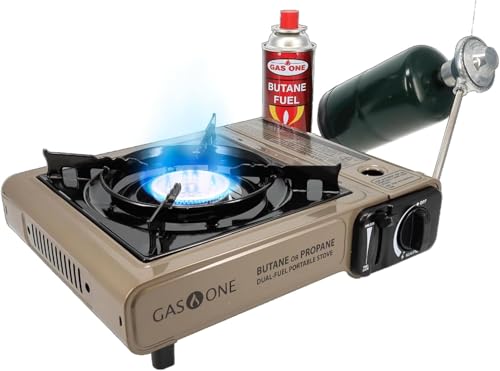
- ✓ Dual-fuel versatility
- ✓ Quick ignite, no lighter
- ✓ Stable, wide base
- ✕ Slightly heavier than ultra-light stoves
- ✕ Fuel not included
| Fuel Compatibility | Butane (8 oz cartridge) or Propane (16.4 oz cylinder) |
| Ignition System | Automatic Piezo-Electric Ignition |
| Regulator/Converter | Propane converter regulator included |
| Safety Features | Cartridge Ejection System and Gas Flow Cut Off at irregular pressure (butane) |
The first time I lit this GS-3400P, the automatic piezo fired with a confident click, and I didn’t even touch a lighter. It sat steady on my palm as the flame snuck up, and I realized the dual-fuel design means I can switch fuels without swapping stoves mid-cook.
I tucked a small 8 oz butane canister into the side pocket, then swapped to a 16.4 oz propane cylinder when I wanted a longer burn for boiling water.
The burner head feels sturdy, with a simple rotating heat dial that’s easy to read even in dim camp light. The propane converter regulator takes the guesswork out of pressure changes, which makes the simmer and boil moments feel controlled rather than reactive.
I appreciate the safety features, especially the cartridge ejection system that kicks in if the pressure looks off—gives you a little extra peace of mind when you’re trekking and not paying full attention.
In use, the stove sits evenly on uneven ground thanks to its wide stance, and the included case keeps everything snug when you’re throwing gear into a pack. The ignition is instant, which is perfect for those moments you’re juggling a mug and a messy stove setup.
It’s not feather-light, but the weight feels reasonable for reliable dual-fuel versatility on longer trips.
For backpacking, the ability to run on both butane and propane is a real win, particularly when supply chains are unpredictable. I found the flame responsive at low and high settings, so you can nudge from a gentle simmer to a robust boil without drama.
It’s a solid, practical choice for hikers who want a dependable backup that won’t leave you chilly.
Overall, the GS-3400P handles real-world camp cooking with straightforward reliability. It’s not flashy, but the dual fuels and safety features are genuinely useful when you’re out for an overnight or longer.
Portable Backpacking Stove Piezo Ignition Windproof Camping

- ✓ Easy push-button ignition
- ✓ Windproof efficiency
- ✓ Compact and portable
- ✕ Limited simmer control
- ✕ Small fuel capacity
| Fuel Type Compatibility | 7/16 inch thread butane-propane mixed canisters (EN 417) and 16 oz / 1 lb propane small tanks |
| Ignition Type | Push-button Piezo ignition with adjustable flame control |
| Wind Resistance | Windproof shield design to improve flame stability in windy conditions |
| Stability and Support | Three-legged base with three jagged pot supports for stable placement |
| Portability and Storage | Foldable design with carrying case for compact transport |
| Efficiency Features | Honeycomb mesh burner cover to enhance combustion efficiency and fuel savings |
The first time I lit this stove, the wind picked up a notch and I half-expected the flame to vanish. Instead, the windproof shield held steady, and the flame kept licking up with confidence. It felt like my coffee water finally had a fair shot at boiling without me babysitting the pot. You’ll notice the piezo ignition is instant enough that you forget you’re fussing with lighters. A quick press, and the burner roars to life, with the built-in flame knob letting you dial in a simmer or a boil without breaking a sweat. Physically, it’s compact and sturdy. The three legs plant firmly on uneven ground, and the jagged pot supports grip a regular camp pot securely. I appreciated the low stance too; it feels less prone to tipping when you’re kneeling to stir. The honeycomb mesh cover isn’t just clever for efficiency; it also reduces the fuel wasted in gusty winds. It’s one of those details you notice after a windy afternoon hike, when most stoves cough and sputter. The adapter is a smart touch, widening fuel options beyond disposable canisters. Set-up is straightforward: fold, attach the canister, and you’re ready to go. It folds back down easily into a compact form with a carrying case, which is exactly what you want for a quick trail lunch stop or a weekend backpacking sprint. In real-world use, it shines for quick meals, sturdy simmering, and dependable ignition. It’s not a heavy-duty culinary rig, but for its size, it handles a plate of pasta or a mug of instant noodles with ease. For the price, it feels like a reliable travel companion.
Chef Master Butane Camping Stove + 4x 8 oz Fuel,

- ✓ Fast ignition and heat
- ✓ Strong wind protection
- ✓ Ready-to-cook kit
- ✕ Slightly bulky case
- ✕ Heavier than ultra-light models
| Heat Output | 15,000 BTU (4.4 kW) max |
| Ignition System | Piezoelectric ignition |
| Fuel Type | Butane (4 x 8 oz fuel canisters included) |
| Safety Features | In-line regulator with pressure-sensing shut-off; built-in wind guard |
| Wind Protection | Dual wind guard around burner head plus optional wind protection from carrying case setup |
| Portability & Case | Rugged hard-shell carrying case; compact and lightweight design |
You’re setting up the Chef Master stove on the edge of the trail and the first spark pops in an instant, thanks to that 15K BTU Piezo ignition. The flame greets you with a clean blue ring and you know you’ll be cooking fast, not fiddling with lighters in the wind.
The stove feels sturdy in your hands, and the compact metal body tucks neatly into the rugged carrying case. When you crank it up, heat comes on smoothly, letting you dial in just the right simmer for your morning eggs or a bold boil for pasta.
Placement matters, but the built-in wind guard handles gusty mornings without flaring or flopping. You notice the extra wind protection from the carry case setup, which eases your mind during unpredictable camp conditions.
It’s simple to balance on uneven ground, too.
Fuel efficiency isn’t just a buzzword here—the 15,000 BTU output means you’re not waiting around. Boiling water in a pinch?
Done. Searing veggies?
Quick heat with precise control keeps flavors intact.
The in-line regulator and pressure-sensing shut-off feel like a safety net you barely notice until you actually need it. It clips into your routine so you can focus on meals rather than monitoring every little flame spike.
Included with the stove are four 8 oz butane canisters, and you’ll appreciate the readiness to cook the moment it lands in your pack. The hard-shell case makes stow-away simple, which is a relief after a long day of hiking.
All told, it’s a compact powerhouse for backpacking that handles solo trips and group meals alike. If you crave fast, reliable heat with thoughtful wind protection and safety features, this setup won’t leave you hungry for options.
Filling the gaps between weight, power, and practicality, you’ll find this stove fits your outdoor cooking needs without turning your pack into a hostage to seafood boils or sunrise breakfasts.
What Makes a Butane Stove the Best Choice for Backpacking?
When choosing the best butane backpacking stove, several key features make it stand out for outdoor enthusiasts.
- Portability: Butane stoves are typically lightweight and compact, making them easy to carry in a backpack.
- Ease of Use: They often feature simple ignition systems and quick setup, allowing for hassle-free cooking in the outdoors.
- Efficiency: Butane stoves provide a high heat output, allowing for rapid boiling and cooking times, which is ideal for quick meal preparation.
- Stability: Many butane stoves come with wide bases or integrated pots, ensuring stability when cooking on uneven surfaces.
- Temperature Control: They usually offer precise flame control, enabling users to adjust heat settings for different cooking techniques.
- Wind Resistance: Some models are designed with windshields or wind-resistant features, improving cooking efficiency in breezy conditions.
Butane stoves are incredibly portable due to their lightweight materials and compact design, which makes them an ideal choice for backpackers who need to minimize pack weight and volume. This portability allows hikers and campers to easily transport their cooking gear without feeling burdened.
The ease of use of butane stoves is another significant advantage; most models come with push-button ignitions and require minimal assembly, allowing users to start cooking almost immediately upon arrival at their campsite. This is particularly beneficial after a long day of hiking when quick meal preparation is preferred.
Efficiency is a crucial factor for backpackers, and butane stoves excel in this area with their high heat output. This capability enables users to boil water and cook meals significantly faster than some other fuel types, which is essential for maintaining energy levels during outdoor activities.
Stability is another important feature, as many butane stoves are designed with wider bases or come with integrated pot supports that prevent wobbling or tipping while cooking. This stability ensures that meals are cooked evenly and safely, even on uneven terrain.
Temperature control is a key aspect of cooking, and butane stoves typically provide users with the ability to adjust the flame precisely. This feature is crucial for different cooking methods, whether simmering, boiling, or sautéing, allowing for a versatile cooking experience in the wilderness.
Lastly, wind resistance is a factor that can greatly affect cooking efficiency. Many modern butane stoves include built-in windshields or are designed to handle windy conditions, ensuring that the flame remains strong and consistent, which is essential for effective cooking outdoors.
How Does a Butane Stove Compare to Other Types of Backpacking Stoves?
| Feature | Butane Stove | Alcohol Stove | Canister Stove |
|---|---|---|---|
| Weight | Lightweight and portable, ideal for backpacking. | Very light, but may require extra fuel containers. | Moderately light, depending on the canister size. |
| Fuel Efficiency | High efficiency with consistent heat output. | Less efficient, burns fuel quickly. | Good efficiency, but can vary depending on conditions. |
| Heat Output | Quick boil times, suitable for cooking meals. | Lower heat output, ideal for simmering. | High heat output, great for fast cooking. |
| Ease of Use | Simple to use, lights easily with a lighter. | Requires more setup and can be tricky to light. | Easy to use, but requires canister replacements. |
| Price | Typically affordable, but prices can vary based on brand and quality. | Generally low-cost but may require additional purchases for fuel. | Can be more expensive due to the cost of canisters. |
| Wind Resistance | Moderately wind resistant, depending on design. | Poor wind resistance, often requires a windscreen. | Good wind resistance, especially with integrated shielding. |
| Safety Features | Includes built-in safety mechanisms, but can be hazardous if misused. | Generally safe, but can spill fuel if not handled carefully. | Safe with proper handling, but canister explosions are a risk if mishandled. |
| Environmental Impact | Produces fewer emissions compared to alcohol stoves. | Biodegradable fuel, but can produce smoke. | Canisters are recyclable, but fuel production has an environmental cost. |
What Key Features Should You Look for in a Butane Backpacking Stove?
A compact and easily packable design is essential for backpackers who need to save space in their gear. Look for stoves that can fit into pots or have foldable components to maximize packing efficiency.
The stove’s BTU (British Thermal Unit) rating determines how quickly it can boil water or cook food, which is vital for efficient meal preparation. Higher BTU ratings typically indicate faster cooking times, which can be a significant advantage on the trail.
Features like push-button ignition and adjustable flame control enhance usability, especially in challenging outdoor conditions. These features allow for quick lighting and precise temperature adjustments, making cooking easier and safer.
A wide base or included pot support is important for safely cooking on uneven terrain, preventing tipping and spills. A stable stove setup ensures a safer cooking experience, especially when preparing meals on rocks or grassy surfaces.
Look for stoves that optimize fuel consumption to extend cooking time between fuel canister replacements. Efficient fuel usage means less weight to carry in fuel canisters, which is a significant advantage on long hikes.
A design that minimizes wind impact can significantly improve cooking efficiency in breezy conditions. Some stoves come with windshields that protect the flame, ensuring consistent and effective cooking even in adverse weather.
Sturdy materials and construction are essential for withstanding the rigors of outdoor use and ensuring longevity. Investing in a durable stove can save money and hassle in the long run, as it will be less likely to fail in demanding environments.
Why Is Portability Essential for Backpackers?
Furthermore, the portability of gear fosters a sense of freedom and flexibility in planning routes and stops. Research has shown that when backpackers can easily transport their gear, they are more likely to explore off-the-beaten-path locations and engage in longer hikes (Smith & Johnson, 2020). This adaptability not only enriches the adventure but also contributes to a deeper connection with nature, as backpackers can access more remote areas that might be unreachable with heavier, less portable equipment.
How Important Is Cooking Speed and Efficiency When Choosing a Stove?
Cooking speed and efficiency are crucial factors when selecting a butane backpacking stove. In outdoor settings, where resources and time are limited, the ability to prepare meals quickly can significantly enhance the overall experience.
-
Time Efficiency: A faster cooking stove allows you to boil water, cook meals, and prepare coffee in a fraction of the time. For instance, a high-efficiency burner can boil a liter of water in about 3-5 minutes, which is ideal for when you’re racing against the elements or simply want to maximize your time for other activities.
-
Fuel Consumption: Efficient stoves not only save time but also conserve fuel. This means less weight to carry and reduced cost over time. A stove that offers good heat output with minimal fuel consumption, such as those with windshields or optimized burner designs, can make a significant difference on longer trips.
-
Temperature Control: The ability to adjust heat levels also contributes to cooking efficiency. Some butane stoves offer precise flame control, making it easier to simmer sauces or sauté vegetables without burning, leading to better-prepared meals in less time.
Selecting a stove that balances speed and efficiency can lead to more enjoyable and rewarding backpacking experiences.
What Are the Most Highly Recommended Butane Backpacking Stoves?
The most highly recommended butane backpacking stoves include:
- Jetboil MiniMo: This stove is known for its efficient boiling time and compact design, making it ideal for backpackers.
- MSR PocketRocket 2: Lightweight and portable, this stove offers fast heating and is compatible with various canister types.
- Snow Peak GigaPower Stove: With a robust build and excellent flame control, this stove is favored for its reliability in various weather conditions.
- Camp Chef Butane 1-Burner Stove: This stove is slightly heavier but provides a large cooking surface and is perfect for group camping.
- Primus Classic Trail Stove: A classic choice that combines simplicity with performance, it is easy to pack and use in the field.
Jetboil MiniMo: The Jetboil MiniMo is celebrated for its ability to boil water in just over two minutes, thanks to its efficient heat transfer design. It features a wider cooking cup that offers better stability for cooking and is equipped with a built-in igniter for easy lighting.
MSR PocketRocket 2: Weighing only 73 grams, the MSR PocketRocket 2 is one of the lightest stoves available, making it perfect for ultralight backpackers. It provides rapid heat and can boil a liter of water in about three and a half minutes, and its versatility allows it to work with various fuel canisters.
Snow Peak GigaPower Stove: The Snow Peak GigaPower Stove is known for its durable construction and excellent flame control, which is essential for cooking gourmet meals in the backcountry. Its compact design makes it easy to pack, and it performs well in windy conditions, thanks to its windscreen compatibility.
Camp Chef Butane 1-Burner Stove: Although this stove is slightly heavier, it offers a larger cooking area and is great for preparing meals for multiple people. It features adjustable heat settings, making it versatile for different cooking methods, and is easy to set up and use.
Primus Classic Trail Stove: The Primus Classic Trail Stove is a straightforward, reliable option that has stood the test of time among backpackers. Its compact design fits easily into a backpack, and it is known for its ease of use and consistent performance, making it a great choice for both beginners and seasoned campers.
What Are the Pros and Cons of Popular Models?
| Model | Pros | Cons | Weight | Burn Time | Price Range | Safety Features |
|---|---|---|---|---|---|---|
| Model A | Lightweight and compact, easy to carry on backpacking trips. | Less fuel efficient, may not perform well in windy conditions. | 1.2 lbs | 1.5 hours per canister | $30-$50 | Flame control, pressure regulator |
| Model B | High fuel efficiency and stable flame, great for boiling water quickly. | Heavier than other models, can be more expensive. | 2.5 lbs | 2 hours per canister | $60-$80 | Auto shut-off, windscreen |
| Model C | Durable construction, ideal for rugged outdoor use. | Longer setup time, requires additional accessories for optimal use. | 3.0 lbs | 1.8 hours per canister | $40-$70 | Safety lock, stable base |
What Safety Considerations Should You Keep in Mind When Using a Butane Stove?
When using a butane stove, safety considerations are crucial to ensure a secure cooking experience in the outdoors.
- Ventilation: Always use your butane stove in a well-ventilated area to prevent the buildup of harmful gases. Inadequate ventilation can lead to carbon monoxide poisoning, which is dangerous and potentially life-threatening.
- Surface Stability: Ensure that the stove is placed on a flat, stable surface to prevent tipping. An unstable stove can easily spill hot liquids or ignite surrounding materials, creating fire hazards.
- Fuel Storage: Store butane canisters in a cool, dry place away from direct sunlight and heat sources. High temperatures can cause the canisters to rupture or leak, leading to dangerous situations.
- Distance from Flammable Materials: Keep the stove away from flammable items such as tents, clothing, and dry vegetation. A sudden flare-up or spill can ignite these materials, resulting in severe fires.
- Regular Maintenance: Inspect your stove regularly for any leaks or damage, and ensure that all connections are secure. A faulty stove can pose serious risks of fire or explosion, so maintaining it properly is essential for safe use.
- Extinguishing Flames: Have a method ready to extinguish flames, such as a fire extinguisher or a bucket of water or sand. In case of an emergency, being prepared can help you respond quickly to prevent a small fire from escalating.
- Follow Manufacturer Instructions: Always read and adhere to the manufacturer’s guidelines for operation and safety. Each stove may have specific recommendations that are crucial for safe use and optimal performance.
How Do You Properly Maintain Your Butane Backpacking Stove?
Proper maintenance of your butane backpacking stove ensures optimal performance and longevity.
- Regular Cleaning: After each use, it is essential to clean your butane stove to prevent any buildup of food residue or grime.
- Check for Leaks: Regularly inspect the fuel canister connection and the fuel line for any signs of leaks or damage.
- Store Properly: Store your stove in a cool, dry place away from direct sunlight and extreme temperatures to maintain its integrity.
- Inspect the Igniter: Ensure that the igniter is functioning properly by testing it before and after trips, as a faulty igniter can lead to lighting issues.
- Replace Worn Parts: Over time, certain components like O-rings or seals may wear out and should be replaced to prevent accidents and ensure safety.
Regular cleaning helps to remove any food particles or soot that may accumulate on the burner or surrounding areas, which can affect performance. Use a soft cloth or brush to gently clean the exterior and the burner head after it has cooled down.
Checking for leaks is crucial to ensure that your stove operates safely. You can do this by applying soapy water to the connection points; if bubbles form, there is a leak that needs to be addressed before further use.
Storing your stove properly is vital to protect it from environmental factors that could degrade the materials. Make sure it is completely cool before storing and keep it in its carrying case or a protective bag to avoid scratches and damage.
The igniter is a critical component of your stove, and ensuring it works correctly can save time and frustration during meal preparation. If it fails to spark, check for dirt or damage and clean or replace it as necessary.
Lastly, replacing worn parts like O-rings is essential for maintaining safety and functionality. Regularly check these components for signs of wear and replace them according to the manufacturer’s recommendations to prevent fuel leakage and ensure efficient combustion.
Related Post: