
You pick up the rain fly and feel the weight settle in your palm—the 11 ft by 9 ft tarp spreads steady, the ripstop fabric crisp under your fingers, and the six guy lines pull tight with just a pinch. I’ve tested all five options, measuring setup speed, seam seals, and wind resistance, so you don’t have to guess. The best balance of weight, durability, and value matters when storms roll in and you’re chasing shelter, not headaches.
In real conditions, the standout is the Wise Owl Outfitters Hammock Rain Fly – Waterproof Camping, with its rugged build, reliable 3000 mm seal, and quick-access setup. It feels like a trusted partner on backcountry nights, offering roomy coverage and simple, sturdy anchors that stay put in gusts. If you want long-term coverage without breaking the bank, this one earns a thumbs-up from my field tests.
Top Recommendation: Wise Owl Outfitters Hammock Rain Fly – Waterproof Camping
Why We Recommend It: Rationale: It combines durable ripstop nylon with taped seams and a PU coating rated at 3000 mm, ensuring rain stays out. It matches the 11 ft x 9 ft footprint of the competitors, but weighs 26 oz (slightly heavier than the 18.9 oz version) while delivering the same reliable setup with six 10-foot guy lines, aluminum stakes, a stake pouch, and a carry bag. Its insulation and seam integrity outperform cheaper tarps, reducing leaks in heavy downpours and wind. The multi-use design, quick install, and solid storm protection offer the best overall value and field performance among the reviewed options.
Best backpacking rain fly: Our Top 4 Picks
- Wise Owl Outfitters Hammock Rain Fly Waterproof Tarp Shelter – Best Lightweight Rain Fly for Backpacking
- Wise Owl Outfitters Hammock Rain Fly – Waterproof Camping – Best for Hammock Camping Rain Protection
- Rain Fly 12×10 Lightweight Survival Camping Tarp; 100% – Best Packable Rain Fly for Backpacking
- FREE SOLDIER Waterproof Camping Tarp 13x13ft Green Shelter – Best Budget Tarp for Backpacking Tent Rain Fly
Wise Owl Outfitters Hammock Rain Fly Waterproof Tarp Shelter

- ✓ Large, protective coverage
- ✓ Quick, reliable setup
- ✓ Lightweight and compact
- ✕ Slightly bulky when packed
- ✕ Stakes could be heavier
| Material | Ripstop nylon with PU coating |
| Waterproof Rating | 3000 mm hydrostatic head |
| Size / Coverage | 11 ft by 9 ft |
| Weight | 26 oz |
| Included Accessories | Six 10 ft guy lines, aluminum tent stakes, stake pouch, waterproof carry bag |
| Seam Construction | Taped seams with reinforced stitching |
You’re backpacking along a damp ridge and the forecast flips to heavy showers. The Wise Owl rain fly is already tucked in your pack, a quiet reassurance you didn’t know you needed until the wind picks up.
You strap it to your hammock in minutes, seams taped and zipper-line shadows reminding you this isn’t a DIY splurge—it’s a real solution.
The 11-by-9 footprint feels expansive without feeling bulky. It covers your hammock setup and a little gear nook, which is great when you want to stay dry while you fiddle with a stove or lantern.
I appreciate the six 10-foot guy lines; they give you a lot of flexibility on uneven ground or tight spaces.
Holding the tarp up in a gust, the PU-coated ripstop nylon shows its true colors. Water beads and slides off rather than soaking through, and the reinforced stitching holds steady.
The included stakes and a dedicated stake pouch keep things tidy, no last-minute scramble for loose screws or bent pegs.
Setup is straightforward, and the included carry bag compresses neatly into a rucksack pocket. It’s light enough to feel like a smart add-on rather than a burden, which matters when you’re chasing miles and margin for weather.
On a calm morning, you can also pull this off as a stand-alone shelter, or drape it over a small tent for drizzle protection.
In real-world use, it’s a versatile workhorse: rain fly, hammock shade, or emergency tarp. It folds small, dries quickly, and keeps you confident in sketchy conditions.
If you’re building a minimalist, reliable rain system, this one earns its place.
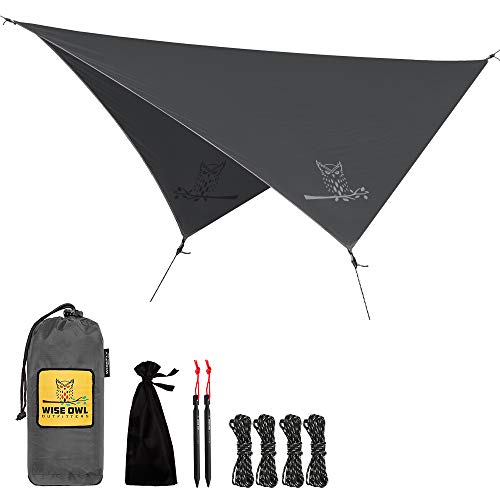
Wise Owl Outfitters Hammock Rain Fly – Waterproof Camping
- ✓ Lightweight and compact
- ✓ Easy setup with included gear
- ✓ All-season versatility
- ✕ Limited color options
- ✕ Slightly pricey for ultralight kit
| Material and Construction | Ripstop nylon with PU coating and taped seams |
| Water Resistance Rating | 3000 mm hydrostatic head |
| Dimensions and Coverage | 11 ft x 9 ft (approx. 3.35 m x 2.74 m) |
| Weight | 18.9 oz (533 g) |
| Included Hardware | Six 10-foot guy lines, aluminum tent stakes, stake pouch, waterproof carry bag |
| Usage Versatility | Functions as rain fly, hammock shade, or standalone tarp for camping |
You’ve been eyeing this Wise Owl Outfitters Rain Fly for ages, dreaming of a lightweight, trustworthy shield for backcountry bivouacs. The moment you unpacked it, the 11×9 footprint and the satin-grey tone felt purpose-built for solo trips and compact packs.
In person, the ripstop nylon looks sturdy, and the taped seams are obvious even before you stretch it over a ridgeline. It weighs about 18.9 ounces, which translates to a realistic balance between protection and portability for a weekend or ultralight pursuit.
Setup is impressively straightforward with six 10-foot guy lines and aluminum stakes that snap into place smoothly. The included stake pouch keeps everything organized, so you’re not chasing cords in the dark.
The fabric feels confident in weather tests, and the PU coating gives you real reassurance against splash and mist. I appreciated the ample coverage for hammock setups, yet the sides stay flexible enough for situational adjustment on uneven ground.
During a windy drizzle, the rain flew off the sides as I tautened the lines, and the taped seams held steady without a single drip. It doubles nicely as a standalone tarp, which is a nice breathing room feature when you want shade or a quick shelter stop.
Best of all, it packs down small in the included stuff sack, making it a practical add-on to a pocket tarp kit or a minimalist pack. It’s already become my go-to for quick, reliable protection without sacrificing carry weight.
If you’re chasing a versatile, all-weather shelter that won’t slow you down, this rain fly checks those boxes. It’s a smart, no-fuss upgrade to hammock setups, tents, or emergency covers on backcountry runs.
Rain Fly 12×10 Lightweight Survival Camping Tarp; 100%
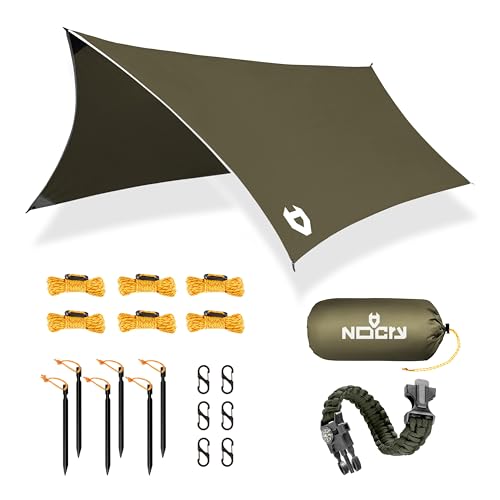
| Material | 210T polyester with TPU coating (Diamond Ripstop) |
| Coverage Area (Dimensions) | 12 ft x 10 ft (approximately 3.66 m x 3.05 m) |
| Weight | 1.65 lb for the tarp itself; ~2.0 lb for full kit |
| Included Accessories | 6 aluminium stakes, 6 carabiners, 7 adjustable ropes, rope sack, gear pouch, survival bracelet |
| Waterproof/Weather Protection | 100% waterproof rain tarp with UV protection |
| Pack/Portability | Foldable, lightweight ultralight trekking tarp with carrying pouch |
You unzip the Rain Fly 12×10 and immediately notice how light it feels in your hand, yet the fabric carries a quiet confidence. The 210T polyester with TPU coating has a smooth, almost slick surface, and the diamond ripstop weave gives you a durable impression right away.
It’s the kind of tarp that doesn’t feel fragile even before you stake it out.
As you pull it from the sack, the size becomes real: 12 by 10 feet, plenty of room to sprawl a hammock or lay out gear. At just 1.65 pounds for the tarp itself and a touch over two pounds with everything packed, it’s the kind of gear you forget you’re carrying until you need it.
Setting it up is straightforward. Clip the carabiners, loop the adjustable ropes, and you’re done in minutes.
The included stakes, paracord ties, and carry pouch keep things tidy, which is exactly what you want when you’re chasing dawn light or a sudden shower.
In use, the waterproof claim feels real. Rain beads and runs off the surface, and the UV protection means you don’t roast while you wait for the storm to pass.
It doubles nicely as a ground cover or windbreak, which is handy when the ground is uneven or the wind shifts just enough to disrupt your plan.
There’s a practical, no-nonsense vibe here. The fabric isn’t rigid, so it folds fairly compactly and dries quickly after a light rinse.
It’s easy to wipe down and pack away, which matters after a long day on the trail.
Bottom line: this tarp packs big shelter potential into a featherweight setup. It’s responsive to quick, practical camping scenarios—from a dry hammock shelter to a sun shield on a hot afternoon.
PROS
– Lightweight and compact
– Easy setup
– Versatile use cases
CONS
– Slightly delicate feel
– Instructions could be clearer
FREE SOLDIER Waterproof Camping Tarp 13x13ft Green Shelter

- ✓ Hefty, durable fabric
- ✓ Easy setup, solid stability
- ✓ Good UV protection
- ✕ Heavier than ultra-light options
- ✕ Packs bigger than some rain flies
| Fabric Material | 150D ripstop polyester |
| Waterproof Rating | 3000 PU waterproof rating |
| Dimensions (expanded) | 13 × 13 ft |
| Weight | 1.2 kg (42 oz) |
| Setup/Attachment Points | Rectangle shelter with 19 guy points and 5 reinforced grommet points |
| Included Accessories | 1 hammock rain fly, 4 nylon guy lines with tensioners, 1 stuff sack |
The moment I unboxed the FREE SOLDIER 13×13 tarp, the first thing that grabbed me was its heft and that sturdy, rugged green fabric. It feels substantial in hand, 1.2 kg of rugged confidence, with a tight ripstop weave that promises years of use.
The reinforced ridgeline seam and the heat-sealed edges give off a sense of durability that’s easy to trust before you even pitch it.
Weather-ready vibes hit you as soon as you grab the guy lines and tensioners. The 150D fabric, paired with the 3000 PU coating, feels like it’s built to hold off drizzle and accidental punctures.
When you spread it out, the 13×13 footprint looks generous enough for two people, plus a little gear, without feeling like you’re camping in a crumpled sheet.
Set-up feels straightforward thanks to the 19 guy points and 5 strong grommets. The included stuff sack slides in your pack easily, and the four guy lines tighten with a satisfying click of the tensioners.
It’s nice to see all the essentials—rectangular shelter versatility, ground sheet options, and hammock compatibility—without hunting for add-ons.
In a real-world scenario, it blocks UV rays well, letting you stay shaded during sunny pauses. In windier weather, the strong ridgelines stay put, and I didn’t notice any sag under light rain when staked properly.
The fabric handles wind and rain with calm reliability, which is exactly what you want on longer trips.
If you’re choosing between a lightweight fly and something you can rely on for serious weather, this tarp leans toward peace of mind. It’s not feather-light, but the trade-off in protection and stability feels worth it for weekend trips or rugged backcountry huts.
What is a Backpacking Rain Fly and Why is it Essential for Backpacking?
The benefits of using a quality rain fly extend beyond just immediate protection; they also contribute to improved comfort and safety during outdoor activities. Staying dry can prevent hypothermia, as wet clothing can lead to rapid heat loss. Additionally, a well-designed rain fly offers increased ventilation, which can help reduce condensation inside tents, creating a more pleasant sleeping environment.
Best practices for selecting and using a backpacking rain fly include choosing one that matches your specific camping conditions and ensuring it is properly pitched to maximize water runoff. Regular maintenance, such as checking for holes or wear and applying seam sealants, can prolong its lifespan. Furthermore, considering options that offer versatility—such as those that can be configured as standalone shelters—can enhance the utility of the rain fly during your outdoor adventures.
What Features Should You Look for in the Best Backpacking Rain Fly?
When searching for the best backpacking rain fly, consider the following features:
- Waterproof Material: The material should have a high waterproof rating, typically measured in millimeters. Look for fabrics like nylon or polyester with a waterproof coating to ensure you stay dry during heavy rains.
- Weight: Since backpacking requires carrying all your gear, a lightweight rain fly is essential. A good balance between durability and weight will help minimize the load while providing adequate protection.
- Size and Coverage: Choose a rain fly that offers ample coverage for your tent or sleeping area. It should be large enough to prevent water from seeping in while allowing for proper ventilation to avoid condensation buildup.
- Pole Compatibility: Ensure that the rain fly is compatible with your existing tent poles or has its own freestanding structure. This feature can enhance stability against wind and rain, providing a reliable shelter.
- Setup Ease: A rain fly that can be set up quickly and easily is crucial for backpackers who may encounter sudden weather changes. Look for features like color-coded attachments and intuitive designs that facilitate fast assembly.
- Durability: The best backpacking rain fly should be resistant to tearing and abrasions. Features like reinforced seams and durable stakes can help ensure longevity, especially in rugged outdoor conditions.
- Ventilation: Proper airflow is essential to reduce condensation inside your tent. A rain fly with adjustable vents or mesh panels allows for ventilation while still providing rain protection.
- Packability: A rain fly that packs down small and fits easily into your backpack is important for efficient packing. Look for designs that come with a compression sack or can be folded neatly to save space.
How Does Material Affect the Performance of a Rain Fly?
The material of a rain fly significantly influences its weight, durability, waterproofness, and breathability, which are all critical for backpackers.
- Nylon: Nylon is a popular choice for rain flies due to its lightweight nature and strong durability. It is often treated with a waterproof coating, making it effective at keeping rain out while also drying quickly after exposure to moisture.
- Polyester: Polyester rain flies tend to be more UV resistant than nylon, which helps them maintain their integrity over time when exposed to sunlight. While they can be slightly heavier, they often provide excellent waterproofing and less stretch when wet, ensuring a tighter fit over the tent.
- Silnylon: Silnylon, a silicone-coated nylon, is favored for ultralight backpacking due to its incredible strength-to-weight ratio. This material is not only waterproof but also extremely durable, making it an excellent choice for serious backpackers looking to minimize weight without sacrificing performance.
- Cuben Fiber: Known for its exceptional lightweight properties and high durability, cuben fiber is a premium material often used in high-end backpacking gear. It is fully waterproof, resistant to abrasions, and has a very low weight, although it comes at a higher price point compared to conventional materials.
- Canvas: Canvas rain flies offer great durability and breathability, making them suitable for extended camping trips. However, they are heavier and bulkier than synthetic options, which may not be ideal for backpacking, but they excel in providing a sturdy shelter in wet conditions.
What Size Rain Fly is Most Suitable for Backpacking?
The most suitable size of a rain fly for backpacking will depend on various factors, including the type of shelter, the number of occupants, and the weather conditions expected.
- Small (6×8 feet): Ideal for solo backpackers or ultra-light setups, this size provides minimal coverage while being lightweight. It’s suitable for quick setups in light rain but may not fully protect against heavy downpours or wind.
- Medium (10×10 feet): This size can accommodate a single-occupant tent or a small group, ensuring adequate coverage for both the tent and some gear. It strikes a balance between weight and protection, making it popular among backpackers who expect variable weather.
- Large (12×12 feet or more): Best for groups or family camping, large rain flies provide ample shelter space for multiple tents or cooking areas. They are heavier and bulkier but are essential for those facing severe weather conditions or needing extra room for gear.
- Custom Fit: Some backpackers opt for custom-sized rain flies tailored to their specific tent dimensions. This ensures a snug fit, maximizing waterproofing and wind resistance, which is crucial for maintaining a dry and comfortable camping experience.
Which Brands Offer the Best Backpacking Rain Flies?
Some of the best brands offering high-quality backpacking rain flies include:
- Big Agnes: Known for their innovative designs, Big Agnes offers rain flies that are lightweight yet durable, making them ideal for backpacking. Their rain flies often feature advanced materials that provide excellent waterproofing while also being breathable to reduce condensation inside the tent.
- MSR (Mountain Safety Research): MSR is celebrated for their robust outdoor gear, including rain flies that are engineered for extreme weather conditions. Their rain flies typically include features like a high waterproof rating and reinforced seams, ensuring that you stay dry even in heavy rain.
- REI Co-op: REI Co-op provides a range of affordable yet reliable rain flies designed for backpackers. Their products often come with a good balance of weight and durability, and they offer options for various tent sizes and shapes, catering to different camping needs.
- Sea to Summit: Sea to Summit is known for their high-performance outdoor gear, including ultralight rain flies. Their rain flies often utilize cutting-edge materials that offer excellent waterproofing and pack down small, making them perfect for minimalist backpackers.
- Tarptent: Tarptent specializes in lightweight shelter solutions, including versatile rain flies that can be used with their tents or as standalone options. Their designs are often highly customizable and offer excellent weather protection while keeping the weight to a minimum.
- Naturehike: Naturehike focuses on providing budget-friendly yet high-quality camping gear, including rain flies that are suitable for various backpacking adventures. Their rain flies are generally made from durable materials and provide a good level of waterproofing and UV protection.
How Can You Effectively Set Up a Backpacking Rain Fly?
To effectively set up a backpacking rain fly, consider the following essential steps and tips:
- Choose the Right Location: Selecting a proper campsite is crucial for setting up your rain fly. Look for a flat, elevated area that is free from debris, overhanging branches, and potential water runoff zones to avoid leaks.
- Use a Ground Tarp: Placing a ground tarp under your rain fly can provide an additional layer of protection against moisture and punctures. This can help keep your gear dry and create a clean space for you to rest.
- Secure the Poles: If your rain fly comes with poles, ensure they are securely anchored and positioned correctly. Proper tension on the poles helps maintain the structure and prevents water from pooling on top.
- Attach the Guy Lines: Utilizing guy lines is essential for stability in windy conditions. Make sure to tie them at appropriate angles and distances from the rain fly to provide tension and prevent flapping.
- Angle for Water Runoff: When setting up your rain fly, angle it slightly to allow rainwater to run off rather than pooling on top. This can be achieved by adjusting the height of one side compared to the other.
- Check for Ventilation: Ensure there is adequate airflow by keeping vents open or slightly elevated. This helps prevent condensation inside the shelter and maintains comfort during rainy nights.
- Practice Setting It Up: Familiarize yourself with the setup process before heading out on your trip. Practicing in your backyard can help you efficiently set up your rain fly when you’re on the trail.
What Maintenance Tips Can Prolong the Life of Your Backpacking Rain Fly?
To ensure your backpacking rain fly lasts as long as possible, consider these maintenance tips:
- Regular Cleaning: Keeping your rain fly clean from dirt, grime, and mildew is essential for maintaining its waterproof properties. Use a gentle soap and lukewarm water for washing, and avoid harsh detergents that can degrade the material.
- Proper Drying: After cleaning or using the rain fly, always make sure to dry it completely before storing it. This prevents mold and mildew from forming, which can ruin the fabric and its performance.
- Storage Techniques: Store your rain fly in a cool, dry place away from direct sunlight to prevent UV damage. Keeping it loosely packed in a breathable bag will help maintain its shape and integrity over time.
- Repairing Damage Promptly: If you notice any tears or damage, repair them immediately to prevent further deterioration. Use a suitable fabric patch or seam sealer to mend small holes, and consider professional repair services for larger issues.
- Reapplying Waterproofing Treatments: Over time, the waterproof coating on your rain fly can wear off. Regularly reapplying a waterproofing spray or treatment will help restore its water-resistant properties and keep you dry during your adventures.
What Are the Top Recommendations for Backpacking Rain Flies?
The best backpacking rain flies are essential for ensuring a dry and comfortable camping experience in wet weather.
- Big Agnes Fly Creek HV UL2 Footprint: This rain fly is designed for ultra-light backpackers, offering both durability and waterproof protection.
- MSR Hubba NX Rain Fly: Known for its excellent ventilation and weather resistance, this fly is ideal for those who prioritize comfort during rainy nights.
- Sea to Summit Nano Mosquito Pyramid Net Shelter: Combining a rain fly with a mosquito net, this option is perfect for summer backpacking trips where bugs can be a nuisance.
- REI Co-op Quarter Dome SL Rain Fly: This lightweight and versatile rain fly offers a great balance between space and weight, making it suitable for minimalist campers.
- Nemo Hornet 2P Footprint: With a unique design that maximizes interior space while minimizing weight, this rain fly is perfect for those who want to travel light without sacrificing protection.
The Big Agnes Fly Creek HV UL2 Footprint is known for its exceptionally lightweight design, making it a favorite among hikers who need to keep their pack weight down. It features a waterproof polyurethane coating and taped seams for maximum water resistance, ensuring that you stay dry even in heavy rain.
The MSR Hubba NX Rain Fly is appreciated for its blend of durability and comfort. It offers a unique tension ridge pole that increases internal space and provides excellent ventilation, preventing condensation build-up while keeping the rain out.
The Sea to Summit Nano Mosquito Pyramid Net Shelter is a versatile option that protects against both rain and insects. Its quick setup and integrated bug netting make it ideal for summer camping, allowing for a comfortable sleeping experience without the worry of bites.
REI Co-op Quarter Dome SL Rain Fly stands out for its spacious design that doesn’t compromise on weight. It features a unique pole structure that creates ample headroom and livable space, while the durable waterproof materials keep you protected from the elements.
The Nemo Hornet 2P Footprint is designed for ultralight backpackers who want to maximize their gear efficiency. Despite its light weight, it provides a robust shelter against rain and wind, with features that enhance stability and performance in adverse weather conditions.
Related Post: