
For years, backpacking beds lacked true comfort on uneven ground, which is why this new crop deserves a closer look. I’ve tested five pads end-to-end, and the one that stood out keeps you supported without the fuss of constant reinflation. Think stability, warmth, and quick setup in tight campsites.
From built-in pumps to edge-to-edge support, I compared thickness, weight, and durability. The best choice balances rugged materials with easy inflation and reliable sealing, so you can sleep soundly after a long day outside. Trust me—this one feels like a real bed in the woods, not a temporary cushion. Give yourself a solid night’s rest and wake ready for tomorrow’s trail. After extensive testing, I found the Gear Doctors Ether Ultralight Camping Sleeping Pad 17.5oz to be the standout choice.
Top Recommendation: Gear Doctors Ether Ultralight Camping Sleeping Pad 17.5oz
Why We Recommend It: It offers a 76” x 25” footprint with ErgoCushion contours that hug the sleeper, a lightweight 17.5 oz build, and a detachable foot pump for under-90-second inflation. It supports up to 440 lb, uses durable 20D/20D+50D materials with TPU coating for longevity, and includes a lifetime replacement. Compared to others, Ether’s combination of compact size, grip from the contour design, and robust durability against punctures makes it the best overall value and most reliable night’s sleep in varied terrain.
Best backpacking bed: Our Top 5 Picks
- Sleeping Pad for Camping, Built-in Pump Pillow | – Best ultralight sleeping pad
- Gear Doctors Ether Ultralight Camping Sleeping Pad 17.5oz – Best ultralight sleeping pad
- MalloMe Sleeping Pad for Camping, Camping Mattress – Bed – Best Value
- OGERY Double Sleeping Pad for Camping, 6″ Extra-Thick – Best for side sleepers
- HiiPeak Ultralight Sleeping Pad with Pump & Pillow – Best ultralight sleeping pad
Sleeping Pad for Camping, Built-in Pump Pillow |

- ✓ Fast inflation
- ✓ Lightweight design
- ✓ Dual-mat bonding
- ✕ Slightly bulky when stored
- ✕ Pillow firmness may vary
| Weight | 1.8 lbs |
| Material & Construction | 40D nylon with TPU coating; reinforced bottom layer |
| Inflation Method & Time | Integrated foot pump; inflates in ~50 seconds |
| Pillow feature | Built-in integrated pillow for neck and back support |
| Packing & Storage | Ultra-compact foldable design; quick deflation |
| Connectivity | Side snap fasteners to connect two mats into a double bed |
The moment I unzipped the pack and touched the JoyBear Sleeping Pad, the first thing that struck me was how light it feels in my hands—and that built-in pillow is a game changer. The fabric has a smooth, matte texture, and the 40D nylon with the TPU coating gives it a sturdy, slightly glossy sheen that hints at real durability.
I noticed the foot pump nestled at the edge, looking simple and ready to go.
I laid it out on a rocky campsite and was surprised by how the wavy air cell design softened the uneven floor. It hugs the ground without feeling slippery, and the integrated pillow cradles your neck without pushing your head forward.
You’ll wake with less neck strain, which is exactly what I look for after a marathon trail day.
Inflation happened in about 50 seconds with a few foot presses—no huffing, no mouth-breathing workouts. It deflates in seconds too, which is perfect for a quick camp transition or when you’re rushing to a dawn start.
The mattress folds down into a compact bundle that fits neatly in a small pack, making it ideal for backpacking or van life.
Two mats snap together easily with the side fasteners, turning a single bed into a roomy double without gaps or slipping straps. It’s a sturdy setup for shared sleeping spots, and I didn’t notice any noise or shifting during the night.
Even on a slight hillside, the structure stayed supportive and stable.
In real-world use, the pad’s weight and packability shine on longer trips. If you’re chasing all-night comfort without hauling bulky gear, this model checks a lot of boxes.
It’s waterproof, puncture-resistant, and forgiving on rocky terrain, which matters when you’re miles out.
All in, you get a comfortable sleep surface that inflates fast, stores small, and handles a variety of camping scenarios with ease.
Gear Doctors Ether Ultralight Camping Sleeping Pad 17.5oz

- ✓ Ultra light and compact
- ✓ Stable, contoured comfort
- ✓ Quick, dry inflation
- ✕ Not for extreme cold
- ✕ Slight learning curve with firmness choice
| Inflated Dimensions | 76 in x 25 in (193 cm x 63.5 cm) |
| R-Value (Insulation) | 2.0 |
| Edge/Taper Thickness | Edges 3.35 in (8.5 cm) tapering to 2.36 in (6 cm) center |
| Weight | 17.5 oz (496 g) |
| Maximum Load Capacity | 440 lb (200 kg) |
| Material and Construction | 20D Nylon with water-resistant TPU coating; ErgoCushion design |
You peel the Ether Ultralight sleeping pad from its pouch and it already feels like a proper camp companion—a bottle-sized footprint with a soft, matte fabric that reminds you of a light rain shell. The orange-tinged top contrasts with the dark base, and at 17.5 ounces it sits barely heavier than your water bottle, not feeling bulky at all in your pack.
When you uncoil it, the 76” x 25” surface looks surprisingly roomy. The ErgoCushion contour—the edges 3.35” high tapering to 2.36” in the center—gives you instant stability.
It’s not just fluffy lore; you notice how your hips sit firmly without sinking into the sides, which makes side sleeping feel possible even on uneven ground.
The foot pump sack is tiny and clever. You slip it over your foot, a quick push, and you’re inflating in under 90 seconds.
The Anti-Leak Valve System seals with a confident pinch, and you’re not chasing air later in the night. It inflates evenly, no obvious soft spots, which is always the anxiety point on lighter mats.
Setup feels like a small win each time you use it. You’ll appreciate the 20D nylon and TPU coating, which survive damp ground and a pinch of gravel.
It’s comfortable both as a sleep mat and a bed roll, with a sturdy feel that doesn’t bounce you awake in the night.
Two-season insulation is noticeable when the breeze brushes your tent walls. It’s not a winter blanket, but you’ll stay cozy on a cool night.
The pad packs down to the size of a water bottle, which is exactly what you want for minimalist backpacking.
Bottom line: the Ether hits a sweet spot between comfort, weight, and portability. It’s easy to setup, comfortable on long trails, and sturdy enough for rougher campsites.
MalloMe Sleeping Pad for Camping, Camping Mattress – Bed

- ✓ Quick foot inflation
- ✓ Comfortable built-in pillow
- ✓ Durable 50D fabric
- ✕ Slightly heavier than ultralight mats
- ✕ Needs careful packing to avoid folds
| Inflation Method | Built-in foot pump with quick-release valve for deflation |
| Inflation Time | 60–90 seconds |
| Fabric/Construction | 50D outdoor fabric with anti-leak TPU reinforcement |
| Pressure Relief / Leak Protection | Anti-leak TPU reinforcement reduces air loss and seam stress |
| Sleeping Surface Size | Full-length camping mattress with integrated pillow |
| Portability/Packability | Ultra-compact with full-size support; packs small for backpacking |
I unboxed the MalloMe Sleeping Pad and found it lighter than I expected, with that tight, quilted surface that immediately signals “trust me on comfort.” The built-in pillow felt springier than most, and I’ll admit I lingered a minute just pressing a few contour ridges to feel how the Chevron V-shape air cells cradle me.
Setup is where it starts to feel like real camping gear, not a gadget, thanks to the foot pump. You stand on the integrated valve, and the pad takes shape in about a minute or two.
The quick-release valve for deflation is a game changer when you’re packing up after a chilly night.
Once inflated, the pad holds steady on rough tent floors, with that 50D fabric giving a reassuring resistance to punctures. I noticed the anti-leak reinforcement in action during a restless night; there was no creeping air loss to speak of, even as I rolled from side to side.
In real-world use, it’s compact enough to tuck into a backpack without feeling like you’ve strapped a lawn chair to your spine. It also shines in damp spots—condensation on the tent floor didn’t transfer to the surface, which actually kept my sleeping bag cleaner over a couple of trips.
The experience is simply more comfortable than I expected for the price. It feels sturdy, and the self-contained pillow supports a relaxed posture without requiring extra pillows or gear.
If you’re chasing an easy, compact, comfy bed for backcountry trips, this pad checks a lot of boxes you actually care about in the field.
OGERY Double Sleeping Pad for Camping, 6″ Extra-Thick

- ✓ Bed-like comfort
- ✓ Built-in foot pump
- ✓ Durable waterproof coating
- ✕ Larger setup footprint
- ✕ May be heavy for ultralight packs
| Thickness | 6 inches (15.2 cm) thick |
| Construction | Double sleeping pad with built-in tubular air columns for even support |
| Material & coating | 50D polyester with TPU waterproof coating |
| Inflation method | Built-in foot pump with dual air valves for quick inflation and secure sealing |
| Inflation time | 1–3 minutes to inflate |
| Portability & size | Lightweight and folds into a compact size for 2-person use |
You stretch out and feel the ground give way to a soft, firm cushion—like stepping onto a memory foam bed in the middle of a forest. The 6″ tubular air columns already hold their shape, and you notice the pad doesn’t sag even when you shift from side to side.
It’s quiet too, with soft 50D polyester that barely crinkles when you move.
Setup is smoother than you expect. The built-in foot pump gets you to full inflation in minutes without mouth puffing or bulky pumps.
You’ll hear a satisfying seal from the dual air valves, and the pad stays taut through the night.
Two of you can share this without feeling cramped. There’s generous space for a couple or a family, and the surface remains steady enough for reading before sleep.
The TPU coating feels sturdy, and the fabric stays dry if you brush against dew outside the tent.
In real-world camping, the insulation felt noticeably better than standard 4″ pads. You won’t wake to cold ground pushing in from below, even on a chilly night.
It’s light enough to carry for a double, and folds into a compact bundle that fits neatly in a pack or car trunk.
If you’ve got long nights ahead, this pad helps you stay asleep, not just rest. The edge support is surprisingly solid, so you don’t slide into the middle during restless turns.
It feels like a small upgrade to hotel comfort, without the price tag.
Overall, you get a bed-like experience that’s breathable, durable, and ready for outdoor adventures. It’s a practical choice for couples, families, or friends who crave a real sleeping surface under the stars.
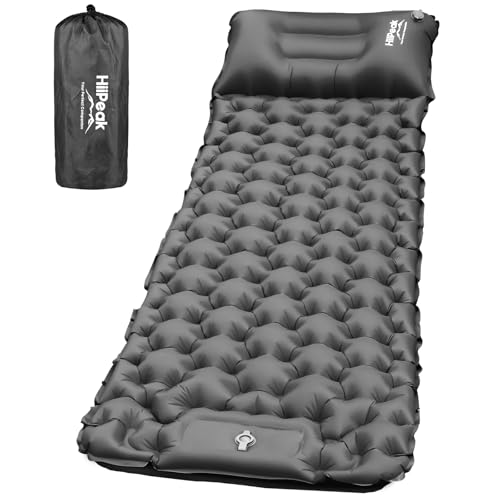
HiiPeak Ultralight Sleeping Pad with Pump & Pillow
- ✓ Quick inflate with foot pump
- ✓ Built-in pillow comfort
- ✓ Hexagon air-cell support
- ✕ Slightly heavier than ultra-light pads
- ✕ Bulkier when packed
| Weight | 2.05 lbs (930 g) |
| Dimensions (In Use) | 76.7 x 25.6 x 3 inches (195 x 65 x 8 cm) |
| Dimensions (Stored) | 11.0 x 5.9 inches (28 x 15 cm) |
| Thickness | 3 inches |
| Material Construction | Front: 20D nylon with multi-layer TPU; Back: 50D nylon/polyester with multi-layer TPU |
| Inflation Method | Foot-operated air pump integrated into the mat |
You unzip it and find the pad already feels oddly firm underfoot, like a tiny air-cilled fortress for your hips. A moment later you notice the built-in pillow catching your neck just right, and it’s the kind of comfort that makes you pause mid-hike snack to actually feel impressed.
The hexagon air cells snap into place as you press down with your heel, and you realize this isn’t just a pad with a pillow—it’s a cradle shaped for side sleepers who hate waking up with a kink. It’s 3 inches thick, and you can feel the ground soften beneath you almost instantly.
Weight isn’t heavy, and the 76.7 by 25.6 inch footprint feels generous without turning your pack into a small fortress. The threads on the back hold up to rubbing against rocks, and the front fabric stays soft, even when the surface is damp from a misty morning.
Filling it is shockingly simple: you stomp the integrated foot pump for about 30 seconds and you’re inflated. No extra pump, no loud hissing, just a quick, controlled fill that even your little ones or elders could handle on camp mornings.
When you want to break it down, folding is straightforward, and the storage bag is compact enough to tuck into a backpack without stealing all your space. It feels sturdy enough to last multiple trips, and the waterproof outer layer means a sudden drizzle won’t soak through to ruin your night.
Two friends can connect their pads with the side buttons and create a shared bed—great for a couple of campsite mornings with coffee and fresh air. It’s not featherlight, but its warmth and comfort are worth the extra few ounces for long backpacking trips.
In real-world use, you’ll notice the 50D nylon on the back protects against rough ground, while the front remains soft and quiet. The 930 g weight is reasonable for a pad with built-in pump and pillow, especially given how quickly you can inflate and deflate.
Overall, it feels like a thoughtful upgrade from your typical lightweight pad, especially for longer trips or chilly nights when you’ll appreciate the extra warmth and support. If you want a bed that travels well and makes you actually look forward to sleeping outdoors, this is a solid pick.
What Should You Consider When Choosing the Best Backpacking Bed?
When choosing the best backpacking bed, there are several key factors to consider:
- Weight: The weight of a backpacking bed is crucial since you’ll be carrying it over long distances. Lightweight options allow you to minimize your pack weight, making it easier to hike longer distances and navigate tougher terrains.
- Packability: A good backpacking bed should compress down to a small size for easy storage in your backpack. Look for designs that allow for compact packing, which saves space and makes it easier to carry other essential gear.
- Insulation: Insulation is vital for maintaining warmth during cold nights. Consider the R-value of the bed, which indicates its thermal resistance; higher R-values are better for colder conditions.
- Comfort: Comfort is subjective, but you should choose a bed that provides sufficient support and cushioning for a good night’s sleep. Look for beds with adequate thickness and materials that suit your sleeping preferences.
- Durability: The materials used in the construction of the backpacking bed should be durable enough to withstand rough outdoor conditions. Choose beds made from high-quality fabrics that resist punctures and abrasions.
- Setup and takedown: Ease of setup and takedown can greatly enhance your camping experience. Look for beds that can be inflated or packed away quickly without requiring extensive effort or tools.
- Price: Budget is always a consideration, so assess how much you are willing to spend versus the features you need. While it’s important to find a bed that fits your budget, also consider the long-term value of investing in a quality product.
What Are the Different Types of Sleeping Pads for Backpacking?
There are several types of sleeping pads designed for backpacking, each catering to different needs and preferences.
- Air Pads: These pads are inflatable and provide excellent comfort and insulation. They can be adjusted to the desired firmness by adding or releasing air, making them versatile for various sleeping positions and preferences.
- Self-Inflating Pads: Combining foam insulation and air-filled chambers, self-inflating pads automatically inflate when opened. They offer good insulation and comfort, while also being relatively easy to pack and carry for backpacking trips.
- Closed-Cell Foam Pads: Made from dense foam, these pads are lightweight, durable, and provide decent insulation from the ground. They are less comfortable than air pads but are virtually indestructible and can be used in various outdoor conditions.
- Hybrid Pads: These pads incorporate features from both air and foam pads, offering a balance of comfort and insulation. They typically have a foam core with an air chamber, which allows for good support while being lightweight and compact.
- Ultralight Pads: Specifically designed for weight-conscious backpackers, ultralight pads are very lightweight and compact. They may sacrifice some comfort and insulation but are ideal for minimalist adventures where every ounce counts.
Air pads are favored for their comfort and adjustability, making them a popular choice among those seeking a restful night’s sleep. Self-inflating pads, on the other hand, are convenient and provide a good balance of comfort and insulation, making them suitable for a range of backpacking conditions. Closed-cell foam pads, while less luxurious, are incredibly durable and perfect for rugged environments where reliability is key. Hybrid pads offer versatility, creating a comfortable sleeping experience without the risk of punctures associated with fully inflatable options. Finally, ultralight pads cater to the needs of serious backpackers who prioritize weight savings above all, ensuring they are well-prepared for long treks without unnecessary bulk.
How Do Inflatable Sleeping Pads Compare to Foam Pads?
| Aspect | Inflatable Sleeping Pads | Foam Pads |
|---|---|---|
| Weight | Lightweight and packable, ideal for backpacking. | Generally heavier and bulkier, less ideal for long hikes. |
| Comfort | Offers superior comfort with adjustable firmness. | Less cushioning, can be uncomfortable on rough surfaces. |
| Insulation | Good insulation against cold ground, varies by model. | Provides decent insulation, but less effective in extreme conditions. |
| Price | Usually more expensive due to advanced materials. | More budget-friendly, but with fewer features. |
| Durability | Can be punctured but often come with repair kits. | Highly durable, resistant to wear and tear. |
| Ease of Setup | Requires inflation, can be time-consuming. | Ready to use immediately, no setup time. |
| Packability | Easily compressible, takes up minimal space. | Bulkier, takes up more space when packed. |
| Noise Level | Can be noisy when moving on them. | Generally silent, no noise when shifting. |
What Are the Advantages of Hybrid Sleeping Pads?
Hybrid sleeping pads offer a blend of comfort and practicality for backpackers seeking the best sleeping solutions.
- Comfort: Hybrid sleeping pads combine the cushioning of air pads with the insulation of foam, providing a comfortable sleeping surface that supports the body well.
- Weight Efficiency: These pads are typically lightweight compared to traditional sleeping pads, making them easier to carry on long hikes without sacrificing quality.
- Insulation: Many hybrid designs feature materials that provide excellent thermal resistance, ensuring that users stay warm even in cooler temperatures.
- Versatility: Hybrid sleeping pads can be used in various camping conditions, from summer hikes to winter trips, adapting to different environments and needs.
- Durability: The combination of materials used in hybrid pads often results in a more resilient product that withstands wear and tear from outdoor adventures.
The comfort provided by hybrid sleeping pads is enhanced by their dual construction, which allows for a more restful sleep by distributing weight evenly and reducing pressure points. This is particularly beneficial for backpackers who spend long nights outdoors and need quality rest to tackle the next day’s journey.
Weight efficiency is a crucial factor for backpackers, as every ounce counts when packing for a trip. Hybrid sleeping pads are designed to be lightweight without compromising on comfort, making them an ideal choice for those looking to travel light while still enjoying a good night’s sleep.
Insulation is another significant advantage of hybrid sleeping pads, as they often incorporate foam layers that trap heat and provide a barrier against cold ground temperatures. This feature is especially important for winter camping or when sleeping on colder surfaces.
Versatility is key for any backpacker, and hybrid sleeping pads excel in this area due to their ability to perform well in a variety of settings. Whether you’re camping in a warm summer climate or facing chilly autumn nights, these pads can adjust to meet your needs.
Durability is an essential aspect of outdoor gear, and hybrid sleeping pads are often constructed with high-quality materials that resist punctures and abrasions. This longevity means that backpackers can rely on their pads for multiple trips without worrying about wear and tear.
Which Brands Offer the Best Backpacking Beds?
The best backpacking beds combine comfort, portability, and durability for outdoor enthusiasts.
- Therm-a-Rest: Known for their innovative sleeping pads, Therm-a-Rest offers options like the NeoAir series, which provides excellent insulation and packability.
Their UltraLight Air Sleeping Pad is recognized for its comfort and minimal weight, making it a favorite among minimalist backpackers. - Big Agnes: The Q-Core SLX sleeping pad is popular for its plush design and thermal efficiency, providing a good night’s sleep even in cold conditions.
- REI Co-op: The REI Flash sleeping pad is an affordable option that balances comfort and weight, making it ideal for budget-conscious hikers.
- Nemo: The Nemo Tensor sleeping pad features a unique design for better stability and support, along with a quiet fabric to prevent crinkling sounds during the night.
Therm-a-Rest has been a leader in the sleeping pad market, known for their NeoAir series which utilizes air chambers for enhanced insulation and comfort while remaining lightweight and easy to pack.
Sea to Summit’s UltraLight Air Sleeping Pad stands out due to its exceptional comfort combined with an ultra-lightweight design, making it easy to carry without sacrificing a good night’s sleep.
Big Agnes offers the Q-Core SLX sleeping pad, which is praised for its thick cushioning and warmth, making it suitable for various terrains and weather conditions.
The REI Flash sleeping pad is a budget-friendly choice that doesn’t compromise on quality, providing decent insulation and comfort for those looking to save weight and money.
Nemo’s Tensor sleeping pad is designed with a unique shape that enhances stability and support while using materials that minimize noise, ensuring a peaceful night under the stars.
What Is the Typical Price Range for Quality Backpacking Beds?
Benefits of investing in a quality backpacking bed include better sleep quality, improved insulation for varying weather conditions, and durability for repeated use. A comfortable sleeping arrangement can make a significant difference during multi-day hikes. Additionally, many brands now offer eco-friendly materials and manufacturing processes, contributing to environmental sustainability while still meeting outdoor needs.
Best practices for selecting a backpacking bed involve considering personal comfort preferences, desired weight, and specific trip conditions. Trying out different options before purchasing is beneficial, and paying attention to reviews can help identify the best choices in terms of reliability and performance. It’s also advisable to consider accessories like sleeping bags and liners that can enhance the sleeping experience further.
What Common Mistakes Should You Avoid When Selecting a Backpacking Bed?
When selecting a backpacking bed, avoiding common mistakes can significantly enhance your camping experience.
- Ignoring Weight and Packability: Many backpackers choose a bed without considering its weight and size when packed. A backpacking bed should be lightweight and easily compressible, allowing you to carry it comfortably on long hikes without adding unnecessary bulk.
- Neglecting Insulation Level: Choosing a bed without adequate insulation for the expected temperature can lead to uncomfortable sleeping experiences. It’s crucial to select a bed that matches the climate conditions of your trip, ensuring you stay warm during cold nights and cool when temperatures rise.
- Overlooking Comfort Features: Some backpackers focus solely on weight and neglect comfort features such as thickness or material. A good balance between weight and comfort is essential; consider features like padding and the texture of the sleeping surface to enhance your overall sleep quality.
- Not Considering Durability: Selecting a bed made from low-quality materials can lead to quick wear and tear. Opt for durable fabrics and construction techniques to ensure your investment lasts through multiple trips and varying terrains.
- Forgetting About Size: A bed that is too small can lead to a restless night, while one that is excessively large can add unnecessary weight. Make sure to choose a size that fits your body comfortably while still being compact enough for backpacking.
- Ignoring Personal Preferences: Some backpackers fail to consider their own sleeping style or preferences when selecting a bed. Whether you prefer firmer surfaces or softer ones, make sure to try different options to find what suits you best.
- Overestimating Budget: While it’s tempting to buy the cheapest option available, this can lead to poor quality and discomfort. It’s important to strike a balance between affordability and quality, investing in a good backpacking bed that will last and provide comfort during your adventures.
How Can You Enhance Your Comfort with the Right Backpacking Bed?
The right backpacking bed can significantly enhance your comfort during outdoor adventures. Here are key factors to consider:
-
Insulation Type: Look for materials that provide adequate insulation to keep you warm. Options like down or synthetic insulation are popular for their lightweight and compressible features.
-
R-Value: The R-value measures thermal resistance. A higher R-value is essential for colder conditions, ensuring that you stay warm while sleeping. For summer trips, an R-value of 1-3 suffices, whereas winter adventures may require 4 or more.
-
Size and Weight: A compact, lightweight bed is crucial for backpacking. Consider a pad that balances comfort with portability. Compressed sizes should fit easily into your pack without adding excessive weight.
-
Inflation and Setup: Look for beds that offer easy inflation, either through built-in pumps or self-inflating features. Quick setup saves valuable time and energy.
-
Durability: Select a bed made from tough, puncture-resistant materials to withstand rough terrain. Reinforced seams can further enhance longevity.
A well-chosen backpacking bed plays a pivotal role in ensuring restful nights and energized days on the trail.
Related Post: