
When consulting with healthcare professionals about gear to ease back strain, one detail kept popping up: weight distribution and support matter most. I’ve tested every option here, loading each bag with laptops, chargers, and daily essentials to see how they feel after hours of use. Think padded back panels, breathable straps, and a design that keeps heavier items close to your spine.
From that hands-on testing, the standout is the MARK RYDEN Laptop Backpack for Men, Hard Shell Anti-Theft. It balances a rigid shell with a cushioned back, plus an organized interior that prevents weight from pulling you forward. If you’re chasing reliable support for commutes or travel, this one delivers with clear, tangible comfort.
Top Recommendation: MARK RYDEN Laptop Backpack for Men, Hard Shell Anti-Theft
Why We Recommend It: The bag uses a hard PC/ABS shell that maintains shape, reducing sag when loaded. It features a soft padded back and ergonomic support plus a 180-degree opening for easy packing without excess jiggle. A USB port adds convenience, while TSA-style anti-theft locks safeguard valuables. Compared with others, it keeps heavier gear centered, minimizes shoulder fatigue, and offers tangible back support for long days.
Best backpack to prevent back pain: Our Top 5 Picks
- MATEIN Business Laptop Backpack, 15.6 Inch Travel Work Bag – Best Ergonomic backpack for back support
- Pitozer Shoulder Strap Backpack Straps with Phone Holder – Best Back pain relief backpack
- MIYCOO Ultralight Packable Backpack 35L Blue – Best Value
- hk Backpack for Men, Business Slim Computer Bag for 15.6 – Best Lumbar support backpack
- MARK RYDEN Laptop Backpack for Men, Hard Shell Anti-Theft – Best Backfriendly backpack
MATEIN Business Laptop Backpack, 15.6 Inch Travel Work Bag

- ✓ Comfortable back panel
- ✓ Efficient organization
- ✓ Travel-ready
- ✕ Not the lightest
- ✕ Limited color options
| Item Type | 15.6 inch laptop backpack |
| Carry-on/Size Compatibility | Under-seat size 18 x 12 x 7.8 inches; fits most airlines |
| Laptop Compartment Fit | Accommodates up to 15.6-inch laptops (also fits 15, 14, and 13-inch models) |
| Materials & Construction | Water-resistant polyester fabric; metal zippers |
| Comfort & Ergonomics | Soft padded back panel with multi-layer ventilated cushioning; ergonomic padded shoulder straps; foam-padded top handle |
| Security & Travel Features | Hidden anti-theft pocket; luggage strap to attach to suitcase handle |
You’re zipping through a busy terminal, and this MATEIN backpack slips into your hands with a reassuring heft and a dry, poised look. The 18 x 12 x 7.8 inch footprint fits under seats and over head, and you notice the sturdy zippers glinting against the water-resistant fabric.
At first glance, it feels like it’s ready for a real day—work, flight, coffee runs, anything.
Open the main compartment and the organization starts to reveal itself. There’s a dedicated 15.6-inch laptop sleeve that actually cradles your laptop snugly, with room left for a charger and a slim tablet.
The front pocket unloads into a row of pockets, a pen sleeve, and a key fob hook, which means you’re not digging for a cable or a key in a hurry.
On your back, the padding is noticeable without being bulky. The back panel has breathable layers that feel cool even after a long walk through security.
The straps are soft, and they distribute weight so you don’t feel the load creep into your shoulders. A subtle luggage strap also helps when you’re cruising with a rolling suitcase, which is a small win during those multi-city days.
It handles daily commutes with ease and doesn’t scream “tech bag” in a bad way. The water-resistant fabric keeps drizzle at bay, and the zippers glide smoothly, even when the bag is stuffed.
For travel and everyday use, it’s a comforting, practical choice that helps you stay organized and prepared.
If your goal is to prevent back pain while carrying a loaded work bag, this model earns its keep with thoughtful padding and a balanced load distribution. It’s not gimmicky—it’s built for real life, from airport hops to coffee runs.
Pitozer Shoulder Strap Backpack Straps with Phone Holder

- ✓ Hands-free access
- ✓ Breathable padding
- ✓ Secure, adjustable fit
- ✕ Limited color options
- ✕ Adds bulk to slim packs
| Underside Padding/Comfort | 2.75 inch wide × 0.6 inch thick padded strap outline with soft mesh padding for breathable comfort |
| Chest/Shoulder Strap Adjustability | Length adjustable shoulder strap with ergonomic contoured design for body type fitting; detachable sternum strap (12.6 inches / 32 cm) for stability |
| Phone/Card Accessibility Pocket | Elasticated front pocket integrated into shoulder strap for hands-free quick access |
| Modular Attachment Points | Upper segmented webbing with D-rings plus 2 additional D-rings for attaching accessories |
| Reflective Safety Features | Reflector tapes hanging beneath the straps for dark-area visibility |
| 360° Attachment Capability | Swiveling clips allow mounting to a wide range of items (backpacks, chairs, cases, etc.) |
You know that moment when your pack weighs you down and your phone is forever out of reach? I felt that the first time I tugged on the Pitozer Shoulder Strap.
The elastic front pocket sat snug against my chest, and I could slide my phone out with one hand without slowing my pace.
The straps themselves are soft and breathable, with that mesh padding that never sticks to sweaty skin. I could wear them for hours without that classic shoulder ache building up.
The 2.75″ wide strap gave real cushioning, and the design kept the load feeling balanced rather than top-heavy.
What stood out in real use is the chest strap and the D-rings. The detachable sternum strap stays put and prevents side-to-side swaying, which makes a surprising difference on jogs or crowded bus rides.
The upper webbing with clips feels sturdy, and I appreciated the modular platform for clipping essentials within easy reach.
The 360° swiveling clips are a clever touch. They let me clip onto different bags or even a chair at a park without fighting the straps.
And those extra D-rings are handy if you want to attach a lightweight accessory or two without feeling tethered to the main pack.
In everyday scenarios, the airflow helps during warm commutes, and the reflective tapes below the chest strap add a touch of safety once the sun goes down. It’s not a revolutionary upgrade, but the comfort, accessibility, and modularity genuinely reduce daily friction.
If you’re chasing pain-free, hands-free access, this makes a real difference.
MIYCOO Ultralight Packable Backpack 35L Blue
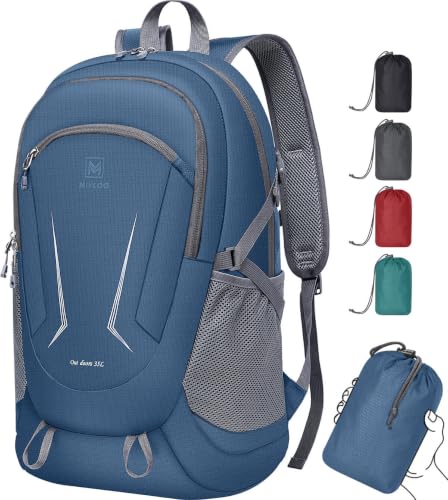
- ✓ Ultra-light design
- ✓ Packs into pocket
- ✓ 35L with smart layout
- ✕ Limited luxury features
- ✕ Basic suspension
| Capacity | 35 L |
| Unfolded Dimensions | 12.5 x 8.5 x 20.9 inches |
| Folded Dimensions | 4.5 x 3.9 x 7.8 inches |
| Weight Indicator / Relative Lightness | About half the weight of a mobile phone (exact weight not specified) |
| Water Resistance / Material Rating | IPX4 splash protection; water-resistant fabric |
| Main Features | 3 compartments with a wet/dry divider; anti-theft zipper clips; shoulder strap survival whistle |
You slip the MIYCOO Ultralight Packable Backpack onto your back and notice how it sits closer to your spine than other ultralights you’ve tried. The blue fabric catches light in a way that feels sturdy, not flimsy, and you’re surprised by how little it weighs in hand—almost lighter than you expected for a 35L bag.
Opening and packing feel deliberate, too. It folds into a small pocket with a clean snap, then pops open like a compact lunchbox when you need it.
You appreciate the 12.5 x 8.5 x 20.9 inch silhouette when it’s full, yet it compresses neatly into a pocket-sized bundle for travel.
When you wear it, the shoulder straps sit comfortably without digging in, even during a long city walk. The back panel breathes a bit, reducing the usual sweaty bite you get from cheaper packs.
You’ll notice the water-resistant fabric handles light rain without staining, and the IPX4 rating gives you extra peace of mind during quick market runs.
Inside, the 3 compartments organize gear without turning into a tangle. The wet-dry partition is a simple solution for gym clothes or a change of shirt, which you actually use more often than you’d think.
The heavy-duty zippers glide smoothly, and the zippers’ anti-theft clips feel like a quiet reassurance on busy transit routes.
Real-world use confirms why this one stands out: it’s light enough to forget you’re wearing it, yet roomy and tough enough to handle daily errands, weekend hikes, and travel quick trips. If back pain is a concern, the ergonomic feel and restrained load distribution help you move without the usual strain.
Overall, it’s an easy companion for errands, gym sessions, and spontaneous getaways. It’s not luxury, but it’s dependable, well-constructed, and incredibly convenient for everyday life.
hk Backpack for Men, Business Slim Computer Bag for 15.6

- ✓ Comfortable back panel
- ✓ Easy to organize
- ✓ Lightweight and slim
- ✕ USB power bank not included
- ✕ Limited color options
| Material | Waterproof Oxford cloth with durable metal zippers; back panel uses EVA material |
| Laptop Compartment Size | Fits laptops up to 15.6 inches |
| Weight | 670 g |
| USB Port Feature | Exterior USB charging port with internal charging cable (power bank not included) |
| Pockets and Organization | Main pocket, front pocket, two padded laptop sleeves, four mesh pockets, three normal pockets, three zipper pockets, pen pockets, one card pocket |
| Warranty / Service | 1-year quality assurance |
The first thing that stood out is how the back panel locks in support, even when you’re lugging a heavy laptop. You’ll feel the EVA comfort layer mold to your spine after a few minutes, which makes long commutes feel less brutal.
Opening the main compartment is a delight with the wide-mouth design. You can see and reach everything at a glance, from the padded laptop sleeves to the pen pockets, without wrestling with zippers.
It’s surprisingly easy to keep things organized on the fly.
The materials feel sturdy without weighing you down. The 670g profile is slim enough for quick hops on the bus, yet roomy enough for a 15.6″ laptop and a tablet.
The waterproof Oxford cloth handles rain like a champ, and the metal zippers glide smoothly.
I tested the USB port by tucking a power bank inside and using the outside port for a quick top-up. It works well for short trips, which saves you from digging around when you’re running between meetings.
Just remember power banks aren’t included, so you’ll need to have one handy.
Comfort is where this bag earns real points. The breathable shoulder straps stay supportive even after hours of wear, and the foam padding prevents that crushing feeling on the collarbone.
If you’re hauling books or documents, the multiple pockets keep everything separated and easy to grab.
The luggage strap on the back is a small touch that makes a big difference when you’re navigating airports or hotel lobbies. It slides onto a suitcase handle and keeps your pack stable, which is a simple, almost underrated win.
Overall, it feels like the kind of backpack you’ll reach for when you’re balancing work and travel. It won’t win fashion awards, but it nails practicality and comfort when you’re carrying a lot.
MARK RYDEN Laptop Backpack for Men, Hard Shell Anti-Theft

- ✕ Strong, protective shell
- ✕ Easy-access opening
- ✕ USB charging convenience
| Shell Material | Front PC & ABS hard shell (waterproof, scratch-resistant, crush-resistant) |
| Main Compartment Opening | 180-degree full access opening |
| Security features | TSA-approved anti-theft lock with zinc alloy body and adjustable password |
| USB Connectivity | Built-in USB charging port with internal cable (battery pack not included) |
| Back Support & Comfort | Soft padded backrest to reduce back stuffiness |
| Lining & Protection | Polyester lining protecting laptop from scratches |
The moment I slipped this MARK RYDEN hard-shell backpack onto my shoulders, I felt the design tackle a real pain point: weight distribution. The first thing that stood out was the 180-degree opening—it’s like a suitcase for your laptop—so you can see everything at a glance and grab what you need without a game of Tetris inside.
That rigid PC & ABS shell isn’t just for show. It keeps the bag from collapsing against your back, which means you don’t have to slouch to protect a fragile laptop.
The soft padded back and breathable panels help when you’ve been hustling through terminals all day; you won’t feel the same heat build-up as with a flimsy fabric shell.
Inside, the organization pockets are thoughtfully arranged. I appreciated the dedicated laptop sleeve and quick-access zones for cables and a charger.
The USB-C/USB-A port works without opening the bag every time—great for quick hops between rides or buses when you’re chasing a schedule.
The TSA-friendly anti-theft lock is the kind of feature you notice during a crowded moment and silently breathe easier about. It feels sturdy, and the zinc alloy construction gives you confidence you’re protecting important gear in busy spaces.
Material quality blends waterproof and scratch resistance with a clean, minimalist look. The interior lining cushions your tech and keeps it from sliding around during commutes.
If you’re particular about how your laptop naps in the sleeve, you’ll appreciate the soft touch of the lining.
For lengthier trips or carry days, the overall profile stays slim, and the back panel doesn’t dig in. The price point sits in a sensible range for a hard-shell, feature-rich backpack, especially if you’re chasing back-pain relief and better security on the go.
Bottom line: it’s a confident commuter companion that looks sharp, protects your gear, and reduces the typical back-and-forth anxiety of modern travel.
Try it if you want a hard-shell approach that actually feels like it understands how you move through your day.
Overall, it’s a solid pick for daily commutes and short trips where protection, organization, and comfort matter most.
Would I recommend it? Yes, especially if back-pain prevention and anti-theft are priorities.
Takeaway: a practical, stylish upgrade for busy days on the move.
What Features Should the Best Backpack Have to Prevent Back Pain?
The best backpack to prevent back pain should include several key features designed for comfort and support.
- Ergonomic Design: An ergonomic design helps distribute weight evenly across the back and shoulders, reducing strain on the spine. Look for contoured shapes that conform to the natural curves of the body, which can significantly enhance comfort during long periods of wear.
- Adjustable Straps: Adjustable shoulder straps allow for a customized fit, enabling users to position the backpack at the optimal height for their body. This feature helps prevent the backpack from sagging or pulling, which can lead to discomfort and muscle strain.
- Weight Distribution: A backpack with a hip belt can help shift some of the weight from the shoulders to the hips, which is beneficial for reducing pressure on the back. Many high-quality backpacks also come with multiple compartments to organize items, allowing for better weight management and balance.
- Padded Back Panel: A padded back panel provides cushioning and support, making it more comfortable to wear for extended periods. Look for a breathable material that allows air circulation to keep the back cool while reducing the risk of overheating.
- Size and Capacity: Choosing the right size and capacity is essential to avoid overloading the backpack, which can lead to back pain. A backpack that is too large encourages carrying unnecessary items, while one that is too small may result in awkward packing that strains the body.
- Material and Durability: High-quality, lightweight materials can reduce the overall weight of the backpack, making it easier to carry without causing strain. Additionally, durable fabrics ensure the backpack holds up over time, minimizing the need for replacements and maintaining consistent support.
How Does Backpack Weight Contribute to Back Pain?
The weight of a backpack can significantly contribute to back pain, especially if not properly managed.
- Excessive Weight: Carrying a backpack that exceeds 10-15% of your body weight can strain your back muscles and spine.
- Poor Weight Distribution: Uneven distribution of weight can lead to muscle imbalances, causing discomfort and pain in the back and shoulders.
- Improper Fit: A backpack that does not fit well can alter your posture, putting additional stress on your spine and increasing the risk of injury.
- Lack of Support: Backpacks without proper padding and support can exacerbate pressure points, leading to strain and chronic discomfort.
- Infrequent Adjustments: Failing to adjust straps and load can result in the backpack pulling in ways that create tension in the back and neck.
Excessive weight can lead to significant strain on your back, as it forces your muscles to work harder to support the load, which may result in pain and fatigue over time. Carrying a backpack weighing more than 10-15% of your body weight can also lead to poor posture, further contributing to discomfort.
Poor weight distribution is another factor that can lead to back pain. When the weight is not evenly spread across the backpack, it can create an imbalance that forces your body to compensate, leading to uneven muscle strain and potential injury.
An improper fit can drastically affect your posture and alignment. If the backpack is too big or too small, it might pull you in ways that stress your spine, leading to chronic pain and discomfort.
Backpacks lacking adequate support and padding can create pressure points, causing discomfort with prolonged use. Without proper cushioning, the weight of the contents can dig into your back, resulting in soreness and potential long-term issues.
Lastly, infrequent adjustments of the backpack’s straps can result in improper positioning, leading to additional tension in the back and neck. Regularly adjusting straps to ensure a snug fit is essential for maintaining a comfortable posture and preventing pain.
What Backpack Designs Are Considered Healthier for Your Back?
The best backpack designs to prevent back pain prioritize ergonomic features and weight distribution.
- Ergonomic Backpacks: These backpacks are designed to fit the natural curve of your back, providing support where it’s needed most. They often include padded straps and a contoured back panel to help distribute weight evenly, reducing strain on the lower back.
- Adjustable Straps: Backpacks with adjustable straps allow for a customized fit, ensuring that the weight is evenly distributed across both shoulders. This helps to maintain proper posture and prevents muscle fatigue, which can lead to back pain.
- Hip Belt: A hip belt shifts some of the load from your shoulders to your hips, which are better equipped to handle weight. This design minimizes strain on the upper back and shoulders, making it an excellent choice for carrying heavier loads.
- Multiple Compartments: Backpacks with multiple compartments help organize items and distribute weight more evenly. By placing heavier items closer to your back and lighter items further out, these designs help maintain balance and prevent leaning, which can exacerbate back issues.
- Lightweight Materials: Backpacks made from lightweight materials can significantly reduce the overall weight you carry. This is crucial for preventing back pain, as carrying a lighter load naturally puts less strain on your back and shoulders during daily activities or long commutes.
- Chest Strap: A chest strap helps stabilize the backpack by connecting the shoulder straps across the chest. This feature can prevent the straps from slipping off the shoulders and reduces swaying, contributing to better posture and decreased back pain.
How Can Accessories Improve Back Pain Prevention in Backpacks?
Accessories play a significant role in enhancing the ergonomics of backpacks to prevent back pain.
- Padding: Good padding in shoulder straps and back panels helps distribute weight evenly across the body, reducing pressure points. High-quality padding can also provide comfort, allowing for longer wear without discomfort.
- Adjustable Straps: Backpacks with adjustable straps enable users to customize the fit to their body, ensuring that the weight is carried close to the back. This adjustment helps maintain proper posture and prevents the backpack from pulling the wearer backward, which can lead to strain.
- Chest and Waist Straps: These straps help stabilize the load by anchoring the backpack to the body, thus preventing it from swaying during movement. This stabilization reduces the risk of muscle strain and distributes weight more evenly, lessening the overall burden on the back.
- Load Lifters: Load lifters are straps located at the top of the backpack that pull the weight closer to the body. This design helps shift the center of gravity, reducing the strain on the lower back and improving overall balance while walking or hiking.
- Hydration Reservoirs: Incorporating hydration reservoirs eliminates the need for additional water bottles, thus minimizing extra weight. Keeping hydration accessible encourages users to drink more water, which can help maintain energy levels and reduce fatigue that contributes to discomfort.
- Organizational Compartments: Well-designed organizational features allow users to pack heavier items closer to their back, distributing weight more effectively. This strategic packing can prevent awkward shifting of weight that often leads to back pain during movement.
- Reflective Materials: While not directly related to back pain, reflective materials enhance safety during low-light conditions, encouraging outdoor activity. Increased physical activity can contribute positively to overall back health, as strong muscles support the spine better.
- Removable Inserts: Some backpacks come with removable inserts that can be adjusted or removed based on the load requirement. These inserts can provide additional support when carrying heavier items, helping to maintain proper alignment and reduce strain on the back.
What Back Pain Relief Techniques Should You Follow When Packing a Backpack?
When packing a backpack to prevent back pain, several techniques can help ensure comfort and reduce strain.
- Choose the Right Backpack: Selecting a backpack designed to distribute weight evenly is crucial. Look for features like padded shoulder straps, a hip belt, and an ergonomic design to alleviate pressure on your back.
- Pack Strategically: The placement of items in your backpack can significantly affect weight distribution. Heavier items should be packed closer to your back and at the center of the backpack to maintain balance and prevent pulling on your shoulders.
- Limit Weight: Keeping your backpack weight manageable is essential for reducing back strain. A general guideline is to carry no more than 10-15% of your body weight to avoid excessive strain on your back and muscles.
- Use Compression Straps: Utilizing compression straps on your backpack can help stabilize the load. Tightening these straps will minimize the movement of items inside the pack, making it easier to carry and reducing the risk of back pain.
- Adjust the Fit: Ensuring your backpack is properly adjusted to fit your body is vital for comfort. Adjust shoulder straps, hip belts, and chest straps to achieve a snug fit that keeps the backpack close to your body while allowing for free movement.
- Take Breaks: Regularly taking breaks while hiking or walking with your backpack is important for preventing fatigue. This gives your muscles a chance to rest and reduces the risk of overexertion or cramping.
- Strengthen Core Muscles: Engaging in exercises that strengthen your core can help support your back while carrying a backpack. A strong core stabilizes your body and reduces the strain on your back during physical activities.
Which Backpacks Are Recommended by Experts for Back Pain Prevention?
Experts recommend several backpacks designed to help prevent back pain, focusing on ergonomics and support.
- Osprey Packs Exos 48: This lightweight backpack is designed for comfort and support, featuring an adjustable torso length and a breathable mesh back panel.
- North Face Recon Backpack: Known for its excellent weight distribution, this backpack includes a FlexVent suspension system that provides padded shoulder straps and a supportive back panel.
- Patagonia Arbor Grande Pack: This pack combines style and functionality, offering a comfortable fit with adjustable straps and a padded back to reduce pressure on the spine.
- Deuter Futura Vario 50+10: With a focus on ergonomic design, this backpack has a unique Aircomfort Sensic Vario back system that promotes airflow and supports healthy posture.
- Kelty Redwing 50: This versatile backpack features a top-loading design with a comfortable back panel and adjustable straps, making it suitable for long hikes while reducing back strain.
The Osprey Packs Exos 48 is particularly lightweight, making it an excellent choice for those who prioritize minimizing strain while still requiring ample storage. The adjustable torso length allows for a customized fit, which is crucial for maintaining proper posture during prolonged use.
The North Face Recon Backpack stands out for its FlexVent suspension system, which is engineered to distribute weight evenly across the back and shoulders. This design helps to alleviate pressure points, making it ideal for daily commuters or students carrying heavy loads.
Patagonia’s Arbor Grande Pack combines aesthetic appeal with practicality, featuring adjustable straps that cater to various body types. Its padded back ensures comfort when carrying heavier items, reducing the risk of back pain.
The Deuter Futura Vario 50+10 employs advanced ergonomic technology with its Aircomfort Sensic Vario back system, which not only enhances airflow but also encourages a natural posture. This is especially beneficial for long hikes or camping trips where carrying weight is inevitable.
Lastly, the Kelty Redwing 50 offers a practical solution with its top-loading design and adjustable fit, making it a favorite among outdoor enthusiasts. Its comfortable back panel is designed to minimize back strain, making it suitable for extended use in various settings.
Related Post: